 New
NewBaselines rooted in reality, not assumptions.
Our Dynamic Baseline Accounting proves your reforestation project is truly additional by comparing it to matched real-world controls that aren't part of any carbon program.
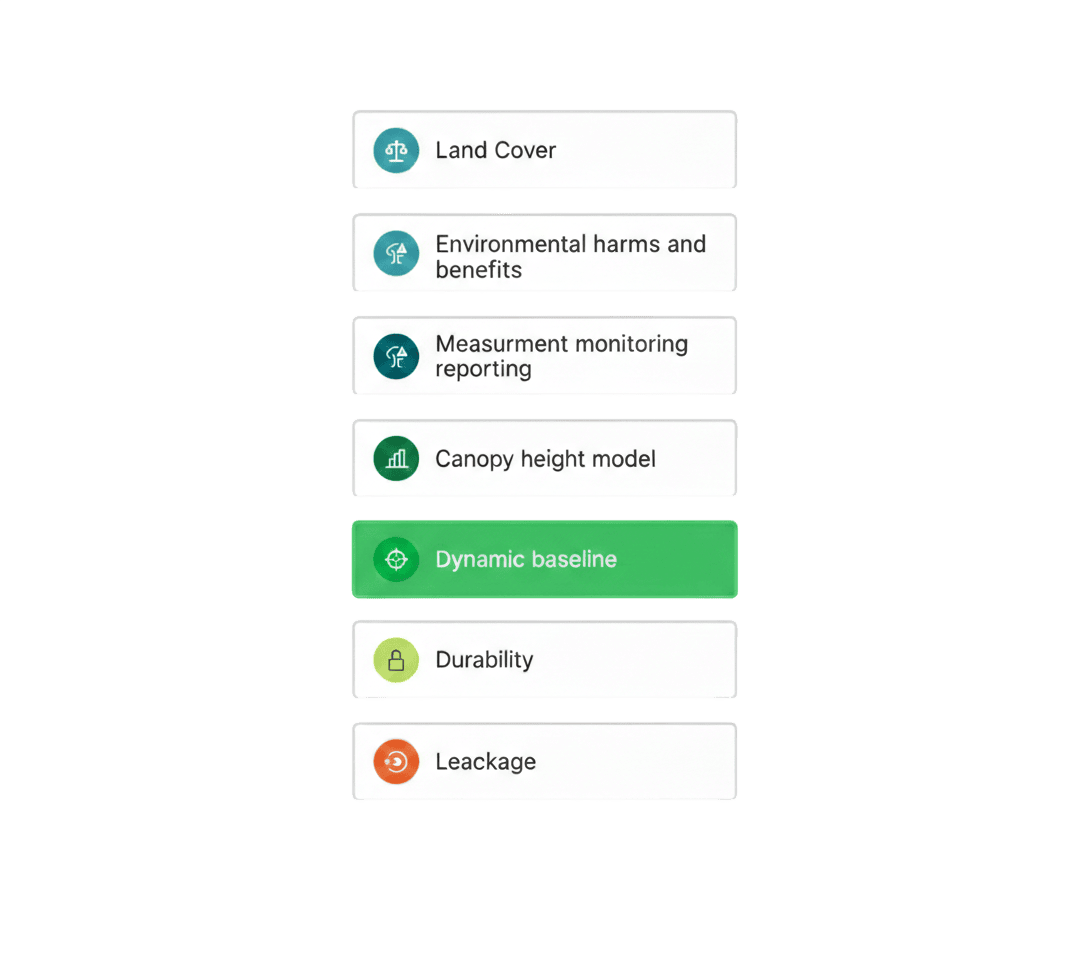
The challenge with current baselines
Carbon markets currently suffer from inflated credit issuance because static projections often assume zero background reforestation—even when trees would have grown anyway.

Phantom Credits Risk
Static projections create non-additional credits that damage market integrity and expose buyers to greenwashing accusations.
Learn about additionalityRegulatory Exposure
Emerging IC-VCM standards and buyer due diligence are increasingly rejecting projects with weak, assumption-based baselines.
Explore compliance standardsObserve the counterfactual. Count only the difference.
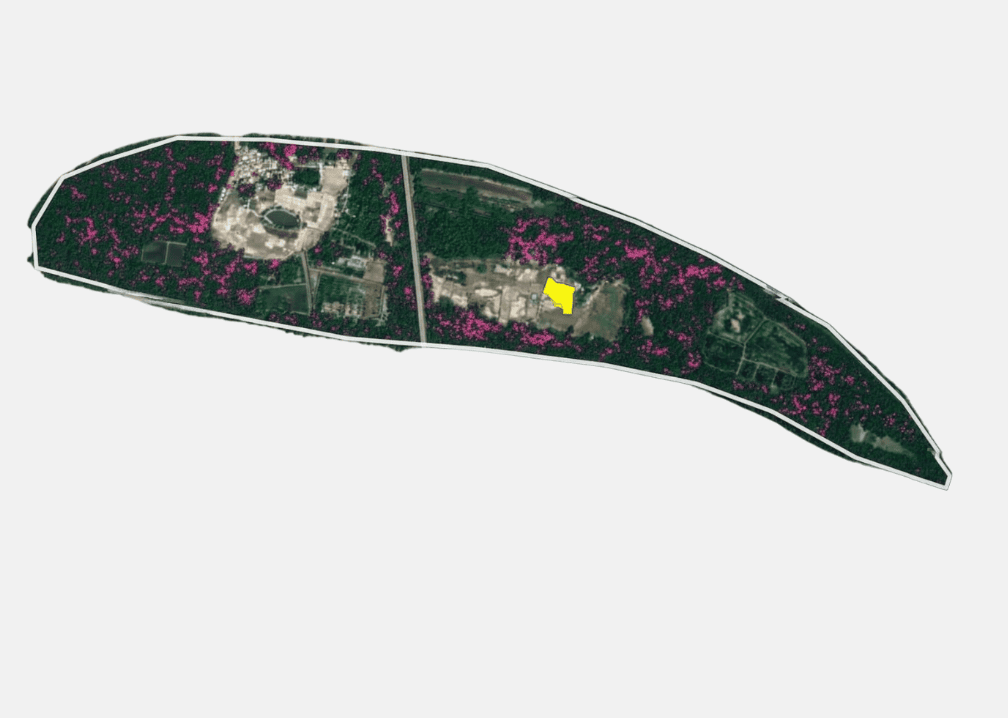
Instead of guessing what would have happened to your land, we find actual land that matches yours—same soil, same climate, same starting conditions.
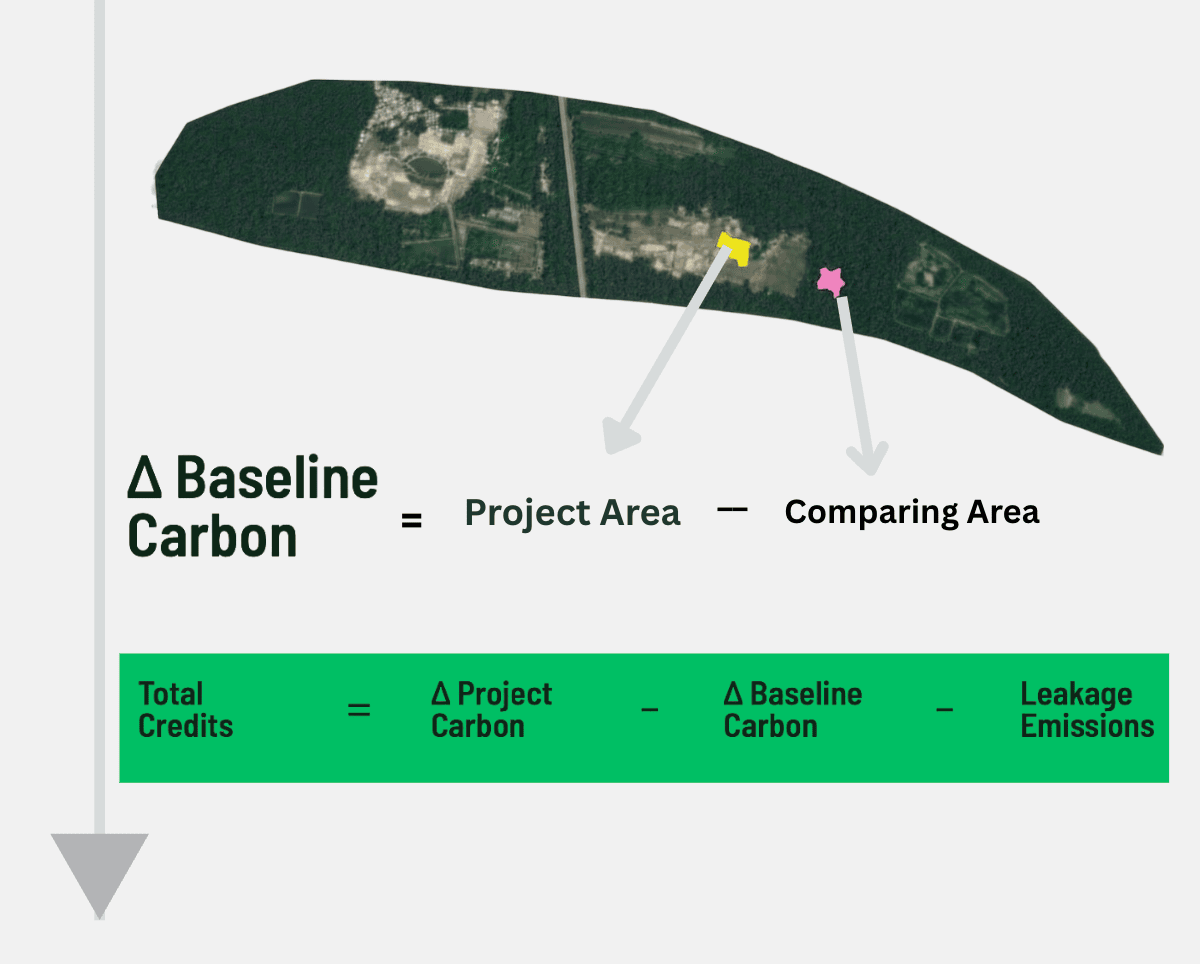
The difference between your forest growth and the control's growth? That's your real, additional climate impact.
From matching to verification.
Match
We algorithmically match your project to statistically similar non-project lands based on historical canopy height.
Monitor
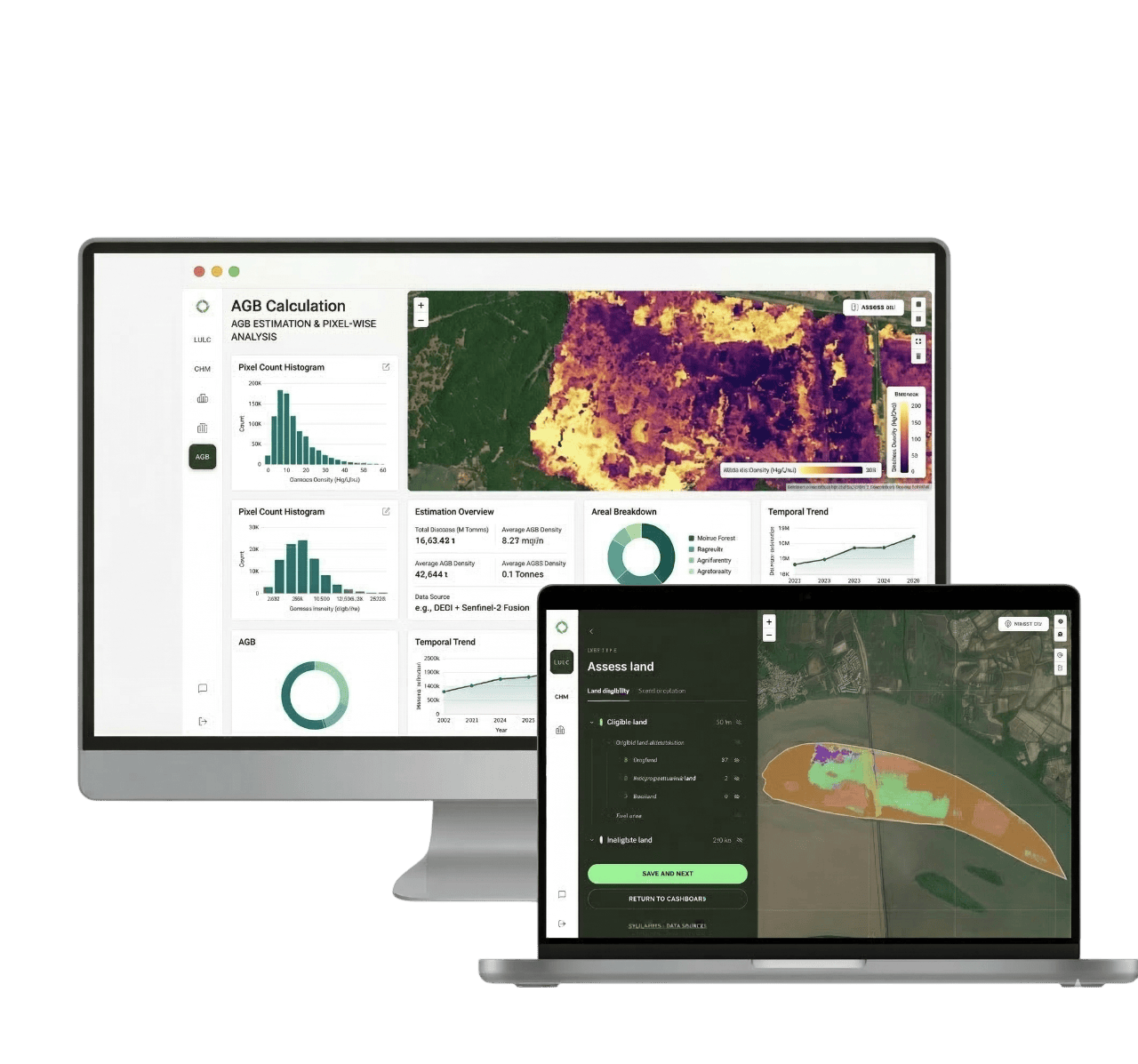
We track both your project and the control area annually using canopy height models.
Compare
We calculate the difference in carbon accumulation between project and control.
Credit
You earn credits only for additional carbon removed above the dynamic baseline.
Static guesses can't capture reality. Observation can.
Empirically Tested
Validate matching using 'pseudo-projects'—random non-project areas where we prove the method works.
Annually Updated
Captures changing commodity prices, policy shifts, and climate events that static projections miss.
Standards Aligned
Compliant with VM0047 for Afforestation & Reforestation. Recognized by IC-VCM.
The science of statistical matching.
DCAB relies on the principle of causal inference: if two plots of land are statistically identical at the start, their divergence can be attributed to the intervention.
Our methodology employs k-Nearest Neighbor matching on canopy height trajectories.
Integrity through observation.
Sylithe is built on the belief that carbon markets deserve measurement systems as rigorous as financial auditing.
By treating additionality as an empirical question, we restore confidence in nature-based carbon removal.
FAQs
What is Dynamic Baseline Accounting in carbon markets?
How does dynamic baselining improve carbon credit integrity?
Is Dynamic Baseline Accounting required for Verra VM0047?
How does Sylithe calculate dynamic baselines using satellites?
What is the difference between a static baseline and a dynamic baseline?
How does Dynamic Baseline Accounting prevent carbon credit reversals?
Eliminate baseline risk from
your portfolio.
Get a dynamic baseline analysis for your ARR project and issue credits with confidence.