Integrity is not a binary switch; it is a spectrum of certainty. In the 2026 market, if you cannot prove it with physics, it doesn’t exist on the balance sheet.
The voluntary carbon market (VCM) is currently undergoing its most significant transformation since the Kyoto Protocol. We have moved from the era of 'Carbon Indifference' where a tonne was a tonne regardless of its origin to an era of 'Radical Transparency.' Today, high-integrity carbon credits are emerging as the only viable currency for corporate entities serious about climate survival.
The Market Has Split Into Two Different Economies
The voluntary carbon market is no longer a single unified marketplace. A structural separation is emerging between low-cost commodity credits with limited verification and institution-grade credits supported by continuous evidence infrastructure.
For years, buyers treated carbon credits as interchangeable units, optimizing almost entirely for price-per-tonne. That assumption has collapsed. Institutional buyers now recognize that two credits carrying the same nominal “1 tonne CO₂e” claim may represent radically different levels of actual climate impact.
Carbon is no longer being valued only by volume. It is being valued by provability.
High-Integrity vs. Low-Integrity Credits: At a Glance
| Attribute | High-Integrity Credits | Low-Integrity Credits |
|---|---|---|
| Verification Method | Continuous dMRV (satellite + AI) | Annual PDF-based desktop audit |
| Additionality Evidence | Algorithmic, satellite-observed | Narrative / expert declaration |
| Baseline Type | Dynamic, algorithm-updated | Static, self-reported |
| Permanence Monitoring | Real-time via SAR/LiDAR | Periodic on-site visits |
| Leakage Tracking | Spatial displacement modeling | Manual boundary checks |
| ICVCM CCP Label | Yes Eligible | No Speculative |
| Institutional Buyer Acceptance | High | Low |
| Price Premium (2026) | ~$25–$60/tonne | ~$3–$8/tonne |
| Stranding Risk | Low | High |
| Co-benefits Verified | Yes | No |
The Anatomy of Systemic Failure
To understand the integrity gap, one must look at the 'Desktop Review' model of the 2010s. For years, third-party auditors reviewed PDFs provided by developers. They checked the math in the spreadsheets, but they rarely verified the ground truth.
- Information Asymmetry: Developers held the data; buyers held the risk.
- Lag-Time Verification: Forests could be lost to fire, yet credits were still being sold because audit cycles were too slow.
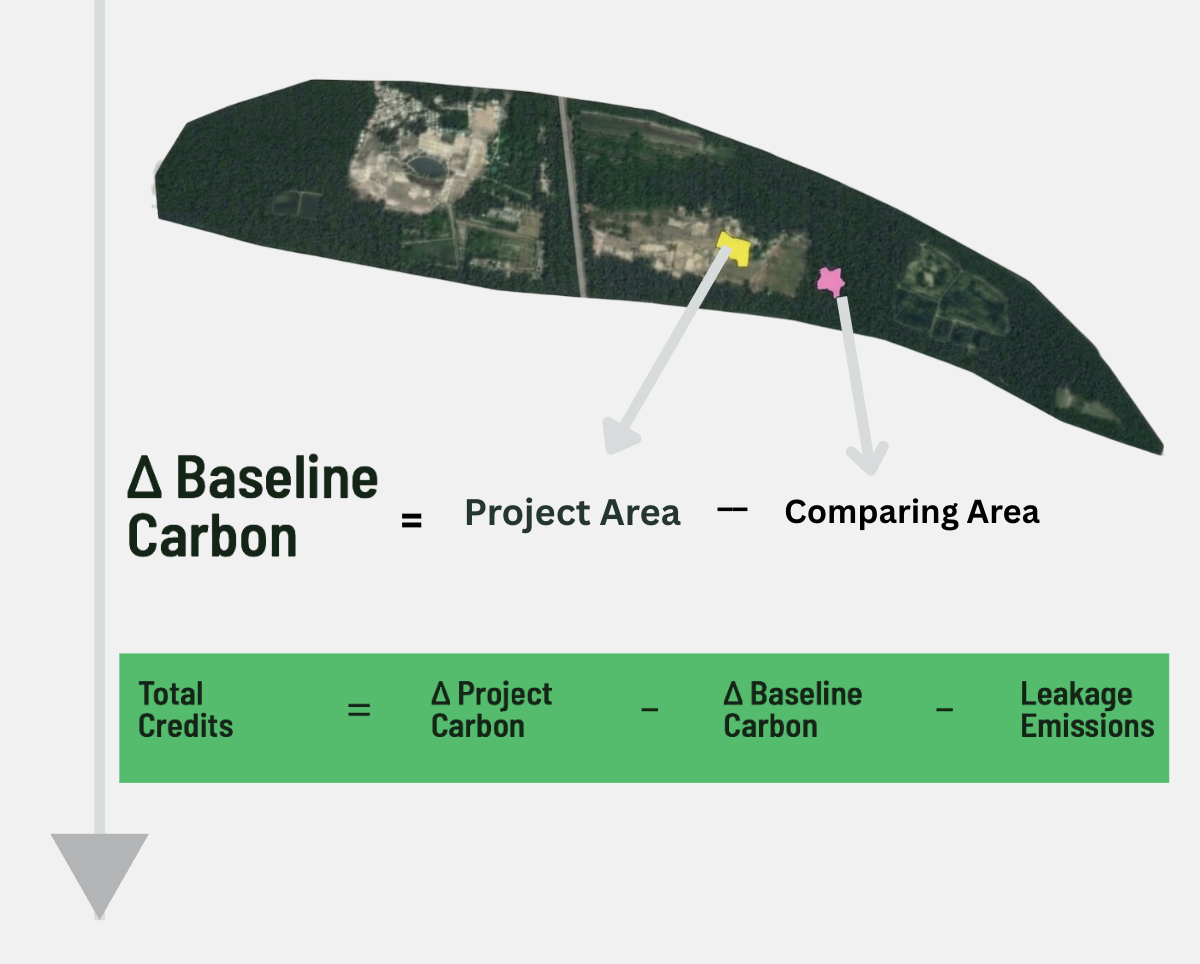
- Subjective Baselines: The use of "expert opinion" instead of algorithmic control areas allowed for inflated carbon impact.
Why Trust Collapsed Across the Voluntary Carbon Market
The integrity crisis did not emerge from a single scandal. It emerged from cumulative structural weaknesses. Historically, the VCM scaled faster than its verification infrastructure. As demand for offsets surged, methodologies expanded and corporate commitments accelerated, but verification remained manual and episodic.
This created systemic weaknesses: overestimated baselines, permanence uncertainty, and leakage risk. In some cases, projects generated millions of credits based on assumptions that could not be independently validated in real time. The market’s current transformation is fundamentally a response to that collapse of confidence.
The ICVCM and the CCP Framework
The Integrity Council for the Voluntary Carbon Market (ICVCM) has stepped in to end the 'Wild West' phase of the market. Their Core Carbon Principles (CCPs) are the new global standard.
The CCP Benchmark
A CCP-labeled credit is now a prerequisite for many institutional investors. It requires projects to prove robust social safeguards and absolute additionality. As integrity standards evolve, CCP-labelled credits are increasingly viewed as lower-risk assets by many institutional buyers.
ICVCM Core Carbon Principles Full Breakdown
| Principle | Category | Key Requirement | Verification Method | Importance |
|---|---|---|---|---|
| Additionality | Impact | Project would not occur without carbon finance | Evidence-based additionality assessment | Mandatory |
| Permanence | Impact | Long-term carbon storage with permanence safeguards | Continuous SAR monitoring | Mandatory |
| No Leakage | Impact | Emissions not shifted outside project boundary | Spatial displacement analysis | Mandatory |
| Robust MRV | Governance | Independent, reproducible measurement | dMRV audit trail | Mandatory |
| Conservative Baselines | Impact | Counterfactual must not overstate risk | Conservative and evidence-based baseline setting | Mandatory |
| No Net Harm | Safeguards | No significant environmental damage | Environmental impact assessment | Mandatory |
| Social Co-benefits | Safeguards | Positive or neutral local community outcomes | Community surveys + registry | Mandatory |
| Sustainable Development Goals | Safeguards | Alignment with relevant UN SDGs | Project design document | Encouraged |
| Registry Transparency | Governance | Public, tamper-evident credit issuance | Public registry API | Mandatory |
| Methodology Approval | Governance | ICVCM-approved methodology used | Standard body review | Mandatory |
Source: ICVCM Core Carbon Principles v2.0 (2024).
Additionality Is Becoming Far More Aggressive
Additionality once operated as a largely theoretical exercise where developers argued that without carbon finance, a project would not have happened. Today, that standard is becoming insufficient.
Advanced buyers increasingly expect empirical evidence rather than narrative justification. Satellite-observed land-use trends, regional deforestation patterns, and commodity price signals can now be analyzed algorithmically to determine whether a project area genuinely faced risk. This changes additionality from a documentation problem into a data science problem.
The Five Pillars of Carbon Credit Integrity
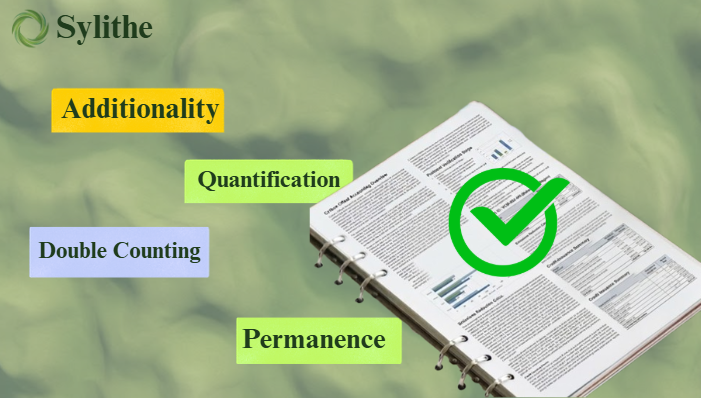
While methodologies differ across project types, most high-integrity carbon credits are evaluated against five foundational principles. Weakness in any one pillar can undermine the credibility of the entire credit.
Additionality: The climate benefit would not have occurred without carbon finance.
Permanence: Carbon storage remains durable over the long term.
No Leakage: Emissions are not displaced outside the project boundary.
Robust MRV: Measurements are transparent, reproducible, and independently verifiable.
Social and Environmental Safeguards: Climate benefits are delivered without causing significant harm.
Modern integrity frameworks increasingly evaluate projects across all five pillars simultaneously rather than focusing only on carbon volume.
Carbon Credits Are Becoming Financial Assets
One of the biggest changes in 2026 is that carbon credits are increasingly being evaluated through the lens of financial asset quality. Institutional investors treat them as risk-bearing assets, compliance instruments, and balance-sheet exposures.
A low-quality credit may create future write-down risk, litigation exposure, or accusations of misleading claims. As a result, CFOs and legal teams are becoming directly involved in procurement decisions. Integrity is becoming a financial risk management function.
Proof Through Physics: The dMRV Mandate
At Sylithe, we believe integrity cannot be 'vouched for' it must be measured. By moving verification from PDFs to orbital sensors, we ground climate claims in physics.
The Technology Stack of Trust
High-integrity verification now requires: (1) SAR (Radar) for all-weather visibility, (2) Spaceborne LiDAR for 3D biomass mapping, and (3) AI-driven change detection. This removes human subjectivity from the equation.
Why Continuous Monitoring Changes Everything
Traditional carbon verification operated in snapshots, but environmental systems change continuously. A forest can experience illegal logging or wildfire long before the next audit cycle begins.
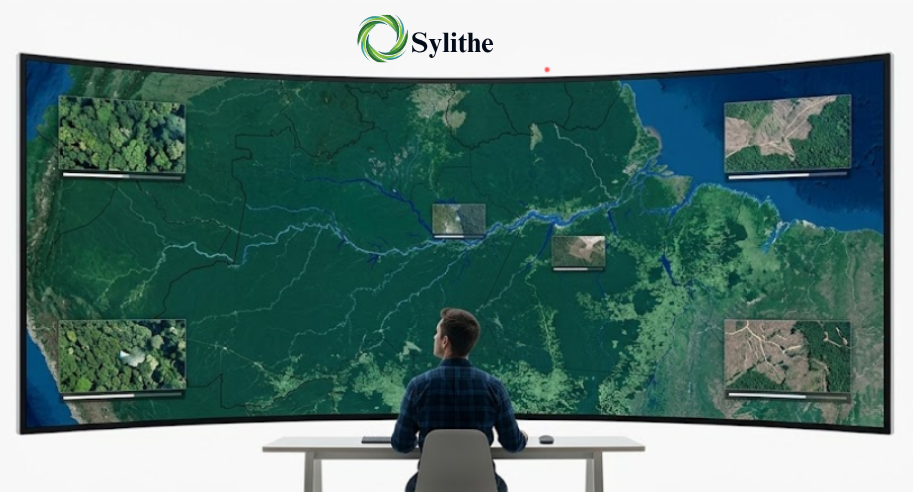
Continuous dMRV (digital Monitoring, Reporting, and Verification) changes this model. Instead of relying on delayed disclosures, projects can now be monitored through satellite imagery and radar systems, moving verification from retrospective reporting toward continuous environmental observability.
The Rise of “Proof-Based Climate Finance”
The next evolution of carbon markets revolves around proof-based financing. Capital providers increasingly want outcomes that are measurable, independently observable, and machine-verifiable. The future market will reward projects capable of producing transparent evidence chains rather than static documentation packages.
How Buyers Conduct Carbon Credit Due Diligence
Large corporate buyers increasingly apply investment-style due diligence before purchasing carbon credits. Project documentation alone is no longer sufficient.
- Verification of additionality assumptions.
- Assessment of permanence and reversal risks.
- Review of leakage controls.
- Evaluation of monitoring methodologies.
- Independent analysis of registry and issuance history.
- Assessment of social and biodiversity safeguards.
As credit prices increase, buyers are treating carbon procurement as a risk-management exercise rather than a simple sustainability purchase.
What Happens to Low-Integrity Credits?
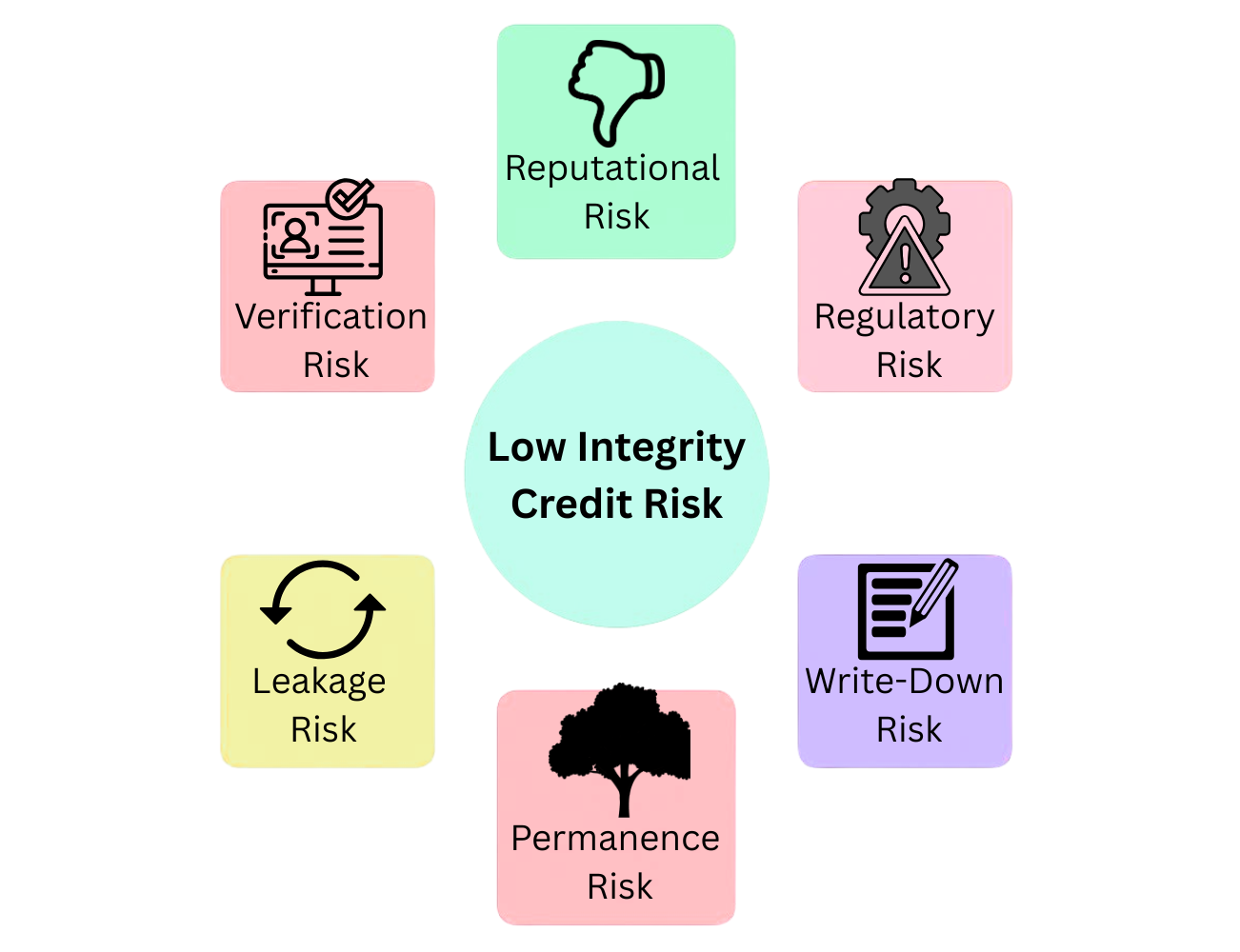
A major repricing event is occurring. Credits unable to satisfy evolving integrity standards are experiencing declining liquidity and reputational discounting. This is creating 'stranded carbon assets' portfolios of credits that technically exist on registries but are no longer considered acceptable by institutional buyers.
Why Physics Matters More Than Narratives
The carbon market historically relied heavily on declarations. But climate outcomes are ultimately physical phenomena. Trees either gained biomass or they did not. The next generation of carbon markets is therefore shifting toward observational verification systems rooted in measurable environmental signals.
Integrity as Competitive Infrastructure
For project developers, integrity is becoming infrastructure for market access. High-integrity projects gain advantages in institutional financing, long-term offtake agreements, and premium pricing. The competitive edge now belongs to the developer capable of producing the most defensible climate evidence.
The voluntary carbon market is entering an era where credibility itself becomes quantifiable.
The future winners of the market will not be those making the largest climate claims, but those capable of continuously proving them under scientific, financial, and regulatory scrutiny. Integrity stops being a branding exercise and becomes the core economic property of the carbon asset itself.
The transition now underway is the transformation of carbon markets from trust-based systems into evidence-based infrastructure.
How to Audit Your Portfolio
Is your carbon portfolio ready for 2027's regulatory environment? Sylithe provides forensic integrity audits for existing assets, helping you identify and replace high-risk credits with data-backed climate impact. Protect your reputation with the truth.