 New
New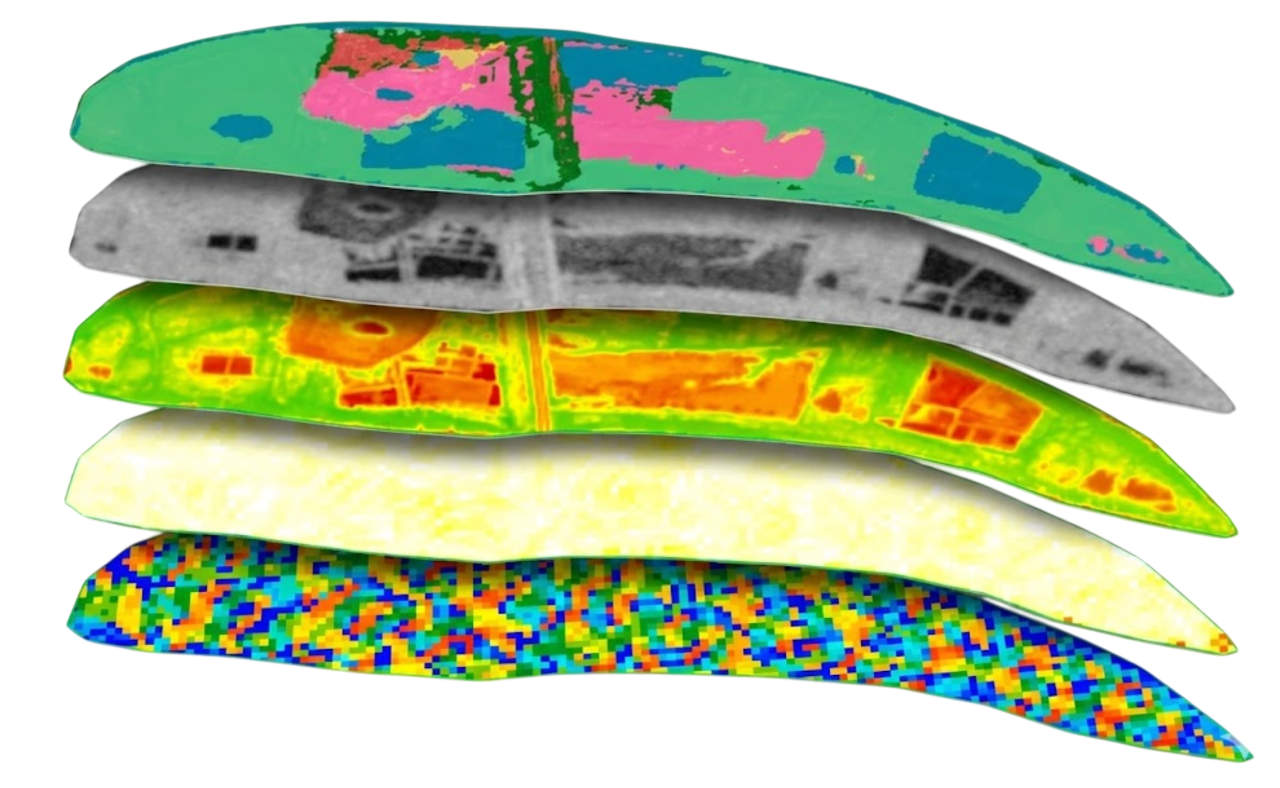
A land use and land cover (LULC) map that reports "90% overall accuracy" sounds like a strong result. For a carbon project, it can still be dangerously misleading. Imagine a project boundary where 85% of the land is dense, easily classified forest and the remaining 15% is a messier mix of degraded forest, regenerating scrub, and agroforestry — exactly the land where eligibility and baseline decisions are made. A classifier that gets every pixel of the easy 85% right and half of the difficult 15% wrong can still post a 90%+ overall accuracy score, because the number is dominated by the majority class. But that difficult 15% is often precisely where a carbon project's eligibility, additionality, and baseline carbon stock are decided. An overall accuracy figure says almost nothing about how reliable the map is in the places that matter most. This is why carbon registries do not accept a single headline accuracy number as sufficient evidence — and why understanding what sits behind that number is essential for anyone developing, verifying, or buying credits from a nature-based project.
What Is LULC Classification Accuracy?
LULC classification assigns every pixel in a satellite image to a category — forest, non-forest, cropland, water, built-up area, and so on — using spectral signatures, machine learning models, or a combination of both. Classification accuracy measures how often those assigned labels match what is actually on the ground.
That measurement is not a single number by default. It is built from a confusion matrix (also called an error matrix) — a table that cross-tabulates what the map predicted against what independent ground or reference data shows was actually there. Overall accuracy is just one summary statistic pulled from that table, and it is the least informative one for high-stakes decisions like carbon crediting.
Why Overall Accuracy Is a Misleading Headline Number
Overall accuracy is simply the percentage of validation points the map classified correctly, across every class combined. The problem is that it treats every hectare as equally important, when in a carbon project they are not.
Most landscapes are dominated by one or two easy-to-classify majority classes — dense intact forest, open water, obvious bare ground. A classifier that performs well on these common, spectrally distinct classes will post a high overall accuracy almost automatically, even if it performs poorly on smaller, harder classes.
A high overall accuracy score can be mathematically true and practically meaningless for the exact hectares a carbon project depends on.
This is why carbon methodologies and independent verifiers look past the single headline number and require accuracy to be reported per class, with the classes that matter most for the project — usually the forest / non-forest boundary — held to their own standard.
Producer's Accuracy vs User's Accuracy
Two class-specific metrics matter far more than overall accuracy, and they answer different questions.
Of all the validation points that are genuinely forest on the ground, what percentage did the map correctly label as forest? Low producer's accuracy means real forest is being missed — classified as something else — which is an omission error.
Of all the points the map labelled as forest, what percentage are genuinely forest on the ground? Low user's accuracy means the map is calling non-forest land "forest" too often — a commission error.
A project map can score well on one of these and poorly on the other. A classifier that is conservative and only labels obvious, dense canopy as "forest" can have very high user's accuracy — almost everything it calls forest really is forest — while its producer's accuracy is weak, because it is missing degraded or open-canopy forest that should have counted. The reverse is just as common. Overall accuracy averages these effects away, hiding which type of error a project actually has.
Why This Matters Specifically for Carbon Accounting
In most other remote sensing applications, a classification error is a data quality issue. In a carbon project, it converts directly into a financial and integrity problem, because LULC maps sit underneath eligibility screening, baseline construction, and additionality assessment.
What a Classification Error Actually Does
- Non-forest misclassified as forest inflates the apparent baseline carbon stock, creating an over-crediting risk before a single tonne is verified.
- Forest misclassified as non-forest can wrongly disqualify genuinely eligible land, or trigger a false deforestation or reversal alert on land that was never disturbed.
- Degraded forest confused with intact forest distorts additionality — the map may not reflect the actual condition a restoration project is improving from.
- Boundary and edge errors around smallholder or fragmented plots can shift a project's eligible area by a meaningful percentage, especially where parcels are small relative to pixel size.
- Errors that are not random — systematically favouring one class over another — bias the entire carbon stock estimate in one direction rather than simply adding noise.
This is why accuracy assessment cannot be treated as a formality performed once and filed away. It is one of the load-bearing pieces of evidence behind every tonne of carbon a project claims.
Reading an Error Matrix: An Illustrative Example
A simplified, illustrative error matrix shows how the same map can look very different depending on which number you read.
Illustrative Confusion Matrix (Validation Points)
| Class | Forest | Non-Forest | Producer's Accuracy |
|---|---|---|---|
| Forest (reference) | 182 | 18 | 91% |
| Non-Forest (reference) | 32 | 168 | 84% |
| User's Accuracy | 85% | 90% | Overall: 87.5% |
In this illustrative example, the overall accuracy of 87.5% looks respectable. But look closer: 32 points that were genuinely non-forest were classified as forest — the exact error pattern that inflates a project's claimed forest area and baseline carbon stock. A single overall accuracy figure would never reveal that this specific, financially consequential error exists.
The Real Sources of Classification Error
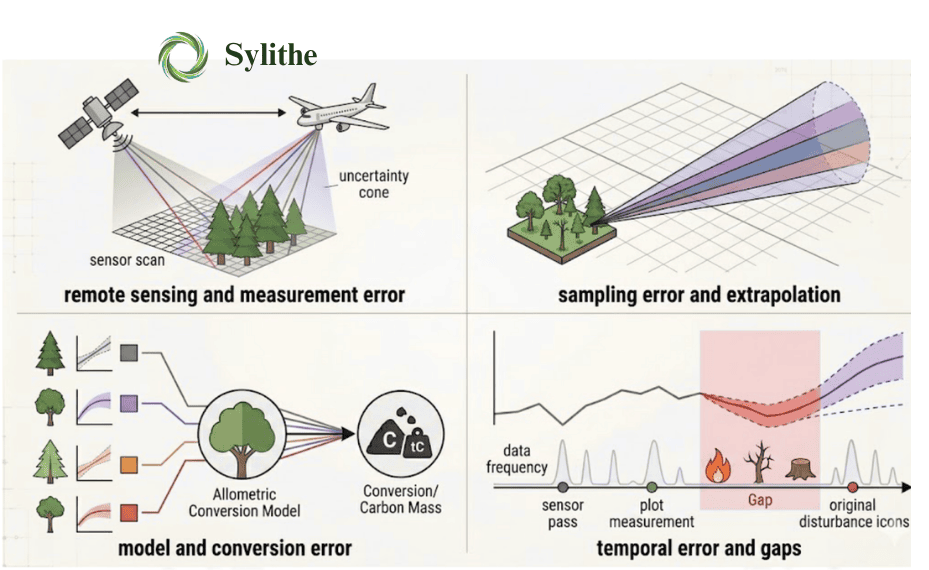
Classification error rarely comes from one cause. It compounds from several sources, most of which concentrate in exactly the boundary classes carbon projects care about most.
1. Spectral Confusion Between Similar Classes
Degraded forest, regenerating scrub, agroforestry, and dense plantation can look nearly identical to a satellite sensor, because they share similar canopy structure and reflectance. This is the single largest source of forest-class error, and it is exactly where carbon eligibility and additionality decisions are made.
2. Cloud Cover and Seasonal Illumination
Optical satellite imagery is unusable wherever cloud cover blocks the surface — a persistent problem in tropical and monsoon-affected regions. Classifiers forced to rely on limited cloud-free scenes, or on images taken in different seasons for different parts of a mosaic, introduce inconsistency that shows up as classification error at scene boundaries.
3. Mixed Pixels at Class Boundaries
A single satellite pixel can straddle a forest edge, a field boundary, or a smallholder plot line, blending the spectral signal of two classes into one ambiguous reading. Where project boundaries follow small, fragmented parcels, this mixed-pixel effect can account for a disproportionate share of total classification error relative to the physical area it covers.
4. Temporal Mismatch
A classifier trained on imagery from one date and applied to a project area mapped on a different date can misread genuine seasonal change — deciduous canopy loss, crop cycles, dry-season vegetation stress — as land cover change that never actually happened.
5. Weak Validation Sample Design
An accuracy figure is only as credible as the sample used to calculate it. Validation points that are not randomly selected, not independent from the training data, or too sparse in rare classes will produce an accuracy number that looks reassuring but does not actually test the map where it is weakest.
6. Sensor Resolution vs Parcel Size
Widely used optical sensors resolve land cover at roughly 10–30 metres per pixel. That is coarse relative to many smallholder plots, agroforestry strips, and narrow riparian buffers — the exact land types common across much of India's carbon project landscape — making resolution mismatch a structural, not just a technical, source of error.
How Carbon Standards Expect Accuracy to Be Assessed
Because of these risks, carbon methodologies generally do not accept a self-reported overall accuracy figure at face value. Credible practice expects an accuracy assessment that is independent of the training data, based on a statistically designed and sufficiently large validation sample, stratified so that rare but important classes are properly tested, and reported per class rather than only as a single aggregate figure — often expecting the classes most relevant to eligibility and baselines to individually clear a meaningfully high bar, not just the map as a whole.
This mirrors how carbon integrity is protected elsewhere in the MRV chain. In the same way that dynamic baselines exist because a static assumption about the past is not good enough evidence of counterfactual land use, class-specific accuracy assessment exists because a single aggregate number is not good enough evidence that a LULC map can be trusted for carbon accounting.
Why This Is Harder in India Than the Textbook Case
Much of the academic literature on LULC accuracy is built around large, contiguous forest blocks with relatively clean class boundaries. India's carbon-relevant landscape looks different: fragmented smallholder agriculture interleaved with agroforestry, community forests with varying degrees of degradation, and mixed-use land where a single administrative boundary can contain several genuinely different land cover types within a few hundred metres.
That heterogeneity is exactly the condition under which overall accuracy is most likely to look good while class-specific accuracy quietly fails. It is also why a single static classification, run once and reused for years, tends to accumulate error faster in Indian landscapes than in the large, homogeneous forest blocks the textbook accuracy targets were originally built around.
How Better MRV Reduces Classification Error
Several practical approaches meaningfully reduce the error sources above, rather than simply reporting around them.
- Fusing optical imagery with Synthetic Aperture Radar (SAR), which penetrates cloud cover and is unaffected by daylight or seasonal haze, closing the biggest single gap in tropical and monsoon regions.
- Using dense, continuous time-series rather than a single annual snapshot, so a classifier sees a full seasonal cycle instead of one ambiguous date.
- Training classifiers on India-specific land cover classes — including agroforestry, degraded forest, and smallholder mosaics — rather than generic global land cover categories that were not designed around these classes.
- Running independent, stratified random validation with adequate sample sizes in rare and boundary classes, not just the dominant majority class.
- Reporting class-specific producer's and user's accuracy alongside the overall figure, so reviewers can see exactly where a map is strong and where it is not.
Where Sylithe Fits
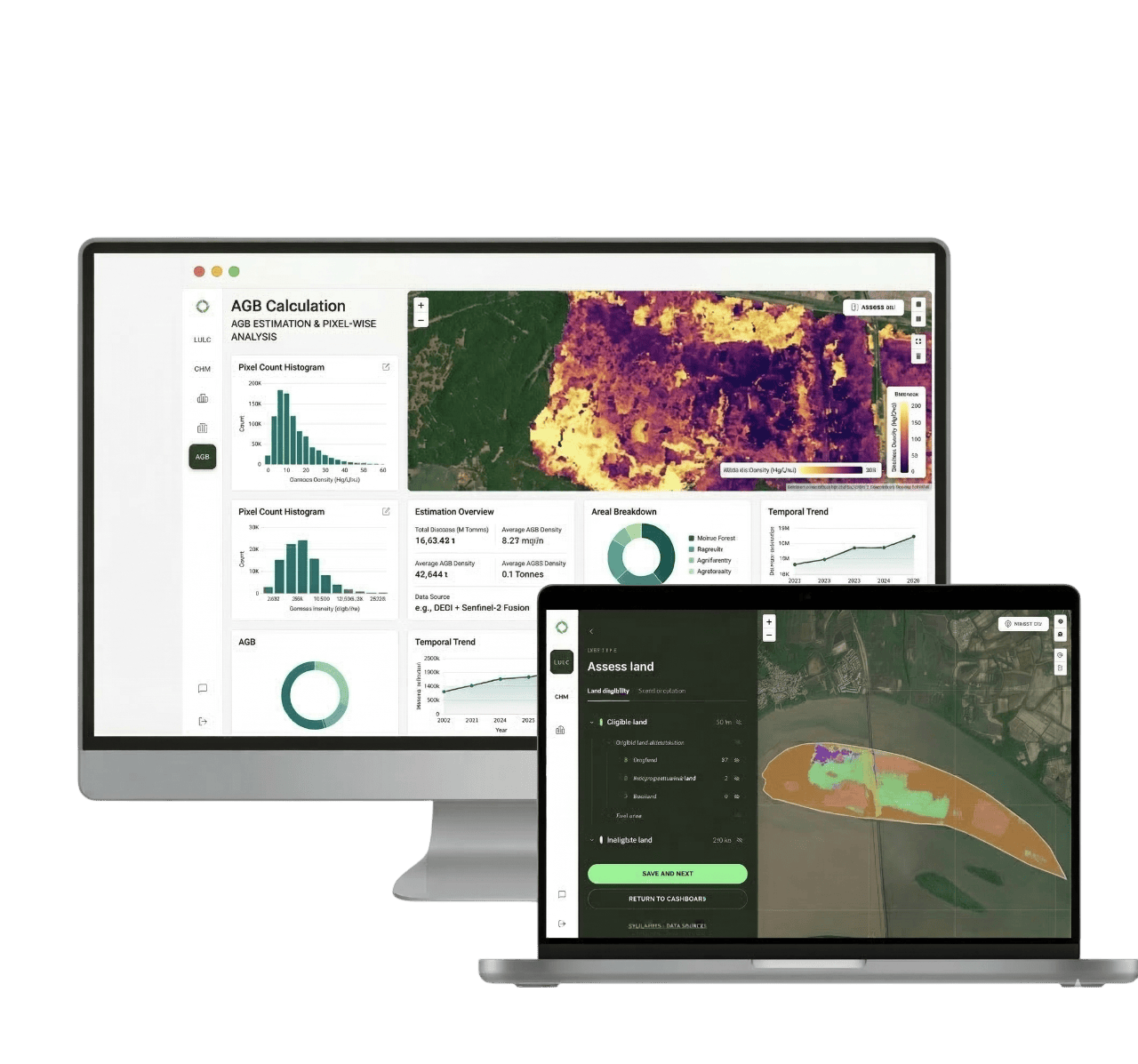
Sylithe's LULC classification pipeline fuses high-resolution optical imagery with SAR data to maintain classification quality through cloud cover and seasonal variation, and is trained on classes relevant to Indian project landscapes — including agroforestry, degraded forest, and fragmented smallholder mosaics — rather than generic global land cover categories.
Because classification underpins eligibility screening, baseline construction, and change detection across every project on the platform, Sylithe reports accuracy at the class level, not just as a single aggregate figure, and treats the forest / non-forest boundary — the classes carbon accounting is most sensitive to — as the standard the map has to meet, not an afterthought behind an impressive overall number.
Key Takeaways
Overall classification accuracy is a single, aggregated number that is dominated by whichever land cover class is most common — which is rarely the class a carbon project's eligibility and baseline actually depend on. Producer's accuracy and user's accuracy tell two different, necessary stories about where a map is reliable and where it is not, and most real classification error concentrates at exactly the boundaries — degraded forest, agroforestry, fragmented smallholder plots — that carbon accounting is most sensitive to. Credible LULC accuracy assessment requires independent, statistically designed validation reported per class, not a single headline percentage. Multi-sensor fusion, continuous time-series, and India-specific training classes are what actually reduce these errors, rather than simply reporting around them.