 New
New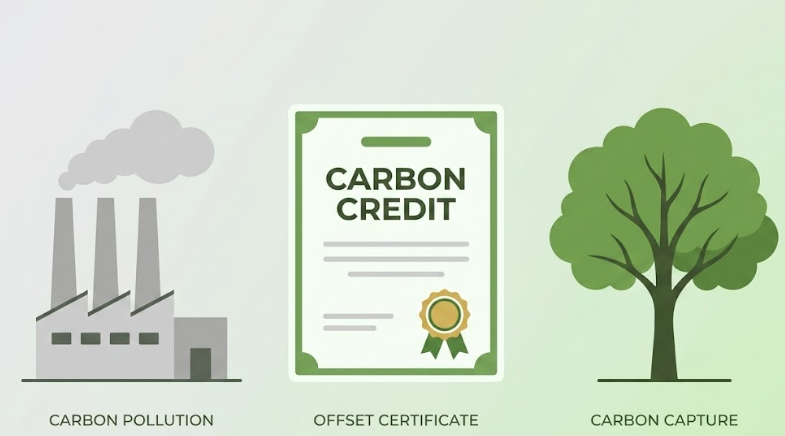
A carbon credit is a promise, backed by evidence: one tonne of carbon dioxide, kept out of the atmosphere or pulled back from it. The definition is simple. Proving it is the entire industry.
If you have heard the term "carbon credit" and found the explanations either too vague or drowning in jargon, this guide is for you. We will build the concept from the ground up what a credit actually is, how one gets created and verified, who buys them and why, how the market works in India specifically, and how to tell a high-quality credit from a worthless one.
By the end, you will understand not just the definition, but the thing that actually matters: a carbon credit is only worth what its measurement can prove. That single idea explains why prices vary so widely, why the market had a crisis of confidence, and why verification technology has become the centre of gravity for the whole industry.
What Is a Carbon Credit, Exactly?
A carbon credit (sometimes called a carbon offset) is a tradable certificate that represents one metric tonne of carbon dioxide equivalent (CO₂e) that has been either prevented from being emitted, or actively removed from the atmosphere. "Equivalent" matters because other greenhouse gases methane, nitrous oxide are converted into their CO₂-warming equivalent, so everything is measured in one common unit.
The one-line definition
1 carbon credit = 1 tonne of CO₂e reduced or removed, measured, verified and issued by a recognised standard. Once retired against a company’s emissions, that credit cannot be used again.
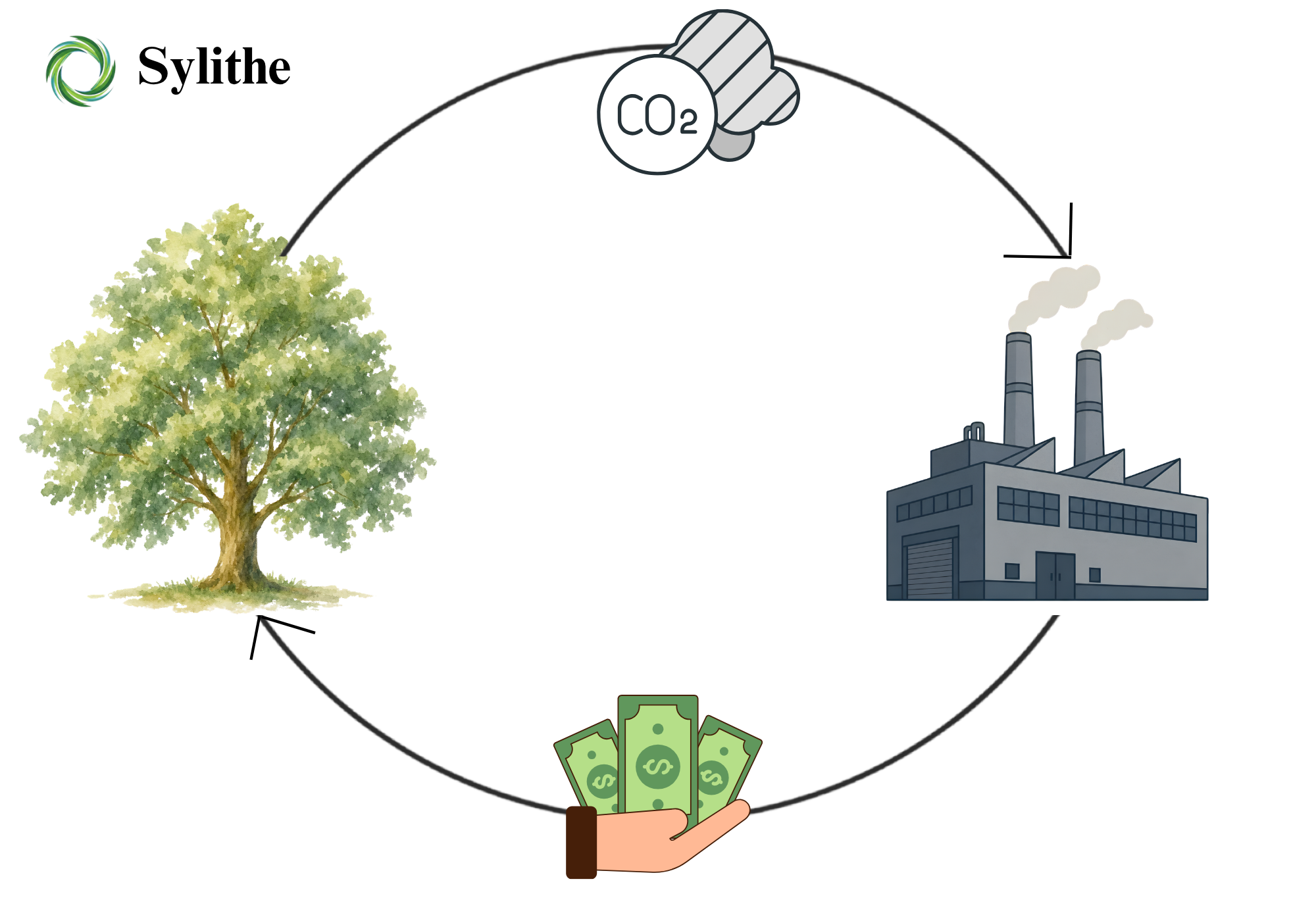
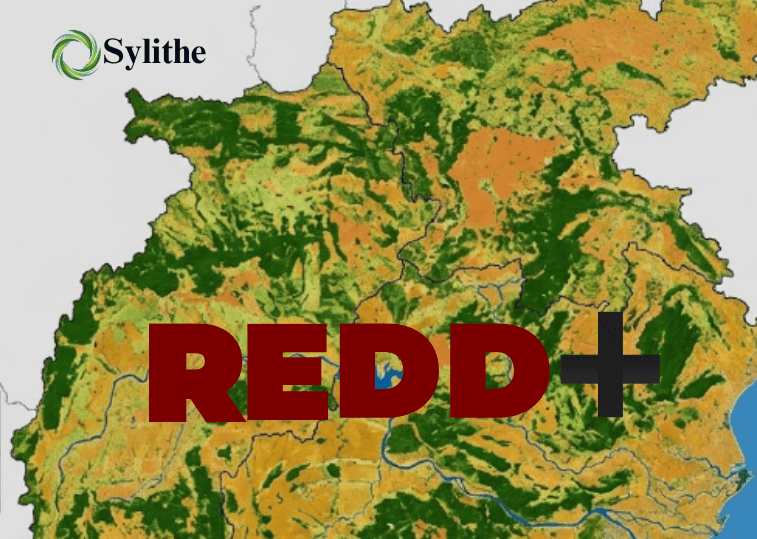
There are two fundamentally different ways to earn a credit, and confusing them is the single most common mistake. An avoidance/reduction credit is earned by stopping an emission that would otherwise have happened for example, protecting a forest that was about to be cut down (REDD+). A removal credit is earned by actively taking CO₂ out of the air for example, planting new trees that absorb carbon as they grow (Afforestation/Reforestation/Revegetation, or ARR). Buyers increasingly prefer removals, because the climate benefit is more tangible and easier to prove.
How a Carbon Credit Is Created
A credit does not appear the moment a tree is planted. It travels through a rigorous lifecycle designed to guarantee that the tonne it represents is real, additional and permanent. Skip any step, and the credit loses its integrity.
A developer defines the activity (e.g. afforestation on degraded land) and selects a methodology under a standard such as Verra VCS or Gold Standard.
They prove what would have happened without the project (the baseline) and that the project is additional it would not have occurred anyway.
Carbon stored or avoided is measured through Monitoring, Reporting and Verification increasingly using satellites and AI rather than manual field surveys.
A third-party auditor (a Validation & Verification Body) checks the claims against the methodology.
The registry issues credits one per verified tonne into a serialised account so each is unique and trackable.
A buyer purchases and "retires" the credit against their emissions. Retired credits are permanently removed from circulation.
The four integrity tests
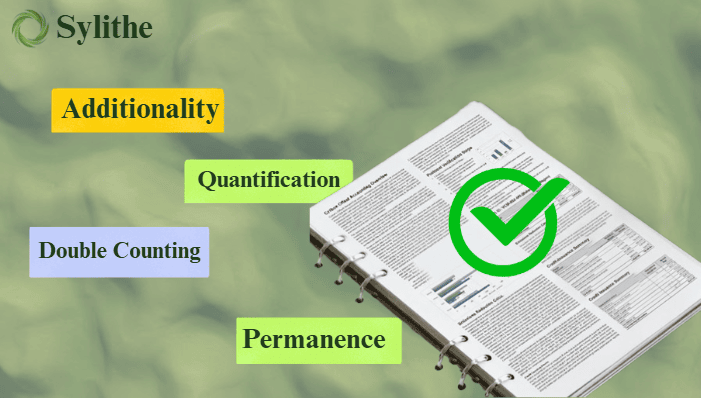
Every credible credit must pass four tests: Additionality (would it have happened anyway?), Baseline accuracy (is the counterfactual honest?), Permanence (will the carbon stay stored?), and Leakage (did the activity just push emissions elsewhere?). A credit that fails any of these is a credit you should not buy.
Compliance vs Voluntary: The Two Markets
People say "the carbon market" as if it were one thing. It is two. Understanding the split is essential because the rules, buyers and prices are completely different.
Governments cap emissions and require regulated entities to surrender allowances or credits. Participation is legally required. In India this is the Carbon Credit Trading Scheme (CCTS), governed by the Bureau of Energy Efficiency.
Companies buy credits voluntarily to meet net-zero and ESG commitments, offset unavoidable emissions, or support climate action. Standards like Verra VCS and Gold Standard dominate here. This is where most nature-based (ARR, REDD+, agroforestry) credits trade.
The two markets increasingly overlap. India’s compliance market (CCTS) is being designed to work alongside the voluntary market, and global corporate buyers pull demand into both. For a project developer in India, the practical question is which pathway compliance or voluntary best fits the project type and buyer base.
Carbon Credits in India (ICM & CCTS)
India has moved decisively from being mainly a supplier to the global voluntary market toward having its own formal, regulated carbon market. The Indian Carbon Market (ICM) framework and the Carbon Credit Trading Scheme (CCTS), administered under the Bureau of Energy Efficiency, establish a domestic compliance mechanism with defined obligations, trading and registry infrastructure.
At the same time, India remains one of the most important sources of nature-based carbon projects in the world afforestation and reforestation (ARR), avoided deforestation (REDD+), agroforestry, mangrove and blue-carbon restoration, and improved land management. These projects typically list under Verra VCS or Gold Standard for the voluntary market, and many are aligned to the ICM as the domestic framework matures.
Why India matters
India combines vast restorable land, millions of smallholder and community landholdings, and rising corporate net-zero demand. That makes it one of the highest-potential and highest-scrutiny carbon markets on earth. Integrity and verification are what will decide whether that potential is realised.
The Main Types of Carbon Credits
Not all credits are created the same way. The most common categories relevant to India’s land sector are:
Why It Matters
- ARR (Afforestation, Reforestation & Revegetation): planting or regenerating trees on non-forest land a removal activity (Verra VM0047).
- REDD+ (Reducing Emissions from Deforestation & Degradation): protecting existing forest that is under threat an avoidance activity.
- Agroforestry: integrating trees into farmland, sequestering carbon while improving farmer livelihoods.
- Blue carbon: restoring mangroves and coastal ecosystems, which store exceptional amounts of carbon in soil and biomass.
- Soil & biochar: increasing soil organic carbon or locking carbon into stable biochar.
- Improved Forest Management (IFM): changing management of existing forest to increase carbon stocks.
How Are Carbon Credits Priced?
There is no single "carbon credit price". A credit’s value depends on the project type, the standard it is issued under, the co-benefits it delivers (biodiversity, community impact), the vintage (year it was issued), and above all the credibility of its verification. A well-verified nature-based removal credit with strong co-benefits can trade at many times the price of an old, thinly verified avoidance credit.
Quality is the price signal
After the integrity controversies of recent years, buyers no longer pay for volume alone. They pay for proof. Two credits that both claim "one tonne" can trade at wildly different prices purely because one is backed by transparent, high-resolution measurement and the other is not.
Why Verification (MRV) Decides Everything
Every problem the carbon market has faced over-crediting, phantom credits, collapsed baselines traces back to weak measurement. If you cannot precisely and independently measure how much carbon a project stored, you cannot know how many credits it deserves. Traditional MRV relied on infrequent, expensive field surveys that were easy to game and hard to audit.
Digital MRV (dMRV) changes the economics. By combining high-resolution satellite imagery, geospatial intelligence and AI, projects can be monitored continuously, at scale, with results that are transparent and reproducible. That is how the market rebuilds trust not with more promises, but with better evidence.
Where Sylithe fits
Sylithe is a satellite-powered dMRV platform for carbon credit verification. It takes projects from land eligibility and land-cover analysis through to audit-ready measurement of canopy, biomass, baselines and permanence for ARR, REDD+ and agroforestry projects across India. Better measurement, lower cost, higher-integrity credits.
So what are carbon credits? Certificates for a tonne of climate benefit. But the more useful answer is this: a carbon credit is a claim, and its worth is set entirely by how well that claim can be proven. Understand measurement, and you understand the market.