 New
New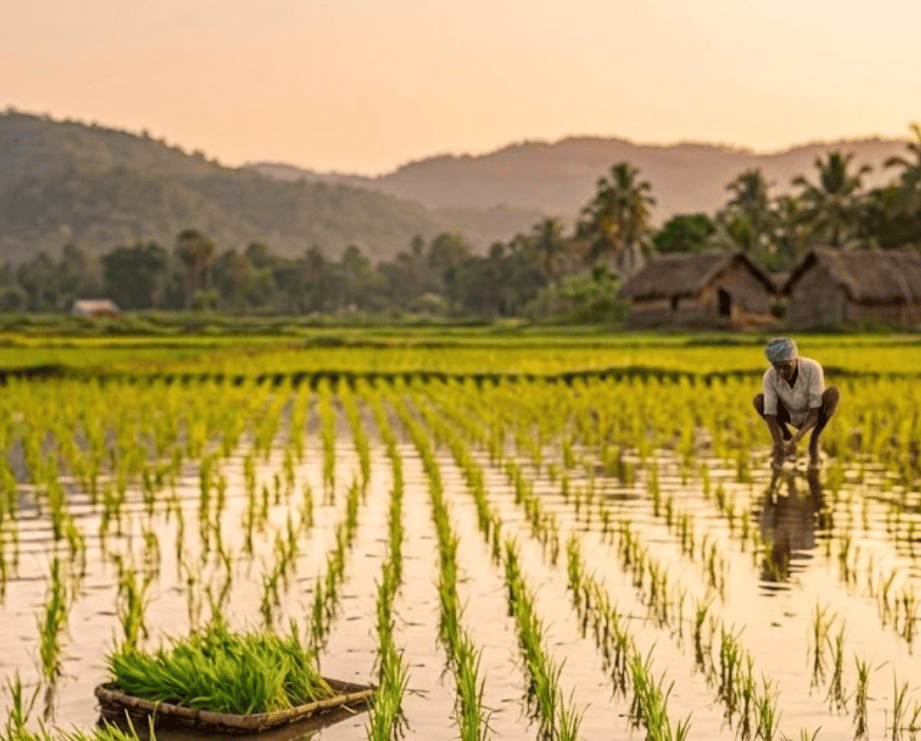
The September 2026 payments to 2,550 farmers in Punjab and Haryana proved that carbon income for Indian farmers is no longer theoretical. The record also shows it is slow, modest, and conditional.
Yes, Indian farmers can now earn money from carbon. The income is still small, slow and conditional. In September 2026, the first soil-carbon payments in India reached farmers in Punjab and Haryana. The Union Agriculture Ministry announced them as a milestone, and the programme behind them took about seven years to get from launch to payout. In July 2026, the government told Parliament that it has not yet assessed how much income farmers could make from carbon credits. The honest message for farmers, advisers and anyone writing about this is that carbon income is real but modest - it works best as a bonus on practices that already make agronomic sense.
1. What Carbon Farming Means
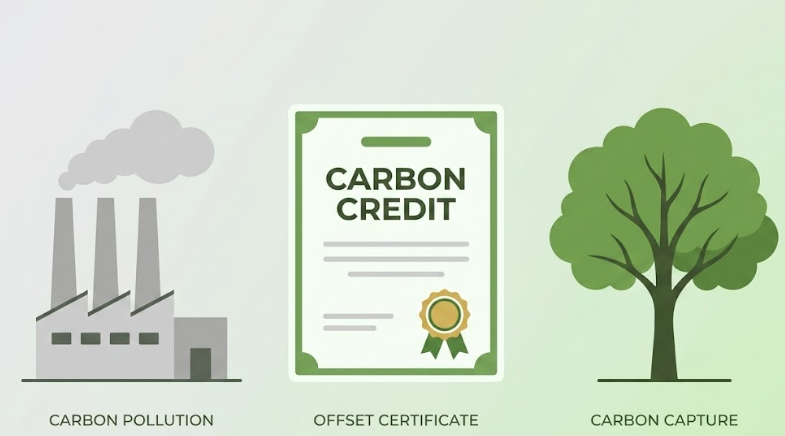
Carbon farming means changing farm practices to cut greenhouse gas emissions or store more carbon in soil and vegetation, and then getting paid for the measured result. A third party verifies the change and a registry issues carbon credits. One credit usually represents one tonne of carbon dioxide equivalent that was avoided or removed. Companies that want to offset emissions buy the credits, and part of the revenue goes back to the farmer.
In India, the practices discussed most often fall into a few groups:
Common Practices Discussed
- Soil carbon and regenerative practices - reduced tillage and better crop residue management instead of burning.
- Rice practices that cut methane - direct seeded rice and better water management.
- Livestock and manure management - including capturing methane from manure.
- Trees on farms and degraded land - which store carbon in biomass.
These practices are measured and credited in very different ways, which matters significantly for how much a farmer can expect to receive.
2. How a Credit Becomes Income
A carbon project has several steps before any money reaches a farmer. Each step takes time, and a gap at any one of them can delay or cancel the payment entirely.
Farmers join a project, usually run by a company, NGO or farmer producer organisation (FPO).
Farmers adopt agreed practices and keep records — activity logs, land boundaries, and input records.
Soil samples, field boundaries, activity logs and satellite data establish what changed relative to the baseline.
An independent body checks the results against a recognised methodology. This step alone can take several months.
A registry (such as Verra or BEE's national offset mechanism) issues credits for the verified result.
Credits are sold to buyers, and farmers are paid according to their contract — which may be upfront, on sale, or a revenue share.
Key Takeaway
Credits are only issued for what can be evidenced. Weak documentation — missing boundary data, incomplete activity logs, or inconsistent soil records — can reduce issuance to zero, however good the actual farming was. Credit generation also varies widely between farms depending on baseline conditions, soil type, climate, and implementation quality.
3. India's Official Framework
The National Carbon Market
India's domestic carbon market is the Carbon Credit Trading Scheme (CCTS), administered by the Bureau of Energy Efficiency (BEE). Parliament passed the Energy Conservation (Amendment) Bill in 2022, which incorporated the aim of developing a domestic carbon market. The scheme has two tracks:
CCTS Tracks
- Compliance track — sets emission-intensity targets for heavy-emitting industries. Farmers are not part of it.
- Offset track — where projects outside the compliance sectors can register and earn credits under approved methodologies. This is the route for agriculture.
The Ministry of Agriculture and Farmers Welfare launched its own framework for the voluntary carbon market in agriculture in January 2024, aimed at helping small and medium farmers benefit from carbon credits.
Which Agricultural Methodologies Are Approved
A methodology is the rulebook that defines how a particular practice is measured and credited. Without an approved one, a farm practice cannot earn credits under the national offset mechanism. BEE's list of approved offset methodologies, last updated on 7 July 2026, shows 12 in total across energy, industry, waste, forestry and agriculture. Only two are agricultural:
Methane recovery from livestock and manure management at households and small farms.
Emission reduction through improved management practices in rice cultivation.
Important Gap
There is currently no approved national methodology for soil carbon from practices like reduced tillage or residue retention — the practices most commonly associated with "carbon farming" in mainstream coverage. The first Aadi payments were issued under Verra's international VM0042 standard, not the national mechanism.
Pilots, Aggregation, and the Missing Income Estimate
In a written Lok Sabha reply on 21 July 2026, the Minister of State for Agriculture said the Ministry is supporting 11 pilot projects on the voluntary carbon market, implemented through seven ICAR institutes and four state agricultural universities. These aim to build technical capacity and develop methodologies for carbon credit generation from regenerative practices.
The government has also published a draft procedure for "Programmes of Activities" (PoA) under the offset mechanism. It would let FPOs, NGOs and project developers bundle many small farm-level activities under one umbrella — which is meant to bring small and marginal farmers in. That matters because a farmer with a small plot cannot realistically run a carbon project alone.
Government's Own Admission
The same Lok Sabha reply included an important admission: the Minister noted that no assessment has been carried out so far on how much income farmers could generate through carbon credit mechanisms. BEE's website was still listing the draft PoA procedure among items open for public comment at the time of writing.
States are also starting to move. Tamil Nadu, for example, was reported in August 2026 to be planning pilot carbon credit projects to help farmers earn additional income.
4. The First Payments: What Actually Happened in September 2026
On 17 September 2026, the Ministry of Agriculture and Farmers Welfare issued a release titled "India's First Soil Carbon Payments Put Farmers at the Centre of Regenerative Agriculture." The details are worth reading closely.
More than ₹2.9 crore was paid to 2,550 farmers in Punjab and Haryana. The Director General of ICAR initiated the Direct Benefit Transfer at Punjab Agricultural University, Ludhiana.
The payments belong to Aadi, a carbon programme run by Grow Indigo. It was launched in 2019 with technical guidance from ICAR. Farmers adopted direct seeded rice, reduced tillage and crop residue management between 2019 and 2022. Results were independently verified under Verra's VM0042 methodology.
It covered around 30,000 acres and more than 50,000 carbon credits. Farmers received approximately ₹3,000 to ₹15,000 according to the Ministry's release. Grow Indigo's own release gives: average payment of ₹11,478, minimum ₹3,000, maximum ₹1,17,985, with most farmers in the ₹4,000 to ₹15,000 range.
Farmers could choose an assured upfront payment or 75 percent of the net carbon revenue after the credits were sold. Grow Indigo released the payments from its own funds before the credits were fully sold, so farmers did not have to wait for sale proceeds.
The programme began in 2019. The Aadi project was approved under Verra’s VCS in January 2026, with its first issuance covering around 30,000 acres and more than 50,000 carbon credits. Payments followed in September 2026 — roughly seven years from programme launch to first payout.
What It Means
An average of roughly ₹11,500 per farmer is real money, but it is a payout covering several seasons of practice and years of waiting not an annual salary. Grow Indigo itself described the programme as the first instance in India of farmers being paid for carbon stored in soil. The company projected that carbon revenue could raise participating farmers' income by around 7 percent at maturity. That is a company estimate, not an independent finding.
5. Who Gets What: Revenue Sharing and Prices
Farmers rarely sell credits directly. A developer or aggregator sells them and shares part of the revenue. The split varies widely — and the percentage alone tells a farmer very little. What matters is what the percentage applies to, what is deducted first, and when the payment arrives.
What to Watch For in Revenue Splits
- Some developers quote a percentage of gross revenue; others deduct verification, monitoring and platform costs first and share only the net.
- One example from 2026 reporting:Boomitra allocates 55% of gross carbon revenue to farmers and 20% to local implementation partners. Other developers use different benefit-sharing structures.
- Late-2025 prices for VM0042 projects in emerging markets reportedly fell in the range of USD 15 to 45 per tonne, according to one developer quoted in trade media.
- A 2024 peer-reviewed study in Scientific Reports cited much lower marketplace prices of USD 2 to 6, with over-the-counter deals at USD 15 to 25.
- Quotes differ several-fold depending on buyer, standard, and year. No single price should be treated as reliable for planning purposes.
6. What Farmers and Researchers Report from the Ground
Field Reporting from Uttar Pradesh
An ISignal investigation, republished by India Development Review in August 2026, followed farmers enrolled in private carbon projects in Sitapur and Bahraich. Several findings stand out:
One farmer recalled being told he could earn ₹2,500 to ₹3,000 per acre from credits but doubted it would materialise. The companies could not say how much farmers would eventually earn because it depends on credit volume and sale price.
A subsidy for avoiding residue burning fell from ₹1,750 to ₹700 in 2025. A farmer who believed he had followed the practices carefully did not understand why his payment was reduced.
Of 19 farmers interviewed, 15 reported lower yields after first adopting it. Agronomists quoted in the piece linked this partly to inadequate early training and technique.
All farmers who moved away from burning reported better yields. One two-acre farmer calculated a net gain of about ₹4,400 per acre, mostly from savings and better wheat output rather than carbon credits.
Soil samples were collected every year, but farmers said they never saw the reports. Transparent data should be a basic right in any carbon programme.
Research on Earlier Projects
A 2024 study in Climate Policy examined existing carbon farming projects in India. It surveyed 841 farmers in seven project villages in Haryana and Madhya Pradesh. It found that 99 percent had not received any money from carbon credits. It also found that farmers in the carbon projects were predominantly larger landholders from non-marginalised castes, and that only 4 percent were women.
Context on the Study
This was a survey of a limited set of villages, and its data predates the first Aadi issuance. It does not describe all of India today. But it explains why the early years looked thin, and it raises a fair question about whether the smallest and most marginalised farmers are being meaningfully reached by carbon programmes.
7. Why the Income Is Slow and Modest
Structural Barriers
- Long cycles - Measurement, verification and issuance take years. Aadi's first payments came about seven years after launch.
- Small farms - Most Indian farms are small or marginal, so even a decent per-hectare credit yield produces a small absolute payment. That is the problem aggregation through FPOs is meant to solve, and the draft PoA procedure is still a draft.
- Documentation - Credits are issued only for what can be evidenced. Weak documentation, missing boundary data, incomplete activity logs, or inconsistent records can reduce the amount of creditable activity and, in serious cases, prevent credits from being issued.
- Additionality - A practice must go beyond what farmers would do anyway to qualify. The Scientific Reports study found that eligibility can vary by district. Practices already widely adopted in an area may not earn credits there.
- Permanence - Carbon stored in soil or trees can be released again if practices stop or land is disturbed. Soil and biomass carbon can be reversed if practices stop or land is disturbed, which makes permanence an important consideration for nature-based projects. Crediting and monitoring periods vary substantially by methodology and programme.
- Few approved national methodologies - Under the national offset mechanism, agriculture has only two methodologies, neither covering soil carbon. Most early-stage soil carbon projects in India are therefore using international standards like Verra.
8. The Case for Optimism
A balanced view must also recognise the upside that modelling and early evidence point toward.
A 2024 Scientific Reports study estimated that if just one-third of wheat area in each state joined conservation agriculture carbon projects, Bihar could generate roughly 900,000 credits and Punjab roughly 2.3 million per wheat season. Farmers' share was estimated at around USD 14 million for Bihar and USD 34 million for Punjab under the study's assumptions.
Under the study's assumptions (60 percent farmer share, higher end of the price range), a typical Bihar farmer might earn about ₹900 per wheat season (roughly 2 percent of income) and a typical Punjab farmer about ₹11,000 (around 7 percent). The gap reflects differences in farm size and credit yield per hectare.
There is now an approved rice methodology, accredited verification agencies, a draft aggregation route, pilots through ICAR institutes and state universities, and first-ever farm-level payments with ICAR involved in the disbursement.
Practices such as residue management and direct seeding can reduce labour, water or burning-related costs. The UP reporting shows the agronomic gains are often larger than the carbon payment itself.
Grow Indigo's decision to pay before credits were fully sold directly addresses the biggest practical barrier for farmers: waiting. This model — developer absorbs the timing risk — is a significant innovation for farmer trust.
9. A Checklist Before a Farmer Signs
Before joining any carbon farming project, farmers and their advisers should get clear written answers to these questions:
Questions to Ask
- What exactly will I be paid, and when? Is it an assured upfront amount, a revenue share, or both? Is the share on gross or net revenue?
- What is deducted before my share? Ask for the full breakdown, including partner fees and verification costs.
- Which standard and methodology are being used? Verra, another international standard, or the national offset mechanism?
- How long must I keep the practice, and what happens if I stop or the land changes hands?
- What will the practice cost me in the first year — machinery, labour, herbicide, and a possible yield dip?
- Will I see my soil reports and my credit volumes? Transparent data should be a basic right.
- What documents and data do you need from me — land records, boundaries, bank details? How are they stored and who else can access them?
- Is an FPO or independent body involved? Collective bargaining can improve terms significantly.
- What happens if my credits are lower than projected? Ask whether anything is guaranteed.
A Useful Rule of Thumb
Adopt a practice because it pays on its own agronomic terms — lower input costs, better water efficiency, improved yields over time — and treat carbon income as an upside, not the primary reason to change how you farm.
10. The Bottom Line
Can Indian farmers earn income through carbon farming? Yes, in an early-stage and limited way. The September 2026 payments show it is no longer theoretical, and the legal and institutional framework now exists. But the record also shows:
An average of about ₹11,500 in the first payout, covering several seasons of practice adoption, after years of waiting.
The Ministry itself confirmed no income assessment has been carried out.
Only two agricultural methodologies are approved under the national offset mechanism, and neither covers soil carbon.
The aggregation procedure (PoA) that would make the scheme viable for marginal farmers is still at draft stage.
Yield dips, changing incentives, and information gaps are reported in real projects. Earlier research found very few farmers had been paid.
Carbon income has arrived for Indian farmers. It is real, but it is still small, slow and conditional — and farmers should judge any offer by its terms, not its promise.
Sources Used in This Article
Ministry of Agriculture and Farmers Welfare (PIB), "India's First Soil Carbon Payments Put Farmers at the Centre of Regenerative Agriculture," 17 September 2026. Bureau of Energy Efficiency, Methodologies and Tools under Offset Mechanism (last updated 7 July 2026). Written Lok Sabha reply of 21 July 2026, as reported by PTI via Outlook Business. Grow Indigo release on India's first soil carbon credit payment (September 2026). Climate Policy (2024), study of carbon farming projects in India. Scientific Reports (2024), study on conservation agriculture and carbon credits in Bihar and Punjab. India Development Review and ISignal (2026), reporting on carbon farming in Uttar Pradesh.
Build Better Carbon MRV with Sylithe
Sylithe helps carbon farming, restoration and nature-based projects turn field data into credible, structured MRV evidence. From verified project boundaries and satellite imagery to LiDAR, RGB and drone observations, Sylithe brings the data needed to monitor what is actually happening on the ground. Use Sylithe to build project evidence, track changes over time, support verification, and generate structured MRV reports — so every hectare has a clearer, traceable evidence trail. Better data. Stronger MRV. More defensible carbon projects.
Key Figures at a Glance
Summary of the most important numbers from the September 2026 first payments and related research.
| Metric | Figure | Source | Status |
|---|---|---|---|
| Total first payout | ₹2.9 crore to 2,550 farmers | Ministry of Agriculture PIB, Sep 2026 | Confirmed |
| Average payment per farmer | ₹11,478 | Grow Indigo, Sep 2026 | Confirmed |
| Payment range | ₹3,000 to ₹1,17,985 | Grow Indigo, Sep 2026 | Confirmed |
| Area covered | ~30,000 acres | Ministry of Agriculture PIB | Confirmed |
| Programme timeline | 7 years (2019–2026) | Aadi / Grow Indigo | Confirmed |
| Approved agri methodologies (CCTS) | 2 of 12 total | BEE, July 2026 | Active |
| Government income assessment | Not yet conducted | Lok Sabha, July 2026 | Pending |
| ICAR pilot projects | 11 underway | MoAFW, July 2026 | Active |