 New
New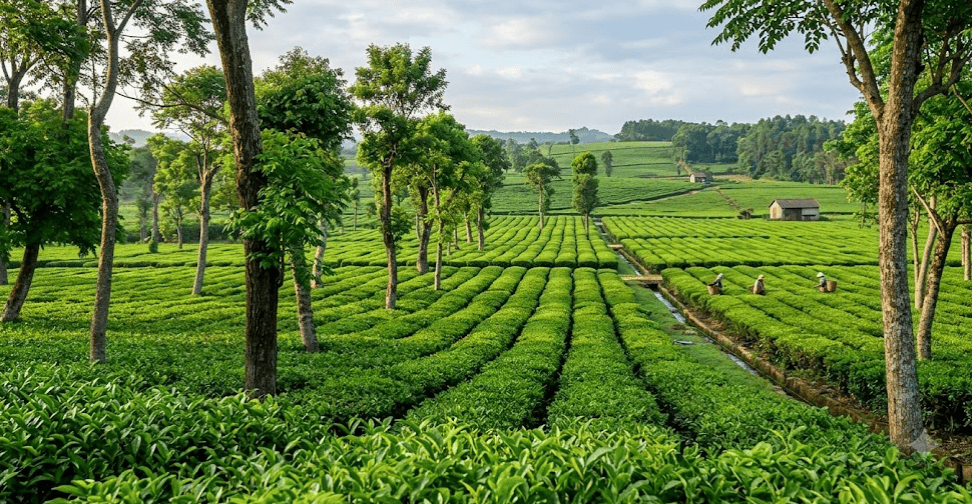
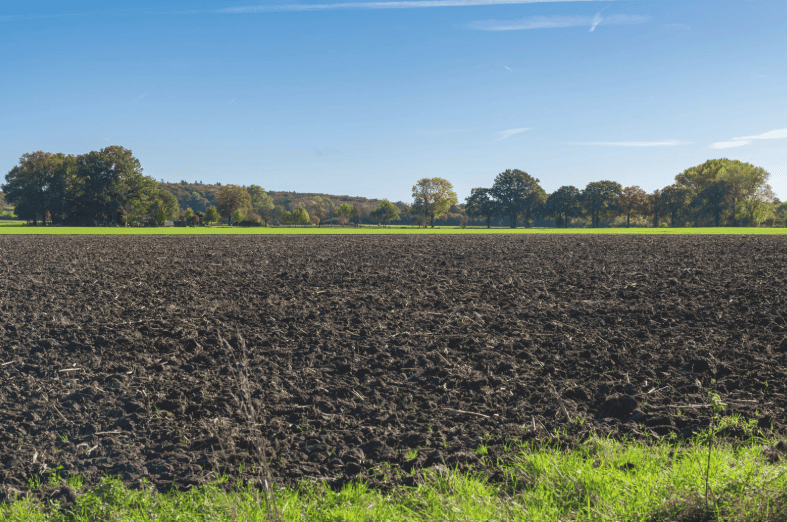
A mango tree on a smallholder farm in Uttar Pradesh sequesters real carbon. No one is paying the farmer for it, because no one has figured out how to measure 400 million trees from space.
India is an agroforestry superpower. While the world's attention is fixed on the Amazon and the Congo, India has been quietly building a massive 'Hidden Forest'. There are approximately 28 million hectares of trees on Indian farms that is larger than the total forest area of many European nations. Yet, until recently, this carbon pool was invisible to the global markets. It was too fragmented to measure, too expensive to audit, and too complex to aggregate.
That is changing. A combination of new carbon methodologies (like Verra's VM0047), sub-metre satellite sensors, and AI crown-detection algorithms is finally unlocking the 'Tree-on-Farm' market. For India's 120 million smallholder farmers, this represents the single largest opportunity to diversify their income while making their land more resilient to climate change.
The Scale of the Opportunity: 28Mha of Unlocked Value
According to the Forest Survey of India (FSI), 'Trees Outside Forests' (TOF) contribute significantly to India's total carbon stock. Agroforestry accounts for nearly 40% of the total TOF area. These aren't just 'extra trees'; they are high-performance carbon sinks. Unlike old-growth forests which are often in carbon equilibrium, young agroforestry systems are in a high-growth phase, sequestering carbon at a rapid rate.
If we could monetise even 10% of India's agroforestry area, we would create a carbon supply of 30-50 million tonnes per year. At $20/tonne, that is ₹5,000–8,000 crore entering the rural economy annually. This isn't charity; it is a payment for a verified environmental service.
Why Agroforestry Credits Are Different From REDD+
A common misconception in the voluntary carbon market is equating agroforestry projects with traditional forest conservation, such as REDD+ (Reducing Emissions from Deforestation and forest Degradation). While both involve trees, their economic, structural, and methodological profiles are completely different. For institutional buyers, understanding this distinction is crucial to assessing credit quality.
Key Takeaway
REDD+ projects fundamentally generate 'Avoidance' credits - they are designed to protect existing forests from being cut down. However, proving that a forest would have been destroyed without carbon finance (additionality) and ensuring it won't be cut down later (permanence) has proven highly controversial. In contrast, agroforestry generates 'Removal' credits. Farmers actively plant new trees, actively sequestering new carbon from the atmosphere. This is far easier to prove and significantly more valuable to buyers aiming for Net Zero.
Key Takeaway
Furthermore, REDD+ projects typically occur on massive tracts of state-owned or contested forest land, leading to complex land tenure conflicts and indigenous rights issues. Indian agroforestry projects, however, take place on private farmland with undisputed ownership, drastically reducing legal and social risks.
Structural Differences: REDD+ vs. Agroforestry
| Attribute | REDD+ (Avoided Deforestation) | Agroforestry (Tree-on-Farm) |
|---|---|---|
| Credit Type | Avoided Emissions | Carbon Removals |
| Land Type | State or community forest land | Private agricultural farms |
| Ownership & Tenure | Complex, often contested | Clear, individual ownership |
| Project Scale | Few large-scale projects | Millions of aggregated smallholders |
| Primary Risk | Baseline manipulation, leakage | Measurement scalability |
Why Traditional MRV Failed the Indian Farmer
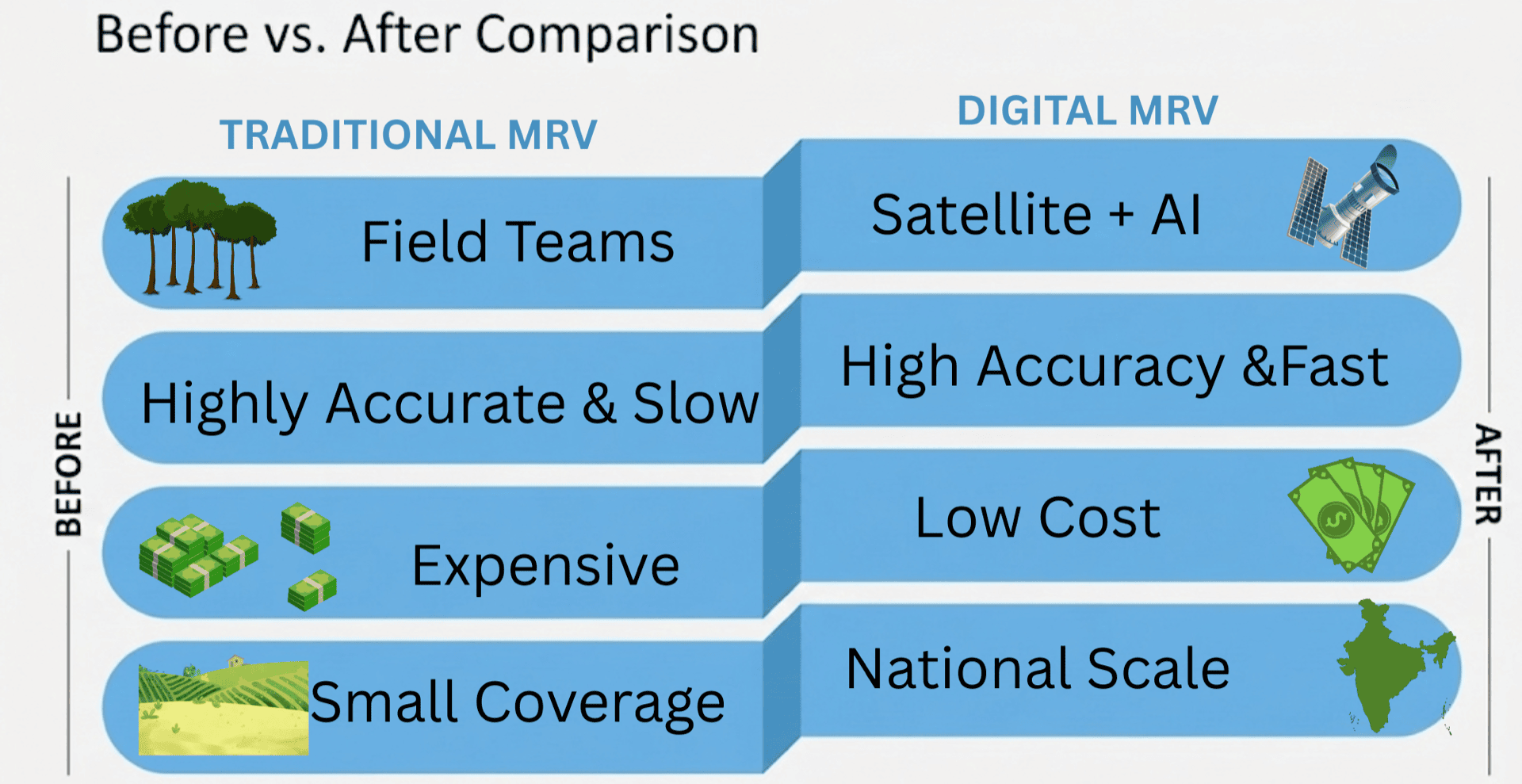
The carbon market has historically been 'Biased toward the Big'. If you had 50,000 hectares in Brazil, you could afford the $100,000 audit fee. If you were a farmer in Maharashtra with 50 trees, you were excluded. The barriers were three-fold:
Why It Matters
- Resolution Gap: Standard satellites (Sentinel/Landsat) have a 10m-30m resolution. An individual neem or mango tree on a farm boundary is smaller than a single pixel. To the satellite, it just looks like noise.
- Fragmentation Cost: Sending an auditor to visit 1,000 farmers across 50 villages is logistically impossible at a $10/credit price point.
- Additionality Hurdles: Proving that a farmer wouldn't have planted the tree anyway is harder on private land than in a threatened state forest.
The Technology Stack: Crown Detection and SAR
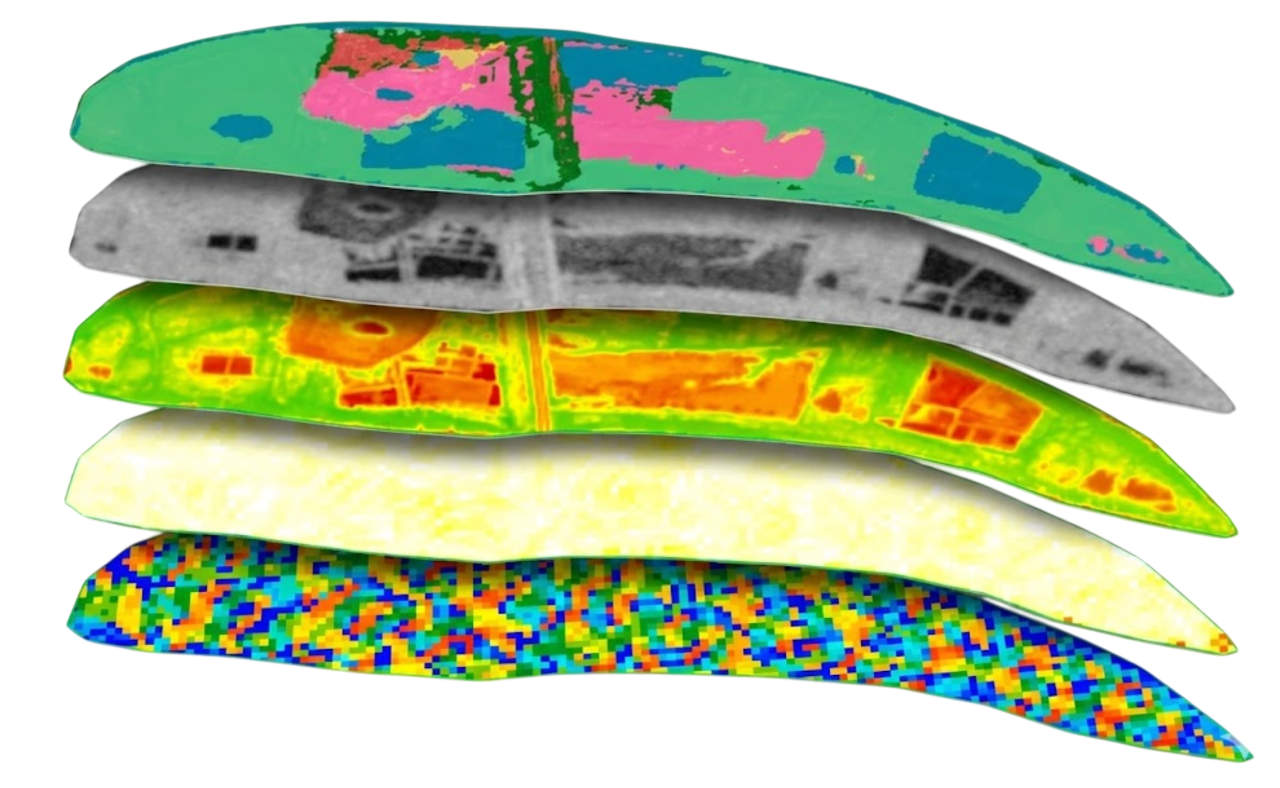
To solve the agroforestry problem, we had to move from 'Area-Based Monitoring' to 'Object-Based Monitoring'. Sylithe's agroforestry pipeline uses a three-layer technology stack.
Layer 1: Individual Tree Detection (ITD)
We use 30cm-50cm satellite imagery (from providers like Maxar or Airbus). Our deep learning models perform 'Instance Segmentation', identifying the unique 'Crown' of every tree. We can even distinguish between species (e.g., Poplar vs. Eucalyptus) based on their spectral and textural signatures.
Layer 2: Sub-Metre SAR (Radar)
Optical imagery only sees the top of the leaf. SAR (Synthetic Aperture Radar) can penetrate the canopy to 'feel' the wood volume. By combining the crown area from optical with the backscatter intensity from SAR, we can estimate the 'Biomass' of individual trees with high accuracy, even in cloudy regions like Kerala or the Northeast.
Layer 3: Smallholder Aggregation Platforms
We provide the 'Digital Infrastructure' for aggregators. We create a 'Digital Passport' for every farmer, containing their farm boundaries, tree counts, and carbon sequestration history. This data is audit-ready, allowing a single Verra auditor to verify 10,000 farms from their desk in London.
The VM0047 Advantage: Why Methodology Matters
Verra's new VM0047 methodology is a breakthrough for Indian agroforestry. Unlike older methodologies that required fixed 'Static Baselines' (which often penalized farmers who had already started planting), VM0047 allows for 'Dynamic Performance Baselines'.
It also simplifies the requirements for 'Small-Scale' projects. By allowing for remote-sensing-based monitoring as the primary evidence source (rather than secondary to field visits), it reduces the MRV cost by up to 80%. This shift is what finally makes $15-$25 carbon prices work for a farmer with only a few acres.
What Could a Farmer Actually Earn?
Carbon finance often sounds abstract. To understand why it matters for Indian agriculture, we must look at the concrete unit economics for a typical smallholder.
Imagine a farmer in Maharashtra with 1 hectare of land. They plant 50 boundary trees (like Neem, Melia dubia, or Mango) that don't interfere with their primary crop. Once these trees mature, they sequester approximately 3 to 5 tonnes of CO₂ equivalent (tCO₂e) per year. At a conservative market price of $20 per high-quality removal credit, this generates $60 to $100 annually.
Even after the aggregator and MRV platform take their necessary service fees, the farmer can earn ₹5,000 to ₹8,000 annually in pure supplemental income. While this might seem modest to a corporate buyer, for a smallholder farmer in India, this recurring, climate-resilient revenue stream can cover agricultural inputs, insurance, or school fees, transforming the economics of rural livelihoods.
The Future: Carbon as the New Cash Crop
For the Indian farmer, trees have always been a 'Savings Account' they are cut and sold when a daughter gets married or a son goes to college. Carbon markets turn those trees into a 'Current Account' providing annual payments while the tree is still standing.
As India's domestic carbon market (CCTS) matures, we expect a massive surge in demand for 'High-Removal' agroforestry credits. Companies in the food and beverage sector (Nestle, ITC, PepsiCo) will need these credits to meet their SBTi FLAG targets. The farmer in Uttar Pradesh is no longer just a food producer; they are a carbon sequesterer.
Agroforestry is the only carbon project type that can scale to 100 million people without needing 100 million hectares of new land.
Scale your agroforestry project
Sylithe is building the world's most accurate individual-tree-detection pipeline for Indian smallholders. We help FPOs, Ag-Techs, and NGOs aggregate thousands of farmers into high-integrity carbon projects using VM0047. If you are ready to turn 'Trees Outside Forests' into a liquid financial asset, let's talk.