 New
New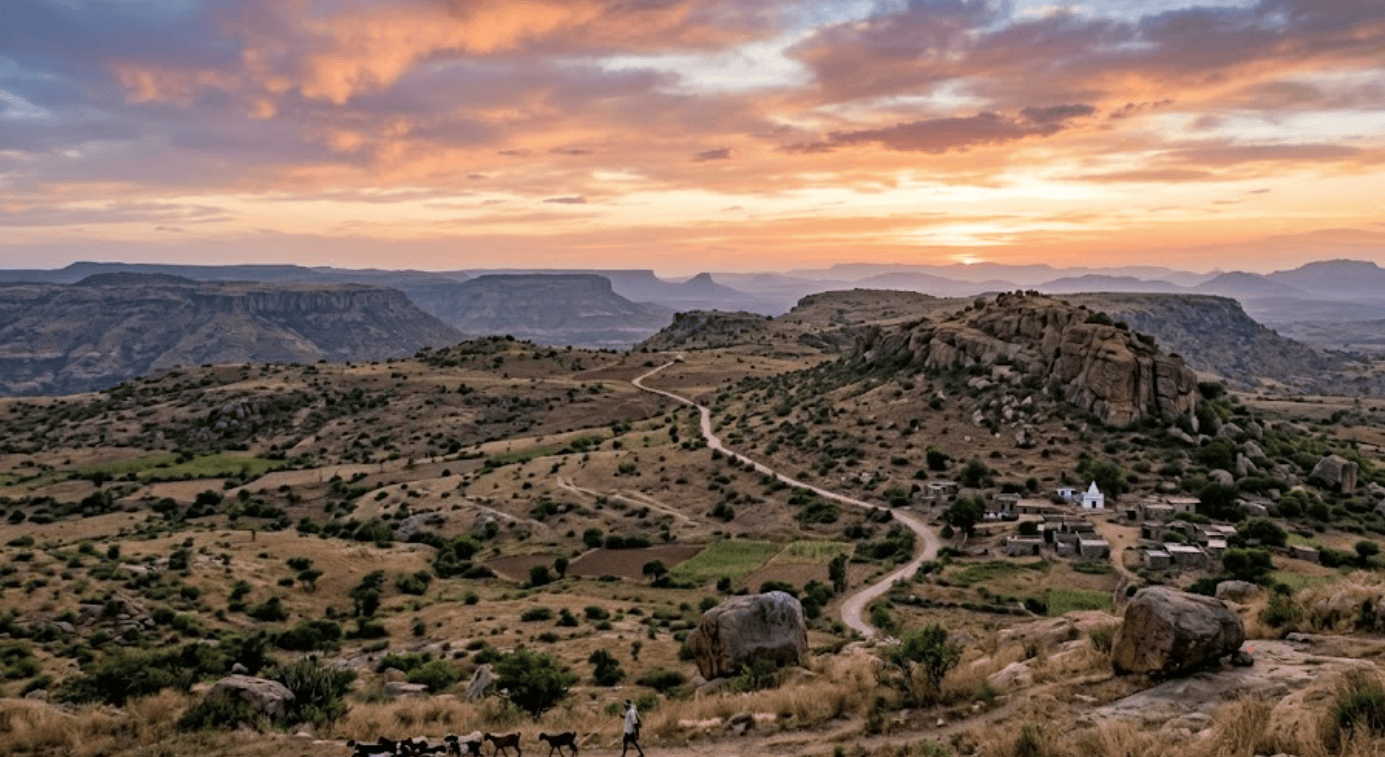
A grassland is a forest turned upside down. Most of the carbon is in the roots and the soil, safe from fire and pests. In the rush to 'reforest' the planet, we are destroying India’s ancient carbon vaults.
If you ask a corporate sustainability officer to describe a carbon project, they will invariably describe a forest. The cultural obsession with 'Tree Planting' has created a massive blind spot in climate finance. While we spend billions planting saplings that often die within three years, we are actively destroying some of the most stable carbon reservoirs on the planet: our natural grasslands.
In India, the Deccan Plateau represents one of the most critical, yet overlooked, landscapes for nature-based solutions. These savannas and 'Open Natural Ecosystems' (ONEs) are not 'Failed Forests' or 'Wastelands'. They are complex, high-sequestering environments that store carbon in the one place it is truly safe: underground.
The Stability Advantage: Why Grassland Carbon Is More Reliable
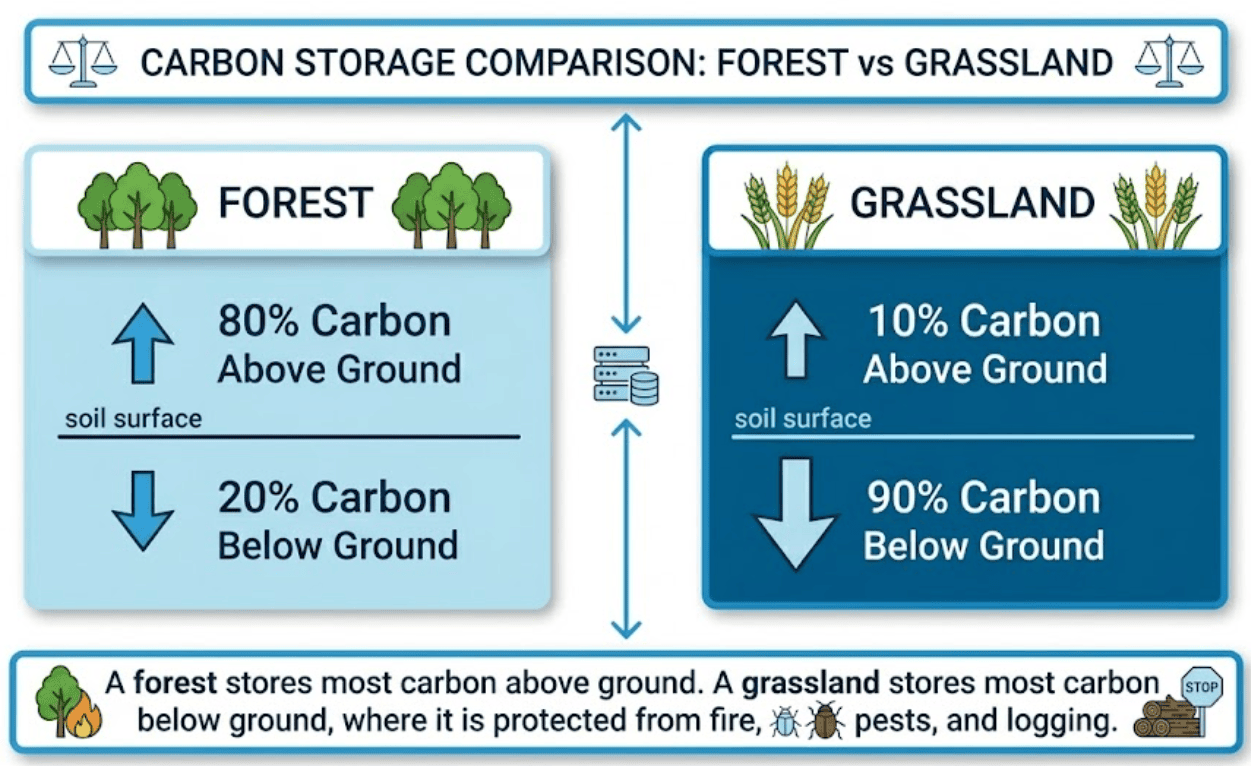
The primary risk in any nature-based carbon project is 'Reversal' the risk that the carbon you stored today is released tomorrow due to fire, disease, or illegal logging. This is the 'Permanence' problem that has plagued forest projects in the Amazon and Southeast Asia.
Grasslands have a structural advantage in permanence. Because their carbon is stored as 'Soil Organic Carbon' (SOC) and deep root systems, it is protected from surface-level disturbances. A wildfire that destroys a forest and releases its entire carbon stock to the atmosphere will merely singe the surface of a grassland. The soil carbon remains locked away. In a climate-uncertain future, this makes grassland carbon a 'Lower-Risk' asset for institutional buyers.
The Afforestation Trap: When Tree Planting Causes Carbon Loss
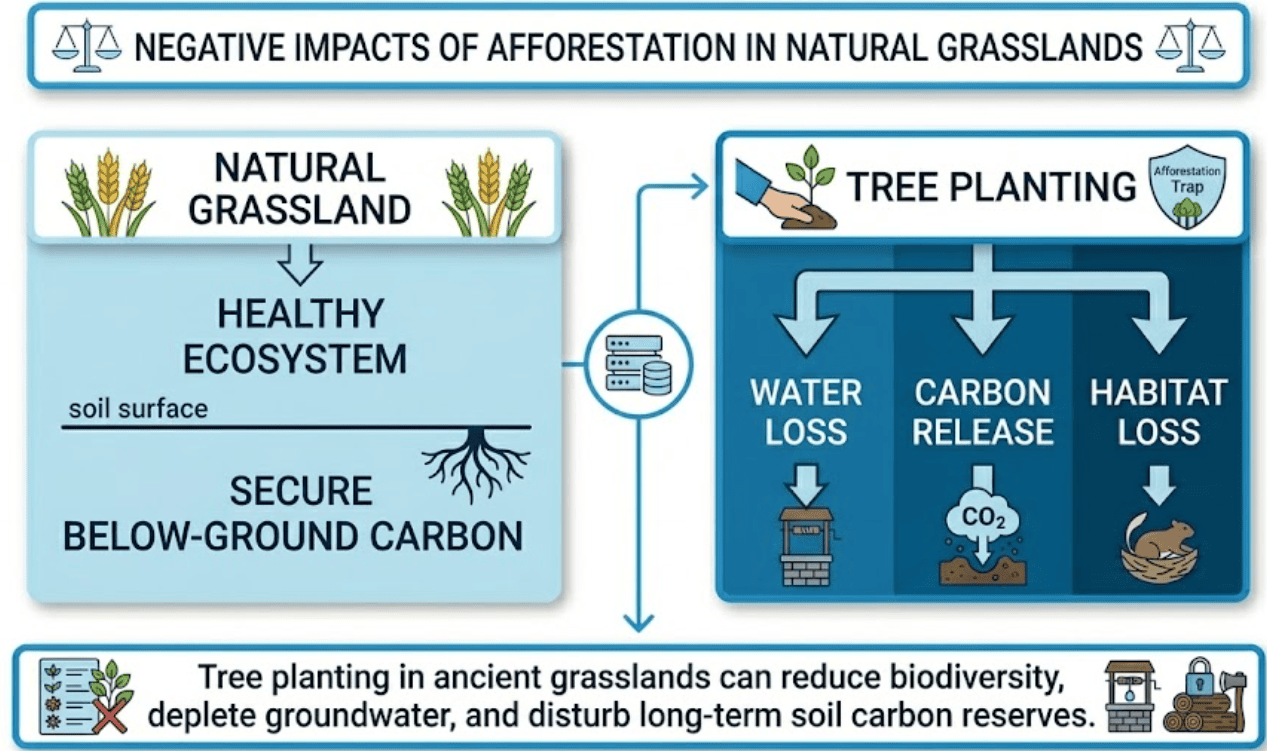
The most dangerous phrase in Indian environmental policy is 'Greening the Wastelands'. For decades, the goal has been to achieve '33% Forest Cover' by planting trees in every available open space. When this happens in natural grasslands, it is an ecological disaster called 'Afforestation'.
Why It Matters
- Water Depletion: Native grasses are drought-adapted. Invasive trees (like Eucalyptus or Prosopis) act as "Water Pumps", sucking up groundwater and drying out the landscape.
- Carbon Release: The act of digging pits for millions of saplings disturbs the ancient soil crust, leading to a "Carbon Flush" where stored SOC is oxidized and released as CO2.
- Biodiversity Collapse: Species like the Indian Grey Wolf, the Blackbuck, and the Great Indian Bustard cannot live in a dense forest. They need open skies. Afforestation is the primary driver of their extinction.
A study in the semi-arid regions of the Deccan found that certain 'reforested' plots had *less* total ecosystem carbon than the original native grasslands they replaced, once you accounted for the loss of deep soil carbon. We must stop treating trees as the only unit of climate success.
Measuring the Invisible: MRV for Grassland Carbon
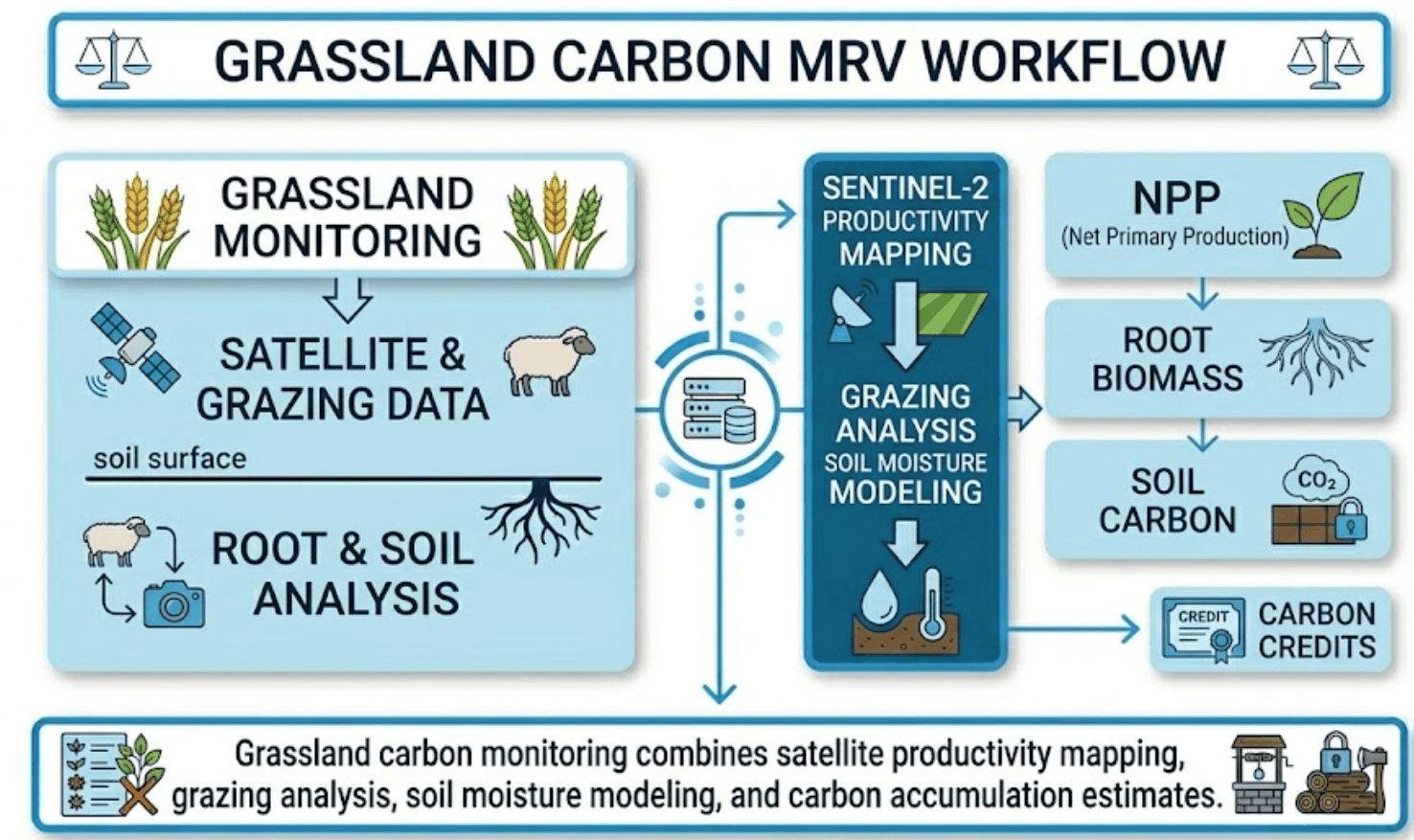
If the carbon is underground, how do we prove it is there? This is the MRV challenge that has kept grasslands out of the carbon market for so long. Sylithe's grassland monitoring pipeline uses a 'Proxy-and-Model' approach.
1. Net Primary Productivity (NPP) Mapping
We use Sentinel-2 to measure the 'Greenness' (NDVI) and 'Moisture' (NDWI) of the grass throughout the year. We can calculate exactly how much biomass is being produced. In a grassland, a fixed percentage of this biomass is 'Allocated' to the roots every year. We use root-to-shoot ratios (RSR) calibrated for the Deccan to estimate the carbon input to the soil.
2. Grazing Intensity Monitoring
Overgrazing is the primary driver of grassland degradation. We use high-resolution satellite imagery to identify 'Trampling Paths' and vegetation thinning. By managing grazing (e.g., 'Rotational Grazing'), we can increase the rest period for the grass, allowing it to pump more carbon into the soil. We monitor this 'Management Intervention' via satellite to verify that the project rules are being followed.
3. Soil Moisture and Temperature Models
Carbon decomposition is driven by moisture and heat. We use SAR (Sentinel-1) and thermal bands to build a daily 'Decomposition Model'. If a project prevents the soil from drying out (by restoring native grass cover), the decomposition rate slows down, leading to a net gain in stored carbon.
Why Grasslands Were Ignored By Carbon Markets
For decades, carbon markets developed around forests because trees are easy to see and easy to measure. Satellite imagery can count canopy cover, estimate biomass, and generate visually compelling maps. Grasslands presented a much harder challenge because most of their carbon exists below ground.
This measurement bias created a policy bias. Investors, governments, and carbon registries often assumed that landscapes without trees stored little carbon. Modern soil carbon science has shown that assumption to be incorrect.
The emergence of advanced MRV technologies is beginning to change this dynamic. Satellite monitoring, soil carbon models, and ecological indicators now allow grassland projects to demonstrate climate benefits with increasing confidence.
As buyers look for more durable removals and stronger biodiversity outcomes, grassland restoration may become one of the most important emerging categories in nature-based carbon markets.
The Economic Path: Grassland Carbon Credits
For the local communities on the Deccan, 'Grassland Carbon' is a way to monetise traditional pastoralist knowledge. Instead of being told to stop grazing, they are paid to manage grazing better. This creates a 'Livelihood-First' carbon model that is much easier to scale than restrictive forest conservation.
The price of 'Removal-Based Soil Carbon' is currently at a premium in the voluntary market. Buyers who are tired of the controversies in REDD+ are looking for 'High-Integrity Removals' that also deliver biodiversity co-benefits. A Deccan project that protects the Great Indian Bustard while sequestering soil carbon is a 'Triple-A' asset in 2026.
A Call for Ecological Realism
We need to update India's environmental metrics. We should stop measuring success in 'Hectares of Trees Planted' and start measuring it in 'Tonnes of Ecosystem Carbon Protected'. The Deccan Plateau doesn't need to be 'reclaimed'; it needs to be respected as the ancient, high-capacity carbon vault that it is.
The best thing we can do for the climate in the Deccan is to let the grass grow and keep the trees out.
Design your grassland carbon project
Sylithe provides the most advanced 'Upside-Down Forest' monitoring for Indian savannas. We combine soil moisture proxies with high-resolution NPP modeling to provide audit-ready verification for grassland restoration. If you are ready to protect India's most misunderstood carbon sink, we should talk.