 New
New
Imagine planting a forest that captures thousands of tonnes of carbon dioxide over the next twenty years. The project earns carbon credits because those trees are removing carbon from the atmosphere. But ten years later, a severe wildfire destroys much of the forest, releasing most of that stored carbon back into the atmosphere. Did the climate benefit still exist? This simple question sits at the heart of one of the most important concepts in carbon markets: permanence. Carbon credits are designed to represent real and measurable climate benefits. However, those benefits only hold value if they continue over time. If the carbon stored by a project is later released, part—or in some cases all—of the original climate impact can be lost. As voluntary carbon markets mature and buyers demand greater transparency, permanence has become one of the strongest indicators of carbon credit quality. Today, investors, corporations, registries, and verification bodies increasingly ask not only how much carbon a project removes, but also how long that carbon will remain stored. Understanding permanence is therefore essential for anyone developing, purchasing, or evaluating carbon credits.
What Is Permanence in Carbon Credits?
Permanence refers to the ability of a carbon project to keep greenhouse gases out of the atmosphere over the long term.
In simple terms, permanence answers one question:
Will the carbon stay stored, or could it be released back into the atmosphere in the future?
Every carbon credit represents one metric tonne of carbon dioxide equivalent (tCO₂e). For that credit to maintain its environmental value, the associated carbon reduction or removal must remain valid over time.
Examples of Storage
- A restored mangrove forest stores carbon in vegetation and soil.
- An afforestation project captures carbon as newly planted trees grow.
- A biochar project locks carbon into a stable material that can remain in soil for hundreds of years.
- A Direct Air Capture facility removes carbon dioxide directly from the atmosphere and stores it deep underground.
Although each project removes or stores carbon, the likelihood that the carbon remains safely stored differs significantly. This difference is what permanence measures.
Why Permanence Is So Important
Climate change is driven by greenhouse gases that remain in the atmosphere for extremely long periods. Carbon dioxide released today can continue influencing the climate for hundreds of years. That means temporary carbon storage cannot always compensate for emissions that persist over similar timescales.
If stored carbon is released after only a few years, the original climate benefit may be partially or completely reversed. For buyers, this creates uncertainty.
Stores carbon in a well-managed forest. Continuously monitors ecosystem health. Has fire management plans. Maintains legal protection for the land. Uses satellite monitoring and regular verification.
Has limited monitoring. Faces frequent illegal logging. Operates in a region with increasing wildfire risk. Lacks long-term land protection.
Although both projects initially generate the same number of credits, buyers are likely to place greater confidence—and often greater value—on Project A because its climate benefits are expected to last longer. This is why permanence has become a major factor influencing both carbon credit quality and market value.
Permanence Is About Risk, Not Certainty
No carbon project can guarantee that stored carbon will remain untouched forever. Natural ecosystems change. Weather patterns evolve. Human activities shift over time. Policies change. Even engineered storage systems require monitoring and maintenance.
Instead of asking whether carbon storage is absolutely permanent, carbon markets evaluate the probability that stored carbon will remain intact for a sufficiently long period.
Projects with lower reversal risk are generally considered to have stronger permanence. Those with higher risks often require additional safeguards before credits can be issued.
Permanence vs Durability
Although the two terms are sometimes used interchangeably, permanence and durability describe different aspects of long-term carbon storage.
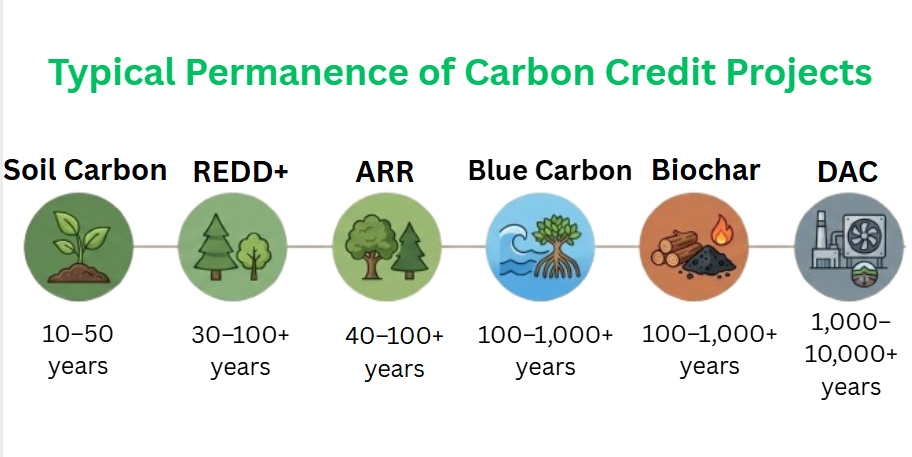
Durability refers to the expected length of time that carbon remains stored under normal conditions. For example, forest carbon may remain stored for decades or centuries if the forest remains healthy. Biochar can retain carbon for hundreds of years. Mineralized carbon stored underground may remain stable for thousands of years. Durability focuses on the intended storage period.
Permanence, on the other hand, considers the likelihood that this storage will actually be maintained. Even if a project is designed for long-term storage, unexpected events can reduce its permanence.
For example: A forest may have the potential to store carbon for more than one hundred years, but if wildfires become more frequent or land ownership changes, the risk of carbon loss increases. In contrast, geological storage associated with Direct Air Capture generally faces much lower reversal risk because the carbon is stored deep underground under carefully monitored conditions.
Both concepts are important. Durability tells us how long carbon is expected to stay stored. Permanence evaluates the confidence that this storage will actually continue over time.
Why Permanence Has Become More Important
In the early years of voluntary carbon markets, buyers often focused primarily on the number of credits available. As long as projects met certification requirements, relatively little attention was paid to how resilient those climate benefits would remain over future decades.
That has changed significantly. Growing scientific understanding, increasing climate risks, and greater scrutiny of carbon markets have shifted attention toward the long-term integrity of carbon projects.
Today, companies are expected to demonstrate that the carbon credits they purchase represent genuine and lasting climate benefits.
Questions that matter today
- Could wildfire destroy the forest?
- What happens if the land is converted to agriculture?
- How often is the project monitored?
- Are there contingency plans if carbon is released?
- Can satellite data verify that the carbon still exists?
These questions all relate directly to permanence. Rather than viewing permanence as a technical requirement, many buyers now consider it a fundamental indicator of project credibility.
What Causes Carbon Reversal?
Permanence is closely tied to the concept of carbon reversal.
A carbon reversal occurs when carbon that was previously stored or emissions that were avoided are released back into the atmosphere, reducing or eliminating the climate benefit created by a carbon project.
Not every carbon project faces the same reversal risk. The probability and severity of reversal depend on the project type, local environmental conditions, governance, and long-term management practices.
1. Wildfires
Wildfires are among the most significant threats to forest carbon projects. Trees and vegetation act as natural carbon sinks, storing large amounts of carbon in trunks, branches, roots, and surrounding soils. When a wildfire burns through a forest, much of this stored carbon is released back into the atmosphere as carbon dioxide and other greenhouse gases.
Project developers often reduce wildfire risk through firebreak creation, controlled vegetation management, early warning systems, continuous satellite monitoring, and community-based fire prevention programs.
2. Illegal Logging and Land Conversion
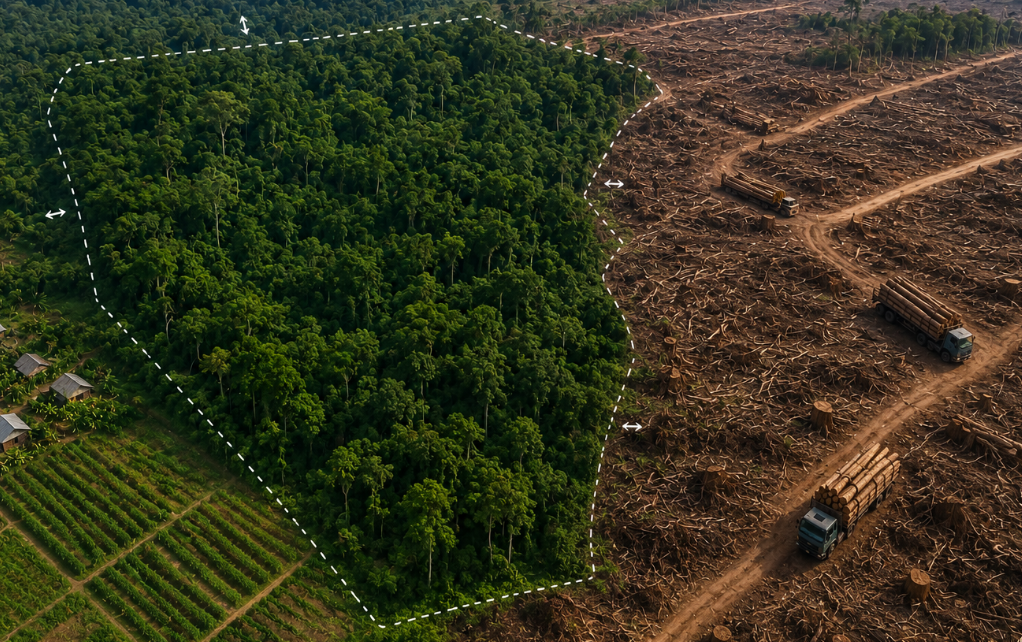
Human activities remain one of the leading causes of carbon reversal. A protected forest may successfully store carbon for many years, but if the land is later cleared for agriculture, mining, infrastructure, or urban expansion, decades of stored carbon can be released within a short period.
Long-term land tenure, legal protection, and community engagement are therefore essential components of permanence planning.
3. Pests and Disease
Forests are living ecosystems. Insect outbreaks, invasive species, fungal infections, and plant diseases can damage large areas of vegetation, reducing biomass and releasing stored carbon as trees die and decompose.
Diversified forest restoration, species selection, and ecological monitoring help improve resilience against these threats.
4. Floods, Storms, and Extreme Weather
Nature-based carbon projects are increasingly exposed to extreme weather events. Cyclones, hurricanes, floods, prolonged droughts, and landslides can damage forests, wetlands, and coastal ecosystems that store carbon. These events do not always eliminate a project's climate benefit, but they can reduce carbon storage capacity and increase reversal risk.
5. Poor Project Management
Not every permanence risk comes from nature. Projects may fail because of inadequate funding, weak governance, poor monitoring, lack of local community involvement, insufficient maintenance, changing ownership, or policy uncertainty. Successful projects combine environmental planning with strong institutional governance.
How Permanence Differs Across Carbon Project Types
Every carbon project stores carbon differently, meaning permanence varies considerably across methodologies.
Afforestation, Reforestation and Revegetation (ARR)
ARR projects remove carbon by planting or restoring trees. As forests mature, they absorb carbon dioxide through photosynthesis and store it in biomass and soils. These projects can deliver substantial long-term climate benefits while improving biodiversity, watershed protection, and rural livelihoods.
However, permanence depends on keeping those forests intact for many decades. Potential risks include wildfire, illegal harvesting, grazing pressure, invasive species, drought, and land-use conversion. Continuous monitoring and sustainable forest management play a major role in maintaining permanence.
REDD+
REDD+ projects focus on preventing deforestation and forest degradation rather than planting new forests. Instead of removing new carbon from the atmosphere, these projects avoid future emissions by protecting existing forests.
The main permanence challenge is ensuring that protected forests remain protected throughout the crediting period. Risks include policy changes, illegal encroachment, agricultural expansion, infrastructure development, and timber extraction. Because these pressures can evolve over time, REDD+ projects require regular monitoring and long-term governance.
Blue Carbon Projects
Mangroves, salt marshes, and seagrass meadows store large quantities of carbon both above and below ground. Much of this carbon remains locked within coastal sediments for extended periods, making blue carbon ecosystems highly valuable climate assets.
However, permanence can be affected by coastal development, erosion, sea-level rise, storms, pollution, and aquaculture expansion. Protecting coastal ecosystems therefore requires both ecological restoration and long-term land-use planning.
Soil Carbon Projects
Healthy soils naturally store organic carbon. Regenerative agricultural practices such as cover cropping, reduced tillage, and improved grazing management can increase soil carbon stocks over time.
Unlike forests, however, soil carbon can be lost relatively quickly if farming practices change. Deep ploughing, intensive cultivation, erosion, or land degradation may rapidly reduce previously accumulated carbon. Regular measurement and sustainable agricultural management are therefore critical.
Biochar Projects
Biochar is produced by heating organic biomass under limited oxygen conditions. The resulting material contains stable forms of carbon that decompose very slowly when incorporated into soil.
Compared with many nature-based approaches, biochar generally offers much stronger permanence because the stored carbon remains chemically stable for hundreds of years under suitable conditions.
Direct Air Capture (DAC)
Direct Air Capture technologies remove carbon dioxide directly from the atmosphere using engineered systems. Captured carbon is then stored in deep geological formations or converted into stable mineral forms.
Among currently available carbon removal approaches, geological storage generally provides the highest degree of permanence because reversal risk is extremely low when storage sites are properly selected, monitored, and regulated. However, these technologies currently remain more expensive than many nature-based solutions.
Can Permanence Ever Be Guaranteed?
The simple answer is no. Every carbon project carries some level of uncertainty. Natural disasters cannot always be predicted. Future land ownership may change. Economic conditions evolve. Climate impacts continue to intensify.
Instead of promising absolute permanence, carbon markets focus on managing permanence risk. This involves identifying possible threats, reducing their likelihood, monitoring project performance, and preparing contingency measures if reversals occur. The objective is not to eliminate all risk—an impossible task—but to ensure that projects maintain credible long-term climate benefits.
Managing Permanence Through Risk Reduction
High-quality carbon projects do much more than plant trees or restore ecosystems. They develop comprehensive risk management strategies that may include:
- Long-term conservation agreements
- Community participation and sustainable livelihood programs
- Biodiversity management and ecological restoration
- Fire prevention planning
- Continuous monitoring and independent verification
- Financial reserves
- Adaptive management as environmental conditions change
Why Buyers Care About Permanence
For companies purchasing carbon credits, permanence is no longer viewed as a secondary technical detail. It directly influences environmental credibility, reputational risk, investor confidence, regulatory preparedness, and long-term sustainability claims.
As climate disclosure frameworks continue to evolve, organizations increasingly seek projects that demonstrate durable carbon storage backed by transparent evidence. Projects capable of clearly documenting permanence often stand out in an increasingly competitive voluntary carbon market.
How Carbon Standards Protect Permanence
No carbon project can eliminate permanence risk entirely. Instead, carbon standards are designed to identify, reduce, and manage these risks before carbon credits are issued.
Leading certification standards such as Verra's Verified Carbon Standard (VCS), Gold Standard, the American Carbon Registry (ACR), and Climate Action Reserve (CAR) require project developers to assess potential reversal risks during project design and throughout the project's lifetime. Rather than assuming carbon will remain stored forever, these standards require projects to demonstrate that risks have been carefully evaluated and managed.
What Is a Buffer Pool?
One of the most important mechanisms used to protect permanence in nature-based carbon projects is the buffer pool. A buffer pool works much like an insurance system for carbon credits.
Instead of issuing every carbon credit generated by a project, a percentage of those credits is placed into a shared reserve managed by the carbon registry. For example, imagine a reforestation project removes enough carbon to generate 100,000 carbon credits. Rather than selling all 100,000 credits, the registry may require the project to contribute 10,000 credits to a common buffer pool.
These credits are never sold. Instead, they remain in reserve to compensate for future carbon losses if unexpected reversals occur. If another forest project later suffers a major wildfire or storm that releases stored carbon, credits from the shared buffer pool can be retired to compensate for that loss.
How Buffer Pool Contributions Are Determined
Not every project contributes the same number of credits. The required contribution depends on the project's overall risk profile. Projects facing higher risks may be required to contribute a larger percentage of credits, while projects with stronger risk management and lower reversal probabilities may contribute less.
Factors commonly considered include wildfire exposure, flood risk, pest and disease vulnerability, political and governance stability, land tenure security, forest management practices, climate projections, and long-term legal protection.
Permanence Across Major Carbon Standards
Understanding how different registries approach permanence highlights the structural safeguards in the market. While the exact mathematics vary, the philosophical approach is consistent: recognize the risk, reserve a portion of the credits, and monitor continuously.
This system intersects directly with other core integrity pillars. For instance, an accurate baseline is essential because if a project over-credits at issuance, the buffer pool contribution is mathematically insufficient. Similarly, if leakage is not properly accounted for, the perceived climate benefit is false from day one. Finally, a credit's vintage (the year the emission reduction occurred) helps buyers assess how long the carbon has successfully navigated real-world risks since issuance.
Why Permanence Became a Major Focus After 2023
The voluntary carbon market experienced significant scrutiny following a series of investigations into carbon credit quality. Questions surrounding baseline assumptions, additionality, monitoring practices, and long-term carbon storage led many corporate buyers to reassess how they evaluated carbon projects.
Rather than simply purchasing the lowest-cost credits, organizations increasingly began asking: How was the carbon measured? Can the project demonstrate long-term monitoring? What happens if carbon is released? How frequently is the project verified? What safeguards exist against reversal?
This shift accelerated demand for projects supported by stronger data, continuous monitoring, and transparent reporting. Today, permanence is no longer viewed as a niche technical concept—it has become a central indicator of carbon credit integrity.
The Role of Digital MRV in Strengthening Permanence
Traditionally, many carbon projects relied on periodic field surveys conducted every few years. While these assessments remain valuable, they provide only snapshots of project performance.
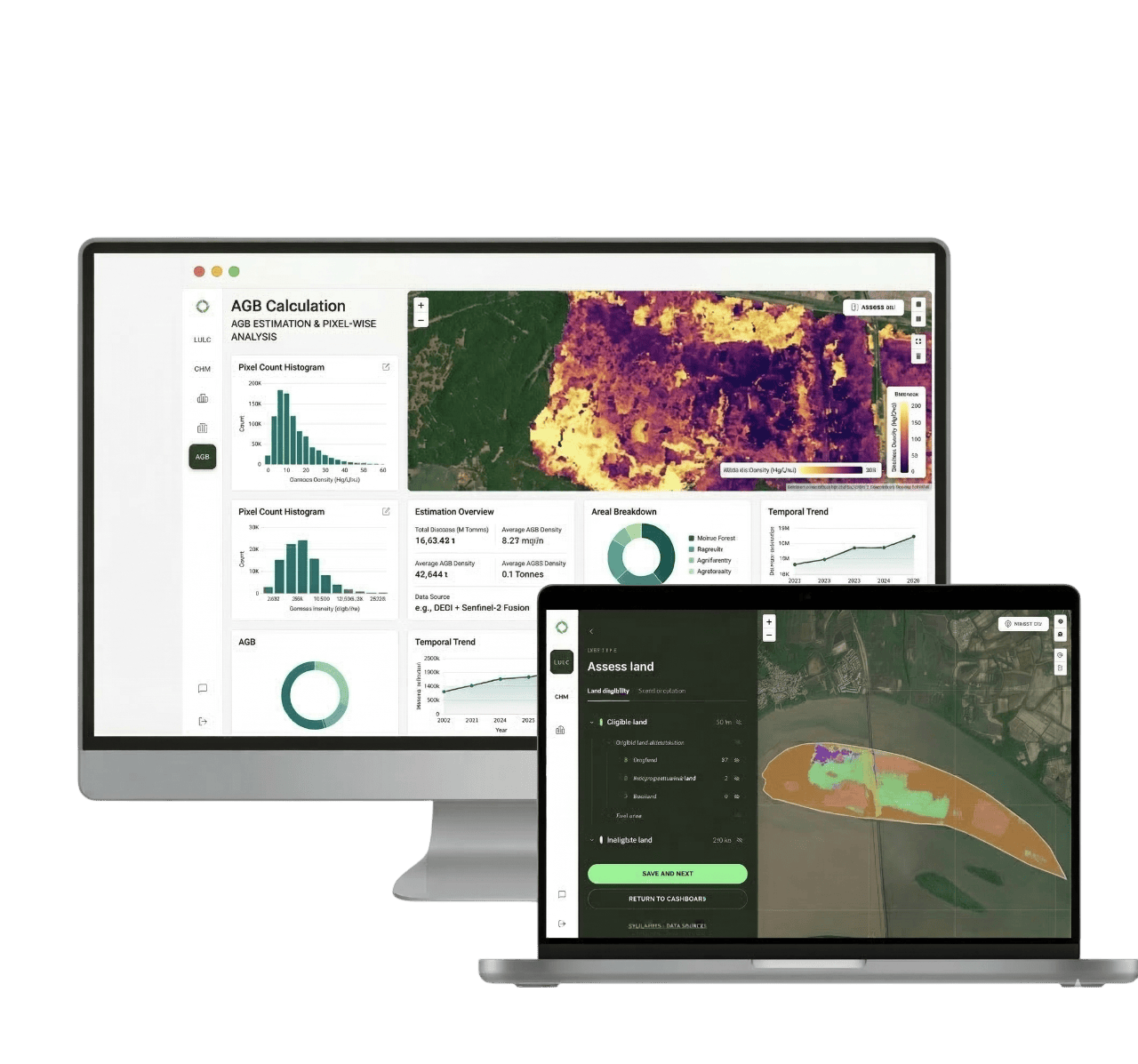
Modern digital Monitoring, Reporting, and Verification (dMRV) is transforming how permanence is monitored. By combining satellite imagery, artificial intelligence, remote sensing, and geospatial analytics, project developers can observe environmental changes much more frequently.
Continuous monitoring enables projects to detect deforestation at an early stage, identify wildfire damage quickly, monitor vegetation growth over time, track changes in land use, measure canopy cover and biomass, and detect degradation before significant carbon losses occur.
Why Continuous Monitoring Matters
Permanence is not established when a project begins—it is demonstrated over many years. Environmental conditions evolve continuously. Forests grow. Storms occur. Land-use pressures change. Climate impacts intensify.
Projects that can continuously monitor these changes are better positioned to identify risks early and respond before significant carbon losses occur. Continuous observation also improves transparency for investors, registries, and corporate buyers by providing evidence that carbon storage is being actively managed rather than simply assumed.
Where Sylithe Fits
Maintaining permanence requires more than periodic verification. It requires continuous visibility into how ecosystems are changing over time.
Sylithe's digital MRV platform combines satellite imagery, AI-powered geospatial analytics, and automated reporting workflows to help project developers monitor carbon projects throughout their lifecycle. By supporting continuous biomass monitoring, land-use change detection, canopy analysis, and transparent reporting, Sylithe helps developers strengthen project integrity and provide the evidence increasingly expected by registries, investors, and carbon credit buyers.
Key Takeaways
Permanence is one of the foundations of carbon credit quality. A carbon credit creates meaningful climate value only if the associated emissions reduction or carbon removal remains effective over the long term. Mechanisms such as buffer pools, independent verification, and continuous digital monitoring help strengthen confidence that carbon storage will endure over time. As voluntary carbon markets mature, permanence is becoming a defining factor in how buyers assess project quality and long-term environmental integrity.