 New
New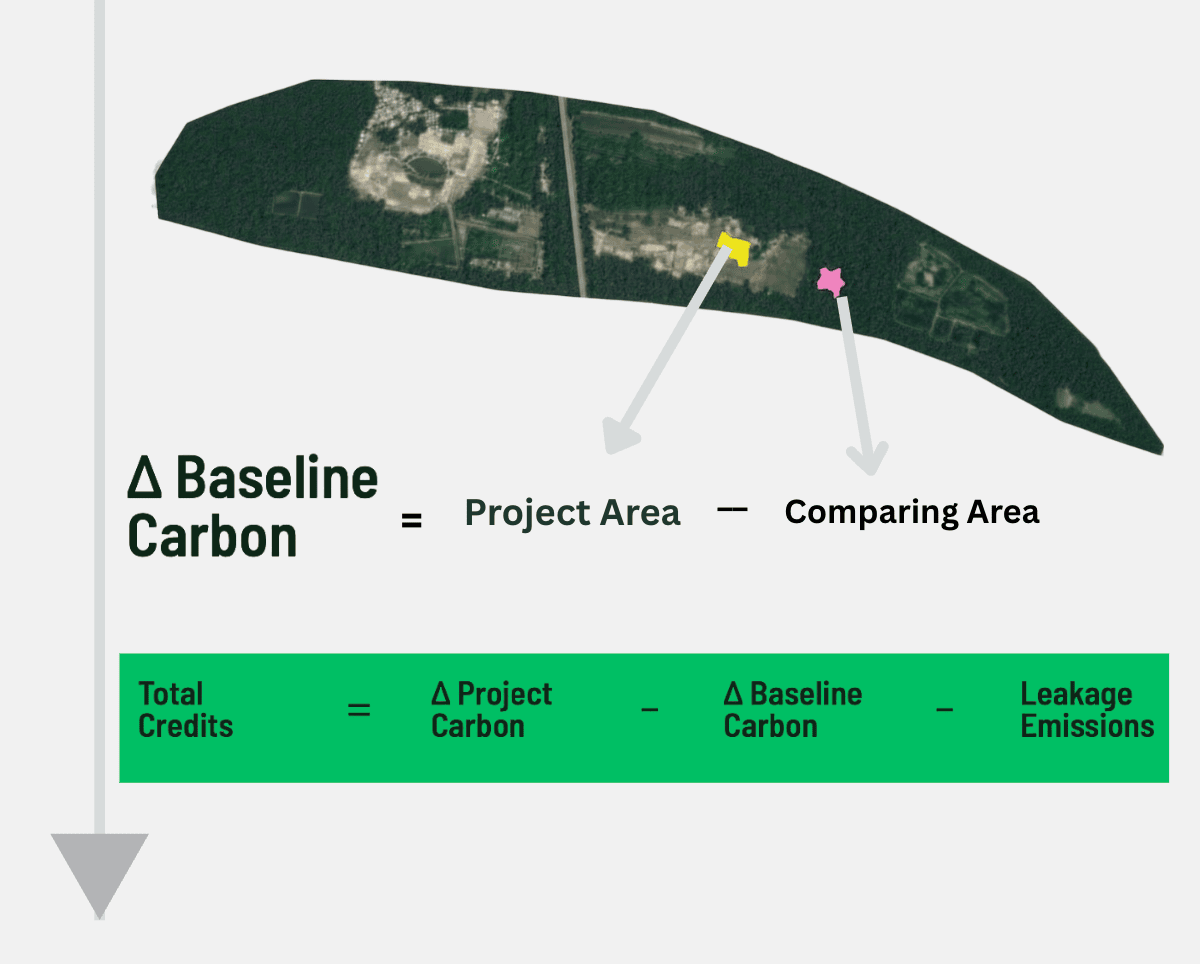
The 2023 REDD+ controversy was, at its heart, a baseline problem. If you base your climate impact on a guess about the future, the market will eventually call your bluff.
The carbon market is built on a 'Counterfactual'. To issue an avoided deforestation credit, you have to prove that a tree *would have* been cut down if you hadn't intervened. For the last 15 years, the industry did this using 'Static Historical Baselines' looking at what happened in the past and assuming the future would be a carbon copy. We now know that this assumption was fundamentally flawed.
Static baselines allowed for 'Baseline Inflation', where developers could select reference regions with high historical loss to justify massive credit issuance, even if the project forest wasn't under immediate threat. This 'Integrity Deficit' nearly destroyed the voluntary carbon market in 2023. The solution being implemented now the 'Dynamic Baseline' is the most important technical shift in the history of nature-based solutions.
The Trust Crisis That Changed the Market
The 2023 REDD+ controversy was not just a methodological debate — it was a crisis of confidence. Corporate buyers, investors, and regulators began questioning whether many forest carbon credits truly represented real climate impact. Reports suggested that some projects were claiming emissions reductions that may never have occurred, leading to concerns about over-crediting.
As a result, buyers became far more cautious. Companies purchasing credits started demanding stronger evidence, transparent methodologies, and independent verification. This shift created pressure on the entire industry to move away from assumptions and toward measurable outcomes.
Projects use historical averages that inflate projected deforestation rates.
Credits are issued for deforestation that was never likely to occur.
Corporate buyers and investors question the climate value of purchased credits.
Regulators and media investigations trigger a collapse in market confidence.
The market demands observable, data-driven proof of climate impact.
The Static Baseline Problem: Why the Past Is a Poor Predictor
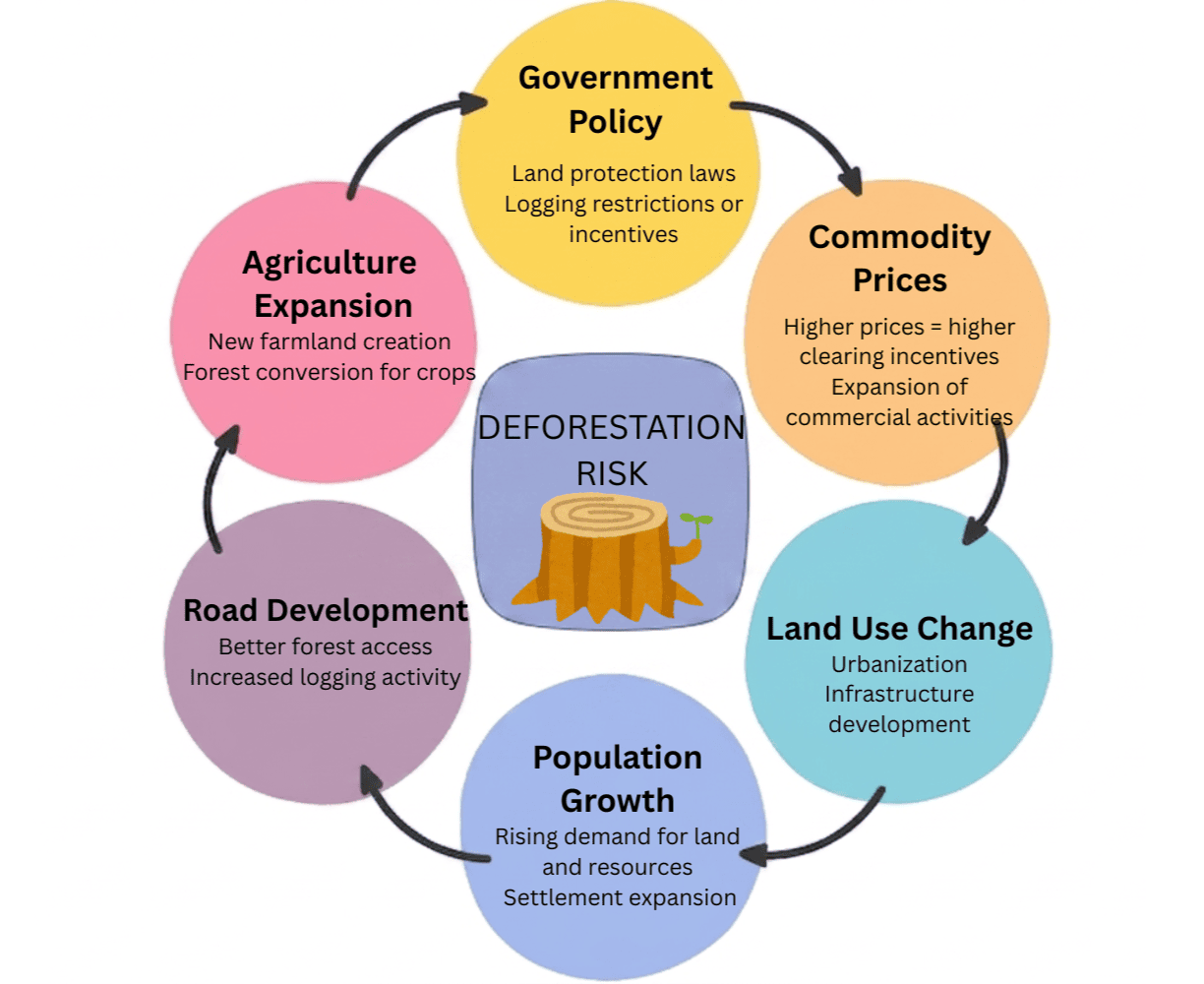
In a static baseline model, you calculate a fixed annual deforestation rate (e.g., 2% per year) and apply it to your project area for a 10-year period. This sounds scientific, but it ignores the 'Lumpy' nature of deforestation. Deforestation is driven by commodity prices, road expansion, government policy changes, and local economic shifts none of which are linear or predictable.
If a new law in a Brazilian state suddenly stops all logging, a project with a static baseline will keep issuing credits as if the threat were still there. This is 'Hot Air'. Conversely, if a new road is built right next to a forest, a static baseline might 'Under-predict' the threat, making the project's actual impact look smaller than it is. In both cases, the credit doesn't reflect the physical reality.
A Real-World Example: Static vs Dynamic Baseline in Practice
Imagine a 50,000-hectare forest conservation project. Under a static baseline, historical data might suggest that 2% of the forest is lost every year. Based on this assumption, the project receives credits for preventing that expected loss.
Key Takeaway
However, what if government enforcement improves and regional deforestation drops naturally to 0.5%? The project would still receive credits based on the outdated 2% assumption — credits for deforestation that was never going to happen.
A dynamic baseline adjusts to actual conditions. If nearby matched control forests lose only 0.5%, the project impact is measured against that observed reality, creating a much more accurate estimate. This is why dynamic baselines are increasingly viewed as the future of carbon accounting.
Side-by-Side Comparison
Static Baseline: Assumes 2% annual loss based on 10-year historical average. Issues credits even when actual regional deforestation has dropped to 0.5%. Result: 1.5% of credits are phantom credits. Dynamic Baseline: Measures actual loss in matched control forests (0.5%). Credits issued only for the difference between project (0.1%) and control (0.5%). Result: 0.4% — real, verified, defensible impact.
The Dynamic Control Area (DCA): The Science of Matching
A Dynamic Baseline replaces the 'Guess' with a 'Control Group'. This is the same logic used in medical trials. To know if a drug works, you compare it to a group that didn't take the drug. In carbon, the 'Drug' is the conservation project.
To build a DCA, we use 'Covariate Matching'. We don't just pick any nearby forest. We use AI to find pixels that are identical in several key dimensions:
Why It Matters
- Accessibility: Same distance to roads, navigable rivers, and settlements.
- Topography: Same elevation and slope (logging is harder on steep hills).
- Forest Type: Same canopy cover and species composition.
- Socio-Economics: Same land tenure status and proximity to agricultural frontiers.
Every year, we use satellites to measure how much forest is lost in these matched control pixels. That *actual, observed loss* becomes the baseline for the project for that specific year. If the control area lost 5% of its forest and the project only lost 0.5%, the difference (4.5%) is the real, verified impact of the project.
Verra's Consolidated REDD+ Methodology (VMD0055)
Following the 2023 integrity crisis, Verra fast-tracked a new consolidated methodology. The most significant change is the move away from project-level baselines toward 'Jurisdictional Baselines'. Instead of every developer picking their own reference region, a centralized authority (or Verra itself) sets the baseline for an entire state or country.
These jurisdictional baselines are then 'Allocated' down to individual projects. This eliminates the 'Cherry-Picking' that allowed for baseline inflation. It also ensures that the sum of all projects in a region doesn't exceed the total actual deforestation happening in that region a problem known as 'Double Counting of Additionality'.
Why Dynamic Baselines Depend on Artificial Intelligence
Dynamic baseline systems process enormous volumes of geospatial information. A single project may involve millions of satellite pixels, years of land-use history, road networks, population data, and environmental variables. Without AI and cloud computing, generating dynamic control areas at scale would be nearly impossible.
AI helps automate five critical functions that make dynamic baselines viable:
Why It Matters
- Pixel matching: AI identifies statistically equivalent forest pixels outside the project boundary to form the control group.
- Forest classification: Machine learning models distinguish forest from non-forest across thousands of hectares.
- Deforestation detection: Change detection algorithms identify loss events within days of occurrence.
- Change analysis: Temporal models quantify the rate, location, and cause of observed forest loss.
- Risk scoring: Predictive models assess future deforestation pressure from roads, markets, and policy changes.
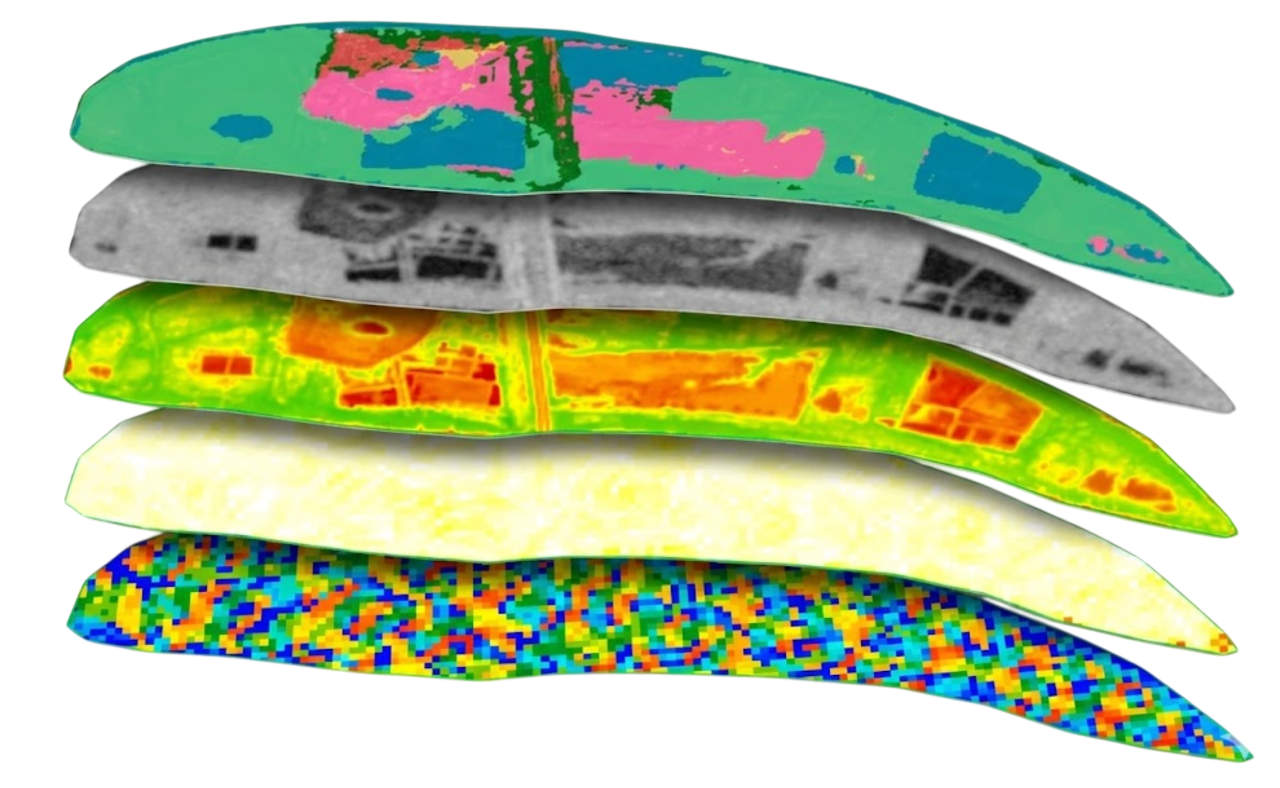
Multi-spectral and SAR imagery acquired continuously from Sentinel, Landsat, and commercial constellations.
Covariate matching algorithms identify statistically equivalent control pixels.
A dynamic reference landscape is assembled and monitored in real time.
Observed deforestation difference between project and control is converted into verified carbon credits.
Dynamic Baselines Are Better — But Not Easier
Dynamic baselines improve integrity, but they also introduce new challenges. Project developers must invest in high-resolution satellite data, technical expertise, continuous monitoring, advanced computing resources, and more rigorous verification.
Revenue predictability may also decrease because future credit volumes depend on observed outcomes rather than fixed assumptions. A new government policy protecting forests in the control area could reduce a project's credit issuance to near zero — not because the project failed, but because the broader environment improved.
The Trade-Off
Dynamic baselines are harder to manage, more expensive to implement, and less predictable in their financial outcomes — but the credits they produce are significantly more trustworthy. In a maturing market, this trust premium translates directly into pricing power.
Building a Dynamic Baseline: The Data Stack
Modern dynamic baseline systems combine information from several data sources to create a complete and verifiable picture of deforestation risk.
Why It Matters
- Satellite imagery: Multi-temporal optical and SAR data for continuous land cover monitoring.
- Historical forest cover: Long-term archives to establish pre-project land use baselines.
- Road infrastructure: Accessibility is the strongest predictor of deforestation pressure.
- Population density: Settlement growth and agricultural expansion are key drivers.
- Land tenure information: Protected status and ownership affect deforestation risk.
- Commodity expansion trends: Price signals for soy, cattle, palm oil, and timber drive clearing decisions.
- Weather and climate data: Drought, fire risk, and seasonal patterns affect forest loss rates.
Sylithe's DCA Modeling Pipeline
Sylithe is at the forefront of the dynamic baseline revolution in India. Our 'Dynamic Control Area' pipeline uses Google Earth Engine and advanced matching algorithms to create audit-ready baselines for Indian projects. We don't just provide a number; we provide the 'Evidence Chain' showing exactly which control pixels were selected, why they were matched, and how their forest loss was measured.
By using our pipeline, project developers can ensure their credits meet the 'Core Carbon Principles' (CCPs) set by the ICVCM. In the post-2023 market, these principles are the minimum requirement for selling to major corporate buyers.
Credit Generation Lifecycle

What This Means for Indian Nature-Based Solution Developers
India's carbon market is rapidly evolving, and project developers are increasingly expected to demonstrate measurable climate outcomes. Projects involving agroforestry, mangrove restoration, forest conservation, and grassland management will face greater scrutiny from buyers seeking high-integrity credits.
Developers that adopt dynamic baseline methodologies early may gain a significant competitive advantage in attracting investors and corporate buyers. As BEE and IBBI refine the domestic CCTS framework, alignment with international dynamic baseline standards will likely become a prerequisite for premium credit pricing.
Why It Matters
- Agroforestry: Dynamic baselines can accurately separate project impact from regional land-use trends.
- Mangrove restoration: Tidal and climatic variables make static baselines particularly unreliable in coastal ecosystems.
- Forest conservation: REDD+ projects in India face the same jurisdictional baseline requirements as global peers.
- Grassland management: Emerging methodologies for grassland carbon increasingly require observed control references.
Why Buyers Prefer Dynamic Baselines
Most carbon market discussions focus on project developers. But buyers — the companies purchasing credits for net-zero claims — have an equally strong interest in how baselines are constructed. For buyers, dynamic baselines provide greater transparency, lower reputational risk, better auditability, stronger climate claims, and higher confidence in project outcomes.
As voluntary carbon markets mature, buyers are increasingly willing to pay premiums for credits supported by robust, dynamic methodologies. The price differential between high-integrity dynamic-baseline credits and legacy static-baseline credits continues to widen.
The Future of Carbon Markets Is Observational
We are moving from a 'Model-Based' market to an 'Observational' one. In the future, we won't need to 'predict' deforestation; we will simply observe the entire world in real-time and allocate credits based on the delta between protected and unprotected areas. Dynamic baselines are the first step in this transition toward a more transparent, data-driven carbon economy.
The next generation of carbon markets will rely less on prediction and more on observation. Instead of estimating what might happen, projects will increasingly be evaluated using real-time monitoring, AI-driven analysis, and continuously updated baselines. This shift represents a broader transformation toward evidence-based climate finance, where credit issuance is tied directly to measurable environmental outcomes.
A credit based on a static baseline is a promise; a credit based on a dynamic baseline is a proof.
Upgrade your baseline integrity
Still relying on historical 10-year averages? Sylithe helps project developers transition to dynamic control area (DCA) baselines that meet the latest Verra and ICVCM requirements. We provide the data science, the satellite monitoring, and the verification documentation needed to restore buyer trust. Let's build a baseline that holds up to scrutiny.
Key Takeaways
A summary of the core concepts discussed in this article.
| Concept | Relevance | Impact Level | Status |
|---|---|---|---|
| Methodology | Core to accurate MRV | High | Active |
| Integrity | Essential for credit value | Critical | Mandatory |
| Technology | Enables scale | High | Growing |