 New
New
Every company buying carbon credits, disclosing ESG data, or planning a nature-based project in India is about to hit the same wall: the regulators and standard bodies that decide whether a credit or a disclosure counts now all demand the same thing. Prove it. Don't just claim it.
Digital MRV for carbon credits in India is now non-negotiable because three forces have converged: SEBI's BRSR Core requires third-party assurance of GHG disclosures, BEE's CCTS offset mechanism routes every credit through an Accredited Carbon Verification Agency, and the ICVCM's Core Carbon Principles demand robust quantification. Manual, field-heavy MRV cannot meet that evidentiary bar at a cost that keeps projects viable.
This is not a sales pitch dressed up as policy analysis. It is the opposite: the policy came first, and the case for digital MRV follows from it. Every claim below is sourced to a regulator, a standard body, a registry document, or named market data.
What Is Digital MRV for Carbon Credits?
Digital MRV (dMRV)
Measurement, Reporting and Verification of emission reductions or removals using digital data, such as satellite imagery, remote sensing, sensors and automated models, so that every reported tonne comes with a repeatable, time-stamped audit trail a verifier can check independently.
Traditional MRV samples a small fraction of a project area once a year, extrapolates from those plots, and compiles the result in spreadsheets. Digital MRV measures the whole area, repeatedly, with the method and inputs recorded. The difference matters less for the project developer than for the person who has to sign off on the numbers: the auditor, the Accredited Carbon Verification Agency, or the board.
BRSR Core: Your GHG Numbers Now Need a Third-Party Check
If your company is among India's largest listed entities, this is no longer optional. SEBI's July 2023 circular introduced BRSR Core, a set of nine ESG attributes, including greenhouse gas footprint and energy footprint, that must be independently checked. The original circular called for reasonable assurance. SEBI's March 2025 circular revised this to "assessment or assurance", allowing a third-party assessment under Industry Standards Forum standards as an alternative route.
| Financial Year | Entities Covered (by market cap) | Requirement |
|---|---|---|
| FY 2023-24 | Top 150 listed entities | BRSR Core assessment or assurance |
| FY 2024-25 | Top 250 listed entities | BRSR Core assessment or assurance |
| FY 2025-26 | Top 500 listed entities | BRSR Core assessment or assurance |
| FY 2026-27 | Top 1,000 listed entities | BRSR Core assessment or assurance |
Value chain disclosure was softened in the same revision. It is now voluntary, covering upstream and downstream partners that individually make up 2% or more of purchases or sales by value, up to 75% of the total, with disclosure from FY 2025-26 and assessment or assurance of that data from FY 2026-27.
Whichever route you choose, an independent, competent party has to trace your GHG and energy numbers back to verifiable evidence. A spreadsheet the sustainability team compiles once a year does not survive that. If your board signs off on assured GHG numbers, the measurement system behind them has to hold up to an auditor, not just a stakeholder. See our breakdown of the nine BRSR Core KPIs for what each one requires.
CCTS Offset Mechanism: Every Carbon Credit Certificate Passes Through an ACVA
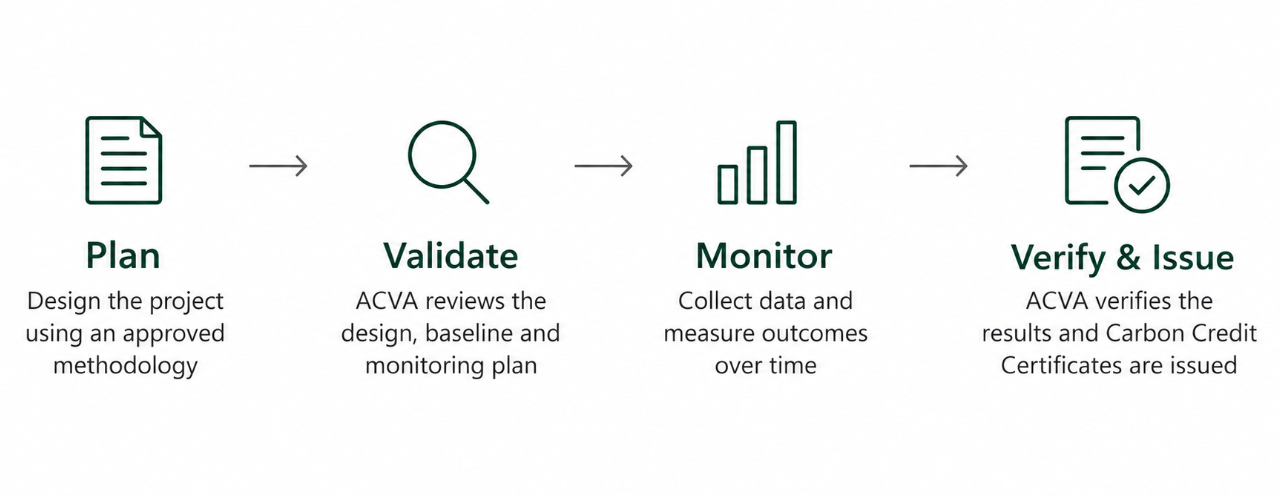
India's own carbon market runs on the same principle. The Ministry of Power issued BEE's Detailed Procedure for the Offset Mechanism under the Carbon Credit Trading Scheme on 27 March 2025. It lets non-obligated entities earn Carbon Credit Certificates (CCCs) for GHG reductions, avoidance or removals, but only after independent checks at two points in the project cycle.
The project proponent registers on the Indian Carbon Market portal and prepares a Project Design Document (PDD) using a BEE-approved methodology.
An Accredited Carbon Verification Agency validates the PDD, checking the baseline, boundary, additionality and monitoring plan, before the project is submitted to BEE for registration.
The project implements its monitoring plan and prepares a monitoring report quantifying the reductions or removals achieved over the period.
An ACVA verifies the monitoring report against the evidence. Only then are Carbon Credit Certificates issued.
Nothing gets credited on the strength of a developer's own numbers. ACVAs are themselves supervised: BEE can suspend or withdraw accreditation for conflicts of interest or false reporting, which gives verifiers every reason to demand evidence they can defend. Our guide to BEE's offset methodologies covers what each methodology asks projects to measure.
ICVCM Core Carbon Principles: The Global Bar for Robust Quantification
The global voluntary carbon market has taken the same position. The Integrity Council for the Voluntary Carbon Market's Core Carbon Principles name robust quantification of emission reductions and removals as a core principle. The Assessment Framework translates that into criteria: conservative approaches, completeness, sound scientific methods, and defined rules for baselines, leakage and uncertainty.
Buyers are selecting for it. CCP-labelled credits made up 13.1% of new issuances according to CEEZER data, and about 15% of credits issued in H1 2026 according to Allied Offsets, up from under 10% a year earlier. As that share rises, credits that cannot show how they were quantified will trade at a discount, or not trade at all. That is also why every serious buyer now asks about uncertainty, not just volume.
"The rules did not get harder because regulators wanted to slow the market down. They got harder because buyers and boards stopped trusting numbers they could not trace."
Manual MRV Is Expensive by Design, and the Fees Are Published
Verification is not just a compliance step. It is a line item. Verra's October 2024 Program Fee Schedule lists a USD 4,500 verification request fee and a USD 15,000 registration request fee for VCS projects, before counting the cost of the third-party auditor, site visits and field campaigns.
In November 2025, as reported by Carbon Pulse, Verra launched a pilot letting developers pay USD 10,000 to 50,000, scaled by expected issuance, to prioritise second and later verification requests. The technical review is identical; the fee buys a place in the queue. An entire second fee tier exists because standard review cycles are slow enough that developers will pay a premium to skip them.
These are not Sylithe's numbers. They come from the registry's own schedule. Much of that cost exists because verification under the traditional model means people travelling to sites, walking plots, and manually reconciling field data against a monitoring report. That cost structure does not change unless the measurement changes. We break down where the savings come from in how Sylithe reduces MRV costs.
Manual MRV vs. Digital MRV
| Dimension | Manual MRV | Digital MRV |
|---|---|---|
| Coverage | Sample plots, extrapolated | Wall-to-wall across the project area |
| Frequency | Annual or per verification | Repeatable at every satellite revisit |
| Audit trail | Field sheets and spreadsheets | Time-stamped data, versioned models |
| Baseline | Fixed at project start | Dynamic, reassessed over time |
| Verifier effort | Site visits to re-check samples | Independent re-run of the same inputs |
| Cost as area grows | Rises roughly with hectares | Rises far more slowly |
What This Means for Companies Buying or Building Carbon Credits in India
Where You Stand
- Listed companies: SEBI has put a third-party check on your GHG and energy disclosures, reaching the top 1,000 entities from FY 2026-27.
- Project developers: BEE's offset mechanism and the CCP framework both route every credit through independent, criteria-based verification, not self-reporting.
- Carbon credit buyers: if you are buying carbon credits in India, integrity labels and verification evidence increasingly decide price and eligibility.
- Everyone paying for verification: today's fees reflect a manual, slow, field-heavy process that digital MRV is built to replace.
None of this is a reason to distrust carbon markets. It is the market maturing as it should: buyers wanted proof, and the frameworks now require it. The real question for any company is how to produce that proof at a cost and speed that does not eat into project economics or the compliance budget.
How Sylithe's Digital MRV Platform Maps to What Verifiers Need
Sylithe is a digital MRV platform built for these standards, not around them, and one of the leading dMRV platforms in India for nature-based carbon projects. Each core capability maps to something a validator, an ACVA or a BRSR assurance provider actually needs to see.
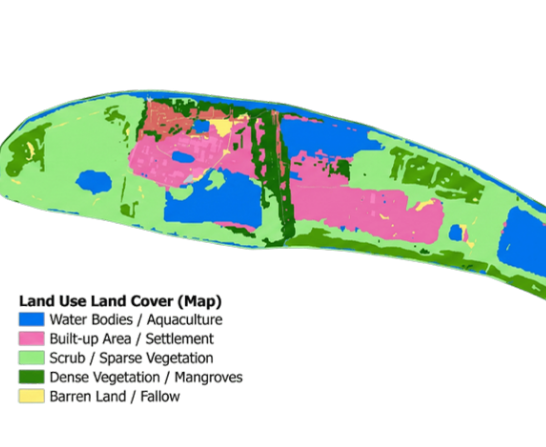
LULC Classification
Land Use and Land Cover mapping establishes the baseline and boundary evidence that a PDD and an ICVCM-aligned baseline assessment both require.
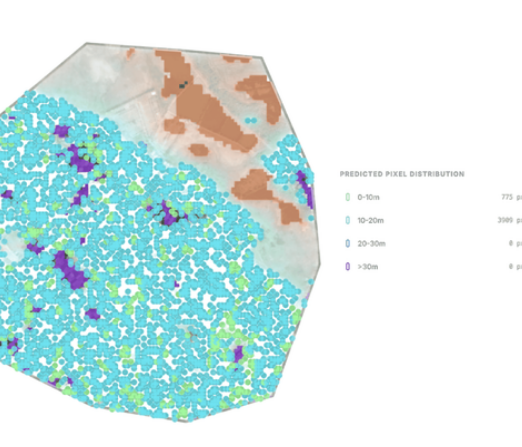
Canopy Height Modelling
Satellite and LiDAR-derived canopy height turns forest structure into a measurable, repeatable input for carbon stock estimates.
Above Ground Biomass (AGB)
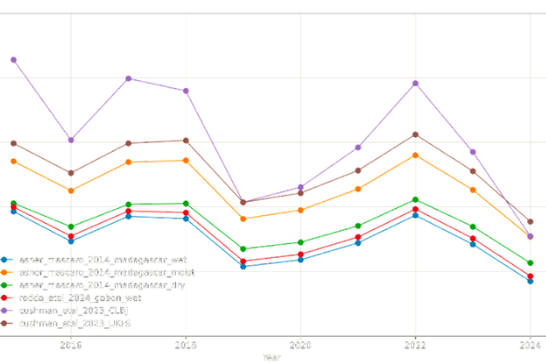
Calibrated biomass models convert satellite observation into the carbon-stock numbers a monitoring report has to defend, with uncertainty stated.
Dynamic Carbon Baselines
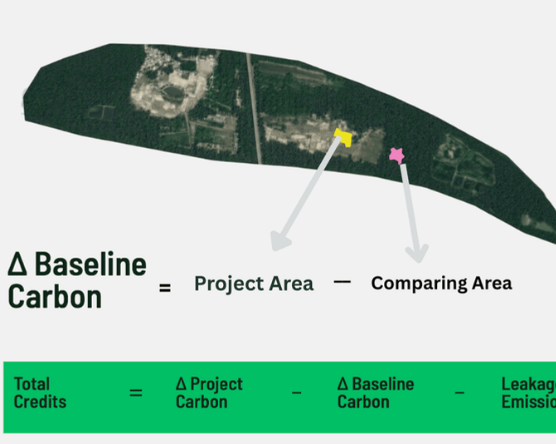
Baselines are reassessed over time instead of frozen at project start, addressing the ICVCM's concern about stale counterfactuals.
Each capability has its own deep dive: LULC classification accuracy, canopy height from LiDAR, biomass estimation methods and dynamic baselines.
Instead of a field team walking a fraction of your plots once a year and extrapolating, a satellite-driven pipeline gives repeatable, wall-to-wall, time-stamped measurement that your verifier can check independently. It is the same audit trail an ACVA needs for CCTS verification, and the same evidentiary bar SEBI's assurance providers now hold companies to.
Digital MRV Readiness Checklist
Map every reported tonne to its source data. If you cannot say which image, plot or meter a number came from, an auditor cannot either.
Version your models and methods. A verifier must be able to re-run the calculation for any past reporting period and get the same answer.
Quantify uncertainty explicitly. CCP-aligned quantification expects conservative estimates with stated error, not a single unqualified figure.
Refresh baselines on a schedule. A baseline fixed at project start is increasingly treated as a risk, not a given.
Keep ground truth, but use it to calibrate. Field plots should validate satellite models, not stand in for whole-area measurement.
The honest pitch is this: regulators did not raise the bar to slow the market down. They raised it because trust now depends on traceability. Sylithe exists to make that traceability something you build in from day one, not something you scramble to produce when the assurance provider or the ACVA asks a question you cannot yet answer.
Make Your Carbon Numbers Audit-Ready
Preparing for BRSR Core assurance or a CCTS verification? Explore the Sylithe platform or talk to our team about a digital MRV scoping session for your project or portfolio.
Sources
- SEBI Circular SEBI/HO/CFD/CFD-SEC-2/P/CIR/2023/122, "BRSR Core: Framework for assurance and ESG disclosures for value chain" (12 July 2023).
- SEBI Circular SEBI/HO/CFD/CFD-PoD-1/P/CIR/2025/42, updates to BRSR Core assessment or assurance and value chain disclosures (28 March 2025).
- Bureau of Energy Efficiency, Detailed Procedure for Offset Mechanism under the Carbon Credit Trading Scheme (issued 27 March 2025).
- ICVCM, Core Carbon Principles, Assessment Framework and Assessment Procedure.
- Verra Program Fee Schedule v1.0 (16 October 2024).
- Carbon Pulse, "Verra offers fast-track carbon project verification approval for up to $50,000" (26 November 2025).
- CarbonCredits.com, reporting CEEZER and Allied Offsets data on CCP-labelled issuance share (July 2026).