 New
New
India is building one of the world's largest carbon market ecosystems, creating a framework that could mobilize billions of dollars into climate action, renewable energy, forestry, agriculture and industrial decarbonization.
Key Takeaway
For years, India participated in global carbon markets through mechanisms such as the Clean Development Mechanism (CDM), Renewable Energy Certificates (RECs), and the Perform Achieve and Trade (PAT) scheme. However, the country lacked a unified national carbon market capable of supporting large-scale domestic carbon trading.
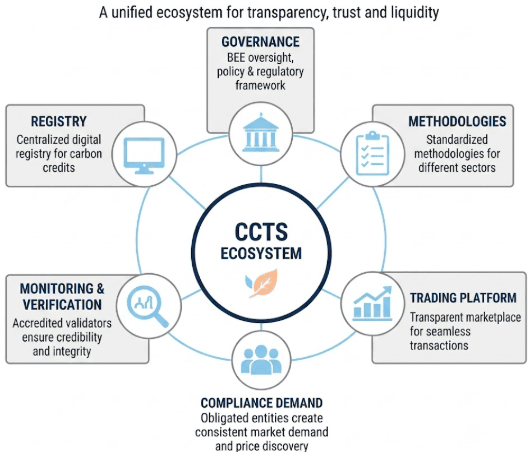
That is now changing through the Carbon Credit Trading Scheme (CCTS), which forms the foundation of the Indian Carbon Market (ICM). This guide provides a comprehensive analysis of how the market works, who participates, how credits are issued, and what this means for project developers, investors, compliance entities and the broader climate finance ecosystem.
India's Climate Commitments Under the Paris Agreement
What Is the Paris Agreement?
The Paris Agreement is an international treaty on climate change adopted in December 2015 under the United Nations Framework Convention on Climate Change (UNFCCC). It entered into force in November 2016 and has been ratified by nearly every country in the world. The agreement established a global framework to limit the increase in average global temperatures to well below 2°C above pre-industrial levels, with efforts to limit warming to 1.5°C.
Unlike its predecessor the Kyoto Protocol, which imposed binding emission reduction targets only on developed countries, the Paris Agreement applies to all participating nations. Each country is required to submit Nationally Determined Contributions (NDCs) describing its climate ambitions and the policies it will implement to achieve them. NDCs are not legally binding targets in the conventional regulatory sense, but they carry significant political weight and serve as the primary mechanism through which national climate ambition is communicated to the international community.
India's NDCs and the Role of Nationally Determined Contributions
Nationally Determined Contributions are the cornerstone of the Paris Agreement's bottom-up architecture. Each country determines its own contribution based on its national circumstances, development priorities and technical capabilities. NDCs are intended to become progressively more ambitious over time, with countries required to submit updated versions every five years.
India ratified the Paris Agreement in 2016 and submitted its first NDC with three primary targets: reducing the emissions intensity of its GDP by 33–35% by 2030 compared to 2005 levels, achieving approximately 40% of its cumulative electric power installed capacity from non-fossil fuel-based energy resources by 2030, and creating an additional carbon sink of 2.5–3 billion tonnes of CO₂ equivalent through additional forest and tree cover by 2030.
In 2022, India submitted an updated NDC that significantly strengthened these commitments. The revised targets include reducing the emissions intensity of GDP by 45% by 2030 compared to 2005 levels, achieving approximately 50% cumulative electric power installed capacity from non-fossil fuel-based energy sources by 2030, and maintaining the forest and tree cover carbon sink commitment. These revised targets reflect India's growing renewable energy capacity and its increasing ambition in sustainable development.
Net Zero 2070 and the 500 GW Non-Fossil Capacity Target
At the COP26 climate summit in Glasgow in November 2021, Prime Minister Narendra Modi announced India's long-term net zero target: achieving net zero carbon emissions by 2070. This announcement made India one of the major economies to formally commit to a net zero timeline, even as it maintained that the country's development pathway required a longer transition period than that adopted by many developed nations.
Alongside the net zero commitment, India announced the Panchamrit or five-element climate action plan, which includes reaching 500 GW of non-fossil electricity capacity by 2030. This target is among the most ambitious in the world for any developing economy. Achieving 500 GW of renewable capacity requires accelerating solar, wind, hydropower and green hydrogen deployment at a rate that has no historical precedent in India's energy sector.
Emissions intensity reduction as a metric measures the amount of greenhouse gas emissions produced per unit of economic output, typically per rupee of GDP. By targeting intensity reduction rather than absolute emission reduction, India acknowledges that its economy must continue growing to lift hundreds of millions of people out of poverty, while simultaneously decoupling economic growth from emissions growth. This approach allows for absolute emissions to continue rising in the near term as the economy expands, while ensuring that each unit of economic activity becomes progressively cleaner.
Why Carbon Markets Become Necessary
Meeting India's climate commitments requires investment on a scale that government budgets alone cannot provide. Estimates vary, but credible analyses suggest India will require between two and five trillion dollars in climate-related investment between now and 2070 to achieve its net zero pathway. This encompasses renewable energy infrastructure, grid modernization, industrial decarbonization, nature-based solutions, climate adaptation, and the development of entirely new sectors such as green hydrogen.
Carbon markets address this financing gap by creating economic incentives that direct private capital toward climate outcomes. When entities that reduce emissions can generate revenue from carbon credits, and when entities that cannot reduce emissions quickly enough must purchase those credits, the market creates a financial mechanism that mobilizes private investment at scale.
Governments alone cannot finance decarbonization for several structural reasons. Public budgets face competing priorities including infrastructure, healthcare, education and social protection. Government procurement and subsidy mechanisms are slow to scale and can distort markets when they remain in place beyond their intended transition function. Regulatory mandates without financial incentives often create compliance costs without encouraging innovation. Carbon markets solve these limitations by embedding climate action into the logic of private investment rather than treating it exclusively as a public expenditure.
What Is a Carbon Market?
A carbon market places an economic value on greenhouse gas reductions. Organizations that reduce or remove emissions can earn carbon credits, while organizations seeking to compensate for emissions can purchase those credits. At its simplest, a carbon market converts an environmental outcome into a financial asset.
How Carbon Credits Create Economic Incentives
The fundamental insight behind carbon markets is that environmental outcomes can be made financially legible to private actors. Consider the case of a forest.
Without a carbon market, a standing forest generates enormous ecological value in the form of biodiversity, watershed protection, climate regulation, and carbon sequestration. Yet these ecosystem services generate little or no direct financial return for the landowner. The economic logic facing many forest owners is therefore perverse: conversion of the forest to agriculture or industrial use may generate immediate revenues, while conservation generates primarily public goods with no associated cash flow. This misalignment between ecological value and financial return drives deforestation.
With a carbon market, the same forest can generate carbon credits representing its sequestration and storage of atmospheric carbon. These credits create a financial return linked directly to climate outcomes. The landowner now has an economic incentive to maintain and enhance the forest rather than convert it. The carbon market has internalized an externality that the conventional economy left unpriced.
This logic applies across sectors. An industrial facility that invests in energy efficiency beyond what regulation requires can generate credits from its additional emission reductions. A renewable energy project displacing fossil fuel generation can earn revenue from avoided emissions. A waste management project capturing landfill methane can monetize what would otherwise have been a greenhouse gas release.
Why Markets Are Used Instead of Direct Regulation
Governments have several policy tools available for reducing emissions, including direct regulation, taxes, subsidies and market mechanisms. Carbon markets offer distinct advantages over command-and-control regulation in several dimensions.
Cost efficiency: Carbon markets allow emission reductions to occur wherever they are cheapest. If a steel plant can reduce emissions at a cost of five dollars per tonne and a forestry project can generate the same tonne of reduction at two dollars, the market directs investment toward the more efficient option. Regulatory mandates applied uniformly across sectors cannot achieve this allocation efficiency.
Innovation incentives: When emission reductions generate revenue, there is a continuous financial incentive to develop technologies and practices that reduce emissions more cheaply. This creates dynamic efficiency that static regulation cannot produce. Companies that innovate beyond compliance requirements capture additional credit revenue.
Private capital mobilization: Carbon markets attract private investment into climate solutions without requiring equivalent public expenditure. The financial return available through carbon credit revenue makes projects that might otherwise be economically marginal viable for private investors.
Outcome-based financing: Carbon markets pay for results rather than activities. Credits are issued only after emission reductions are measured and verified. This outcome orientation aligns financial incentives with environmental performance in a way that input-based subsidies cannot guarantee.
Global Carbon Market Evolution
Carbon markets have evolved significantly over three decades. The Kyoto Protocol, adopted in 1997, established the first international carbon market architecture. It created three flexibility mechanisms: the Clean Development Mechanism (CDM), which allowed developed countries to earn credits from projects in developing countries; Joint Implementation, which allowed credit generation from projects between developed countries; and International Emissions Trading, which allowed countries to trade assigned emission allowances.
Key Takeaway
The CDM represented the first large-scale experiment in international carbon finance and generated over 1.7 billion credits from projects in developing countries, with India becoming one of the largest CDM host nations. However, CDM also exposed fundamental challenges in carbon market design including environmental integrity questions, administrative complexity and the difficulty of operationalizing additionality at scale.
The Paris Agreement replaced the Kyoto framework with a more inclusive architecture. Article 6 of the Paris Agreement establishes frameworks for voluntary cooperation between countries in achieving NDC targets, including mechanisms for international carbon credit transfers. Article 6.2 covers bilateral cooperative approaches. Article 6.4 establishes a new international crediting mechanism. Together these provisions create the foundations for the next generation of international carbon markets.
Alongside these compliance frameworks, voluntary carbon markets have grown substantially, allowing companies and individuals to purchase carbon credits outside regulatory requirements. The voluntary market has been both a laboratory for innovation and a source of integrity concerns, driving the development of standards such as the Verified Carbon Standard and the Gold Standard.
Types of Carbon Markets
| Market Type | Description | Example |
|---|---|---|
| Compliance Markets | Mandatory emission reduction obligations imposed by governments | EU ETS, CCTS India |
| Voluntary Markets | Voluntary purchase of carbon credits by organizations and individuals | VCS, Gold Standard |
| Article 6 Markets | International transfers of mitigation outcomes between countries | Bilateral ITMO agreements |
India's Experience With Carbon Markets
India enters the Carbon Credit Trading Scheme with significant prior experience in market-based climate mechanisms. This experience has shaped the design of the CCTS and provides important lessons for how the new framework can be implemented effectively.
The Clean Development Mechanism (CDM)
The Clean Development Mechanism was created under the Kyoto Protocol to allow developed countries to meet part of their emission reduction obligations by financing projects in developing countries. Projects that reduced emissions beyond a business-as-usual baseline generated Certified Emission Reductions (CERs), which could be sold to developed country governments and companies seeking to offset their own emissions.
India was one of the largest CDM host nations globally. By the end of the CDM's peak period, India had registered over 1,500 CDM projects and issued tens of millions of CERs. Project types ranged from renewable energy and energy efficiency to waste management and industrial gas destruction. The CDM created an entire ecosystem of project developers, consultants, validation agencies and carbon brokers in India, establishing institutional knowledge and technical capacity that remains valuable today.
Key Takeaway
However, the CDM also exposed significant limitations. The additionality assessment process was frequently criticized for approving projects that would have proceeded without carbon finance. The CDM Executive Board became overwhelmed by project registration backlogs. CER prices collapsed during the European debt crisis as demand fell and supply accumulated. By the mid-2010s, CER prices had fallen to near zero and CDM activity in India had largely stalled.
The CDM's most important legacy for India was not the credits it generated but the institutional foundation it established. India's project developers, regulators and technical agencies developed working knowledge of baseline methodologies, additionality concepts, measurement and verification procedures, and international carbon market governance. This knowledge base directly informed the design of the CCTS.
The Perform Achieve and Trade Scheme
The Perform Achieve and Trade scheme was launched by India's Bureau of Energy Efficiency in 2011 as part of the National Mission for Enhanced Energy Efficiency under the National Action Plan on Climate Change. PAT created the first domestic market-based mechanism for industrial energy efficiency in India.
Under PAT, energy-intensive industries designated as Designated Consumers were assigned specific energy consumption targets. Industries that exceeded their targets earned Energy Saving Certificates (ESCerts), which could be traded with industries that failed to meet their targets. This cap-and-trade structure for energy efficiency created the first domestic experience with tradable environmental instruments in India's industrial sector.
Key Takeaway
PAT generated important lessons for CCTS design. The scheme demonstrated that India's industrial sector could participate in market-based mechanisms and that domestic trading of environmental instruments was technically feasible. However, PAT also revealed challenges including low ESCert prices due to over-allocation of targets, limited market liquidity, and administrative complexity in target-setting across heterogeneous industrial units. These lessons directly influenced decisions about compliance mechanism design, target-setting methodology and market architecture in the CCTS.
Renewable Energy Certificates
Renewable Energy Certificates were introduced in India in 2010 to address the mismatch between states with good renewable energy potential and states with high renewable energy obligations. RECs allowed renewable energy generators to sell electricity at conventional power market prices and separately sell certificates representing the renewable attribute of their generation to obligated entities in other states.
Key Takeaway
The REC market created a tradable instrument market for clean energy and established regulatory infrastructure including a centralized registry, designated trading platforms and compliance reporting mechanisms. However, the REC market was also periodically plagued by price volatility, compliance weaknesses and periods of low demand that depressed certificate values.
Why These Experiences Led to CCTS
The CDM, PAT and REC experiences collectively demonstrated both the potential and the limitations of market-based climate mechanisms in India. They established that domestic and international carbon markets could generate meaningful private investment in climate solutions. They also revealed that poorly designed mechanisms with weak additionality requirements, inconsistent enforcement and insufficient institutional capacity could undermine environmental integrity and market credibility.
The Carbon Credit Trading Scheme represents an attempt to build on these experiences while addressing their weaknesses. It creates a unified domestic market with clear legal foundations, robust institutional governance, rigorous methodology requirements and a professional verification infrastructure. Rather than adapting an international mechanism for domestic use, CCTS is designed from the outset as a national framework calibrated to India's development context.
What Is the Carbon Credit Trading Scheme (CCTS)?
Why India Introduced CCTS
India introduced the Carbon Credit Trading Scheme to create a unified, domestically governed framework for carbon credit generation, issuance, trading and compliance. The scheme represents a strategic response to multiple converging pressures: India's increasing climate ambition, the need to mobilize private capital for decarbonization, the opportunity to establish credible domestic carbon pricing ahead of potential international requirements, and the desire to build institutional capacity for carbon market governance before international carbon market frameworks mature under Article 6.
The decision to establish a domestic scheme rather than continuing to rely on international mechanisms reflects a broader shift in India's climate policy. The country is transitioning from being primarily a supplier of carbon credits to international buyers toward building a domestic market architecture capable of serving both compliance and voluntary demand within the Indian economy.
Legal Foundation: The Energy Conservation Amendment Act 2022
The legal foundation for the Indian Carbon Market is the Energy Conservation (Amendment) Act 2022. This legislation amended the original Energy Conservation Act of 2001 to explicitly authorize the establishment of a carbon credit trading scheme. The amendment granted the Central Government the power to specify a carbon credit trading scheme, designate obligated entities, set greenhouse gas emission standards and establish the regulatory framework for carbon credit issuance and trading.
The 2022 amendment was a landmark piece of legislation because it provided the statutory basis for what could become one of the largest carbon markets in the world. By embedding carbon market authority within the energy conservation framework, the legislation connected carbon pricing to India's existing industrial regulatory architecture, leveraging established compliance relationships between the Bureau of Energy Efficiency and energy-intensive industries.
Carbon Credit Certificates
Under the scheme, one Carbon Credit Certificate (CCC) represents one tonne of carbon dioxide equivalent (tCO₂e) reduced, avoided or removed. CCCs are the fundamental unit of account in the Indian Carbon Market. They are issued through the national registry operated by the Grid Controller of India, traded on exchanges regulated by CERC, and retired when used for compliance or voluntary offsetting purposes.
The design of Carbon Credit Certificates reflects lessons from international carbon markets. Each CCC is uniquely identified in the registry, preventing double counting. Ownership transfer is recorded transparently, creating an auditable chain of custody. Retirement is irreversible, preventing reuse. These features collectively contribute to the market integrity that buyers, compliance entities and investors require to have confidence in the environmental value of issued credits.
Core Objectives of the CCTS
The Carbon Credit Trading Scheme is designed to serve five interconnected objectives that extend beyond simple emission reduction. First, decarbonization: the scheme directly creates financial incentives for emission reductions across industrial, energy, agricultural and land-use sectors. By placing a price on carbon, it makes clean alternatives more economically competitive relative to high-emission options.
Second, market development: the scheme builds domestic infrastructure for carbon markets including registries, exchanges, verification agencies and methodology development capacity. This institutional infrastructure has value beyond any single compliance cycle and positions India to participate effectively in international carbon markets as they develop under Article 6.
Third, climate finance: by creating a domestic market for carbon credits, the scheme unlocks private capital for climate action without requiring equivalent public expenditure. Forestry projects, renewable energy installations, and industrial efficiency improvements become financeable through carbon revenue, broadening the investment base for India's climate transition.
Fourth, technology adoption: the financial incentives created by CCTS encourage adoption of clean technologies across sectors. Industries that adopt technologies enabling them to outperform emission intensity targets earn credits. Project developers that deploy renewable energy, waste management or forestry solutions access carbon revenue. This creates pull demand for clean technology that complements government procurement and subsidy programs.
Fifth, international competitiveness: as trading partners including the European Union implement carbon border adjustment mechanisms, Indian industries that can demonstrate credible carbon pricing and emission reduction performance will face lower trade compliance costs. Building domestic carbon market credibility now positions Indian exporters advantageously as international carbon border measures expand.
Institutional Structure of the Indian Carbon Market
National Steering Committee for Indian Carbon Market (NSCICM)
The National Steering Committee for Indian Carbon Market serves as the apex governance body for the CCTS. It provides policy oversight, inter-ministerial coordination and strategic direction for the carbon market framework. The committee brings together senior representatives from multiple ministries and regulatory bodies to ensure that carbon market development aligns with India's broader climate and economic policy objectives.
The NSCICM's role is particularly important in the early phases of market development, when fundamental questions about market design, target-setting methodology and regulatory coordination require high-level political buy-in. By convening decision-makers from across government, the committee helps ensure that CCTS development is not siloed within any single ministry but reflects the cross-sectoral nature of India's climate transition.
The committee is also expected to provide guidance on India's engagement with international carbon markets under Article 6, ensuring that domestic carbon market decisions align with India's international climate diplomacy objectives and its management of corresponding adjustments to NDC targets when credits are transferred internationally.
Bureau of Energy Efficiency (BEE)
The Bureau of Energy Efficiency is the primary administrator of the Indian Carbon Market. Established under the Energy Conservation Act 2001, BEE was originally focused on energy efficiency promotion across industrial, commercial and residential sectors. The 2022 amendment significantly expanded its mandate by making it the central regulatory authority for the CCTS.
As market administrator, BEE is responsible for a broad portfolio of functions including designating Designated Consumers subject to compliance obligations, setting greenhouse gas emission intensity targets for obligated entities, accrediting Carbon Validation and Verification Agencies, approving project methodologies and carbon accounting tools, supervising the offset mechanism and reviewing project registration applications, and providing technical guidance and capacity-building support to market participants.
Key Takeaway
BEE's prior experience administering the PAT scheme and the REC market gives it relevant institutional knowledge of market-based environmental instruments in the Indian context. However, carbon markets present a significantly more complex regulatory challenge than energy efficiency trading, requiring BEE to develop new expertise in areas including greenhouse gas accounting, ecological monitoring, additionality assessment and international carbon market linkage.
The bureau's capacity to discharge these functions effectively will be one of the most important determinants of the CCTS's success. International experience suggests that carbon market administrators require substantial technical capacity, clear institutional mandates, adequate resourcing and effective coordination mechanisms with other regulatory bodies. Building this capacity is an ongoing institutional investment that will shape market outcomes over the long term.
Grid Controller of India (GRID-INDIA)
The Grid Controller of India operates the national registry for the Indian Carbon Market. The registry is the central ledger in which all Carbon Credit Certificates are recorded, tracked and managed from issuance through transfer and retirement. It serves as the authoritative source of information about credit ownership, status and history.
GRID-INDIA was selected as registry operator because of its existing experience managing complex national systems for the power sector, including renewable energy certificate tracking. A well-designed registry is essential for market integrity. It must prevent double issuance and double counting, ensure transparent ownership records, maintain complete audit trails, and provide reliable data for regulatory reporting.
The registry's technical architecture must support both the compliance mechanism, where obligated entities submit credits for cancellation against their obligations, and the offset mechanism, where project developers receive credits upon verification and transfer them to buyers. Interoperability with international registries may become important if India pursues Article 6 linkages in the future.
Central Electricity Regulatory Commission (CERC)
The Central Electricity Regulatory Commission serves as the market regulator for carbon credit trading, providing oversight of price discovery mechanisms, trading rules and market conduct on designated exchanges. CERC brings established regulatory expertise from its primary role as the regulator of India's electricity markets, creating a natural institutional fit with a carbon market whose initial focus includes energy sector participants.
CERC's responsibilities in the carbon market context include approving trading platforms and exchanges for CCC transactions, establishing market rules to prevent manipulation and ensure fair price discovery, monitoring market conduct and investigating complaints, and coordinating with BEE on the regulatory interface between carbon credit compliance obligations and trading activity. The market regulatory function is distinct from BEE's administrative function, creating an important separation of roles between policy administration and market oversight.
Accredited Carbon Validation and Verification Agencies (ACVAs)
Accredited Carbon Validation and Verification Agencies are the independent third-party organizations that assess carbon projects at two critical stages: validation before registration and verification after each monitoring period. ACVAs provide the independent assurance that is essential for market credibility. Without credible third-party assessment, buyers and compliance entities cannot rely on the environmental integrity of issued credits.
Validation is the process by which an ACVA assesses a project's design document to confirm that the project meets all applicable methodology requirements, that the baseline has been correctly established, that additionality has been properly demonstrated, and that the monitoring plan is technically appropriate and feasible. A positive validation opinion is required before a project can be registered in the registry.
Verification is the process by which an ACVA reviews monitoring data from a completed monitoring period to confirm that reported emission reductions have actually occurred and have been accurately quantified. A positive verification opinion is required before credits can be issued by the registry for the relevant monitoring period.
The quality of ACVAs is a critical determinant of overall market integrity. ACVA accreditation, training, conflict of interest management, and technical competence requirements all shape the reliability of the verification process. BEE's accreditation of ACVAs and ongoing oversight of their performance is therefore one of the most important administrative functions in the market governance architecture.
Compliance Mechanism
How Compliance Markets Work
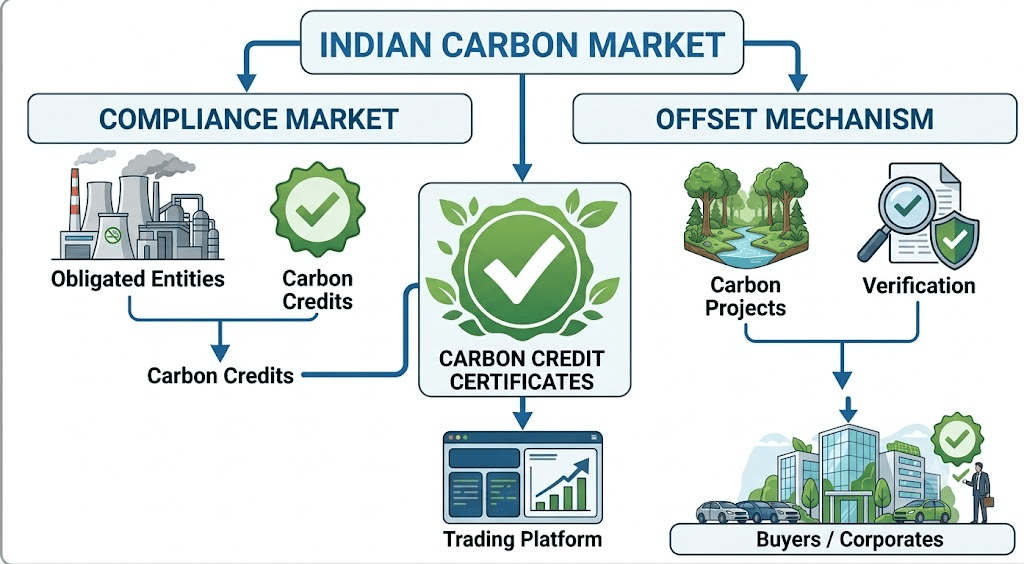
Compliance carbon markets operate by imposing greenhouse gas obligations on a defined set of regulated entities and then allowing those entities to meet their obligations through a combination of actual emission reductions and the purchase of credits from other entities that have achieved reductions. This cap-and-trade or performance-standard-based architecture creates economic pressure to reduce emissions while allowing flexibility in how and where those reductions occur.
The Indian compliance mechanism differs from the European Union Emissions Trading System in its fundamental design. The EU ETS is a cap-and-trade system in which a total cap on emissions is set across regulated sectors, and this cap is gradually reduced over time. Regulated entities must hold allowances equal to their actual emissions. The CCTS compliance mechanism is built around emission intensity targets rather than absolute emission caps, reflecting India's development status and the need to accommodate continued economic and industrial growth.
Emission Intensity Targets
Under the compliance mechanism, Designated Consumers in specified energy-intensive sectors are assigned greenhouse gas emission intensity targets. An emission intensity target expresses the permitted level of greenhouse gas emissions per unit of industrial output, rather than a total emission cap. A steel plant might be assigned a target expressed in tonnes of CO₂ equivalent per tonne of steel produced. A cement plant might receive a target expressed in emissions per tonne of clinker.
This intensity-based approach is well-suited to India's context. It allows industrial production to grow in absolute terms while requiring each unit of production to become progressively less carbon-intensive. Industries that achieve significant production growth may still increase absolute emissions while meeting their intensity targets, whereas industries that improve both production efficiency and energy efficiency will see both absolute emissions and intensity decline.
Target-Setting Process and Sectors
BEE is responsible for setting emission intensity targets for Designated Consumers. The target-setting process involves analysis of baseline emission intensity across each sector, assessment of technically and economically feasible improvement rates, consideration of sector-specific investment cycles and technological constraints, and alignment with India's broader NDC commitments.
Why It Matters
- Aluminium
- Cement
- Fertilizer
- Iron & Steel
- Petrochemicals
- Petroleum Refining
- Pulp & Paper
- Chlor Alkali
- Textile
These sectors were selected because they account for a disproportionate share of India's industrial energy consumption and greenhouse gas emissions, they have established measurement and reporting infrastructure from the PAT scheme, and they represent areas where market-based mechanisms can stimulate meaningful decarbonization investment. Additional sectors may be brought within the compliance mechanism over time as the market develops and regulatory capacity grows.
Credit Surplus and Deficit Mechanism
The financial logic of the compliance mechanism operates through surplus and deficit. A Designated Consumer that achieves emission intensity performance better than its target generates a surplus and earns Carbon Credit Certificates corresponding to the emission intensity outperformance multiplied by its production volume. A Designated Consumer that fails to meet its intensity target incurs a deficit and must either purchase Carbon Credit Certificates to cover the shortfall or pay a penalty.
This mechanism creates bilateral demand and supply within the compliance market. High-performing facilities with strong efficiency programs become net sellers of CCCs, generating carbon revenue that can support further investment in decarbonization. Lower-performing facilities that face structural constraints on near-term improvement become net buyers, transferring financial value to cleaner facilities and creating an economic pressure to improve performance over subsequent compliance periods.
Comparison with EU ETS
The EU ETS is the world's oldest and largest mandatory carbon market. It operates as an absolute cap-and-trade system covering over 10,000 installations across energy generation, manufacturing and aviation. Under the EU ETS, the total volume of emissions allowed across all regulated sectors is capped, and this cap declines annually by a linear reduction factor, creating absolute emission reduction pressure regardless of production levels.
Key Takeaway
India's intensity-based compliance mechanism differs fundamentally from this architecture. Intensity targets do not constrain total production, making them more compatible with India's growth ambitions. However, intensity targeting creates less certain absolute emission reduction outcomes, since total emissions depend on both intensity improvement and production growth. As India's economy and industrial sector mature, the CCTS may eventually consider moving toward absolute targets for specific sectors, following the EU ETS evolution from intensity toward absolute caps.
Offset Mechanism
Why Offsets Exist
The offset mechanism exists to expand carbon market participation beyond the regulated industrial sector. Not all economically valuable climate action occurs within energy-intensive industries. Forests sequester carbon. Mangroves store blue carbon and protect coastlines. Farmers can adopt regenerative practices that enhance soil carbon. Waste managers can capture methane from landfills. Small manufacturers can improve energy efficiency. The offset mechanism allows all of these activities to generate Carbon Credit Certificates, broadening the supply of carbon credits and directing investment into climate solutions across the full economy.
Offsets also serve a demand function within the compliance mechanism. Obligated entities that face difficulty meeting their intensity targets through internal emission reductions can purchase offset credits generated by non-obligated entities to meet compliance obligations. This creates a direct financial link between industrial compliance demand and the investment opportunities available to project developers in forestry, agriculture, renewable energy and waste management.
Project Registration Process
Project developers seeking to generate Carbon Credit Certificates through the offset mechanism must follow a structured registration process. The project developer first identifies an eligible activity that falls within a sector and project type covered by an approved methodology. The developer then prepares a Project Design Document describing the project location, design, baseline calculation, additionality assessment, monitoring plan and expected credit generation.
The Project Design Document is submitted to an Accredited Carbon Validation and Verification Agency for validation. If the ACVA issues a positive validation opinion, the project design is submitted to BEE for review and approval. Upon approval, the project is registered in the national registry and can begin its monitoring period. Following each monitoring period, the project submits a Monitoring Report documenting actual emission reductions, which is then verified by an ACVA before credits are issued.
Examples of Eligible Offset Projects
Mangrove restoration projects restore degraded coastal mangrove ecosystems, sequestering carbon in vegetation and soil while providing ecosystem services including coastal protection, fisheries habitat and biodiversity. Under approved methodologies such as BM FR05.001, project developers can quantify and credit the carbon sequestration achieved through restoration activities.
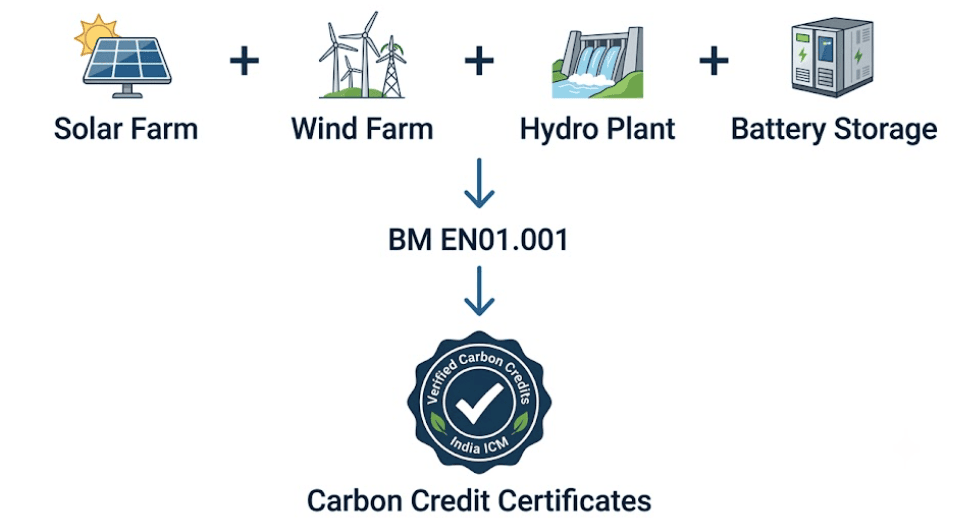
Renewable energy projects under BM EN01.001 generate credits by displacing fossil fuel-based electricity generation. A solar farm or wind project feeding power into the grid reduces the emissions associated with equivalent fossil fuel generation. The difference between baseline grid emission intensity and the near-zero emissions of renewable generation, multiplied by the electricity produced, determines the creditable emission reduction.
Green hydrogen projects under BM EN01.002 generate credits by producing hydrogen through electrolysis powered by renewable energy rather than through steam methane reforming, which is the dominant conventional process and produces substantial CO₂ emissions. As India's green hydrogen sector develops, BM EN01.002 may become one of the most significant methodology categories in terms of credit volume.
Agriculture projects under BM AG04.001 focus on methane recovery and destruction from agricultural waste management systems. By capturing biogas from animal waste or agricultural residues and using it productively rather than allowing methane to escape into the atmosphere, these projects generate both emission reductions and energy benefits.
Approved Methodologies Under the Offset Mechanism
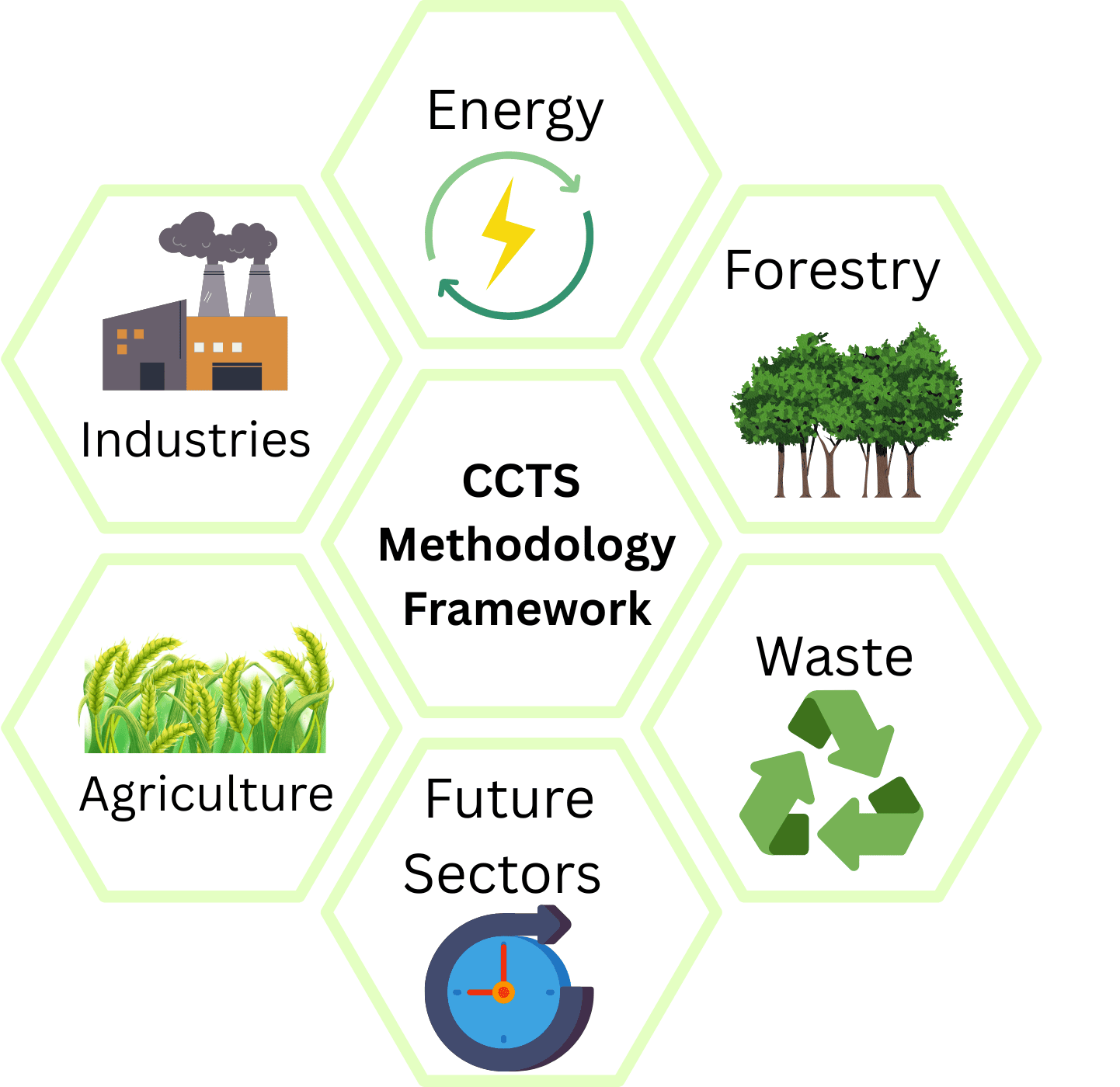
Approved Methodologies
| Methodology | Sector | Project Type |
|---|---|---|
| BM EN01.001 | Energy | Renewable Energy |
| BM EN01.002 | Energy | Green Hydrogen |
| BM IN02.001 | Industry | Energy Efficiency |
| BM WA03.001 | Waste | Landfill Methane Recovery |
| BM AG04.001 | Agriculture | Methane Recovery |
| BM FR05.001 | Forestry | Mangrove Restoration |
| BM FR05.002 | Forestry | Afforestation & Reforestation |
Renewable Energy Methodologies: BM EN01.001 and BM EN01.002
BM EN01.001 is the primary renewable energy methodology under the Indian Carbon Market. It covers projects that generate electricity from solar, wind, hydro, biomass and other renewable sources and feed this electricity into the national or state grid, thereby displacing electricity that would otherwise have been generated from fossil fuels. The methodology calculates creditable emission reductions as the product of renewable electricity generation and the baseline grid emission factor, which represents the average CO₂ intensity of the electricity displaced.
BM EN01.001 projects must demonstrate additionality using BM-T-001, confirming that the renewable energy project would not have proceeded without carbon finance. In a rapidly growing renewable energy market, demonstrating that a specific project is additional rather than simply part of the normal commercial trajectory of renewable energy deployment is increasingly challenging and requires careful barrier and investment analysis.
BM EN01.002 addresses green hydrogen production through electrolysis powered by renewable electricity. Green hydrogen represents a strategically important sector for India's decarbonization given its potential applications in steel production, fertilizers, chemicals, transport and energy storage. Credits generated under BM EN01.002 reflect the emission reduction achieved by producing hydrogen through a clean process rather than through steam methane reforming with its associated CO₂ emissions.
Industrial Methodologies: BM IN02.001
BM IN02.001 covers industrial energy efficiency improvements in sectors not covered by the compliance mechanism, or additional efficiency improvements by compliance entities beyond their mandatory targets. The methodology quantifies emission reductions achieved through technology upgrades, process optimization, waste heat recovery, fuel switching and other efficiency interventions. Industrial efficiency methodologies are technically demanding because they require careful baseline characterization of pre-project energy intensity and rigorous monitoring of post-project performance, accounting for changes in production volume and product mix.
Waste Methodologies: BM WA03.001
BM WA03.001 covers landfill gas capture and destruction projects. Landfills emit methane as organic waste decomposes in anaerobic conditions. Since methane has a global warming potential approximately 80 times that of CO₂ over a 20-year horizon, landfill methane destruction generates disproportionately large emission reduction benefits relative to the volume of gas destroyed. Projects under BM WA03.001 install gas collection systems that capture landfill emissions and combust them, converting methane to CO₂ and dramatically reducing the climate impact of waste disposal.
Forestry Methodologies: BM FR05.001 and BM FR05.002
BM FR05.001 covers mangrove restoration projects. Mangroves are among the most carbon-dense ecosystems on earth and store substantial carbon in both above-ground biomass and below-ground sediment. Mangrove restoration generates carbon credits by rebuilding degraded coastal mangrove ecosystems, sequestering atmospheric carbon while simultaneously restoring biodiversity and coastal protection services. India's extensive coastline and its history of mangrove degradation make BM FR05.001 potentially one of the most significant forestry methodology categories.
BM FR05.002 covers afforestation and reforestation projects that establish new forest cover on land that was previously deforested or degraded. These projects generate carbon credits by sequestering atmospheric carbon as new forests grow over multi-decade periods. Afforestation and reforestation projects require careful consideration of species selection, particularly from a biodiversity perspective, since monoculture plantations may sequester carbon while failing DNSH tests related to biodiversity and water.
Approved Carbon Accounting Tools
Carbon Accounting Tools
| Tool | Purpose |
|---|---|
| BM-T-001 | Baseline & Additionality |
| BM-T-002 | Fossil Fuel Emissions |
| BM-T-003 | Electricity Monitoring |
| BM-T-004 | Flaring Emissions |
| BM-T-005 | GHG Mass Flow |
| BM-T-006 | Thermal Efficiency |
| BM-T-008 | Anaerobic Digesters |
| BM-T-010 | Biomass Emissions |
Why Carbon Accounting Tools Matter
Carbon accounting tools are standardized calculation procedures that support the quantitative elements of methodology implementation. While methodologies define the overall framework for how emission reductions are identified, calculated and verified, tools provide the specific technical procedures for quantifying particular types of emissions or removals that appear across multiple methodology contexts. By standardizing these calculations, BEE ensures consistency across projects and reduces the technical burden on individual project developers.
BM-T-001: Baseline Identification and Additionality Assessment
BM-T-001 is the most foundational tool in the CCTS methodology framework. It provides a standardized procedure for two of the most critical and contested aspects of carbon project development: identifying the baseline scenario and demonstrating additionality. The tool is explicitly referenced by multiple approved methodologies including BM EN01.001, BM EN01.002 and the forestry methodologies, making it the common analytical thread running through the entire offset mechanism.
The baseline identification component of BM-T-001 requires project developers to identify all plausible alternative scenarios to the project activity and determine which scenario best represents what would have happened without the project. This counterfactual analysis is the foundation of the entire carbon credit calculation, since credits represent the difference between actual project emissions and the emissions that would have occurred under the baseline scenario.
BM-T-002: Fossil Fuel Emissions Calculation
BM-T-002 provides standardized procedures for calculating greenhouse gas emissions from fossil fuel combustion. It is used in multiple methodology contexts where project activities involve changes in fossil fuel consumption patterns, such as energy efficiency projects, fuel switching projects and combined heat and power installations. The tool standardizes emission factor selection, fuel measurement procedures and calculation methodologies to ensure consistency across projects and monitoring periods.
BM-T-003: Electricity Monitoring and Emission Calculation
BM-T-003 standardizes procedures for monitoring electricity consumption and generation and for calculating the associated greenhouse gas emissions or emission reductions. It is essential for renewable energy projects under BM EN01.001, which require accurate measurement of electricity generation and application of grid emission factors to determine the displacement of fossil fuel generation. The tool addresses metering requirements, calibration procedures and the application of appropriate emission factors for different grid regions.
BM-T-004 and BM-T-005
BM-T-004 provides calculation procedures for greenhouse gas emissions from flaring operations, relevant to oil and gas sector projects and industrial processes involving combustion of waste gases. BM-T-005 covers greenhouse gas mass flow calculations, providing procedures for quantifying emissions in processes where direct measurement of mass flows is more appropriate than combustion-based calculation methods. Both tools are used in specific industrial and energy sector contexts where the emission sources involved require specialized calculation approaches.
Why Environmental Integrity Matters
The value of a carbon credit depends entirely on whether the emission reduction or removal it represents is real, measurable, permanent and additional. These requirements are not bureaucratic formalities. They are the substance of what makes a carbon credit environmentally meaningful. A carbon credit that fails to meet these requirements is not a slightly lower-quality carbon credit. It is not a carbon credit at all. Understanding why each integrity requirement matters is essential for anyone seeking to participate in, invest in or regulate the Indian Carbon Market.
Additionality
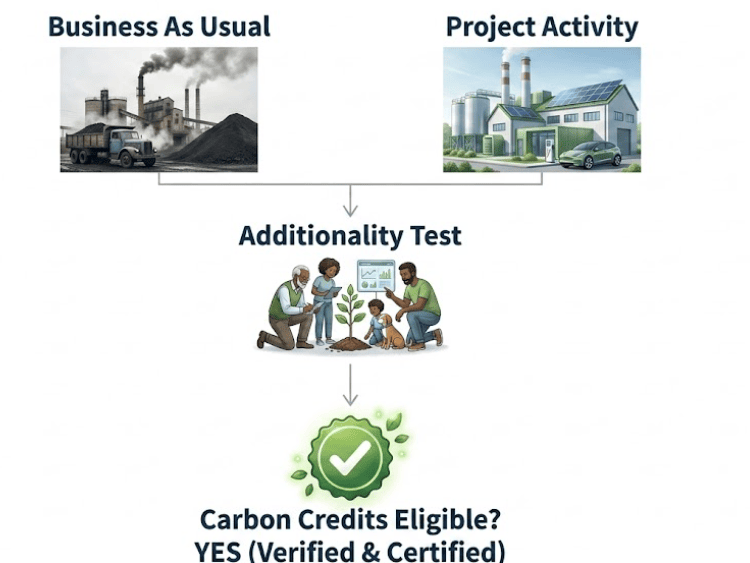
Additionality is the requirement that emission reductions generated by a project would not have occurred without the project activity and without the financial incentive created by carbon credit revenue. If a project would have happened regardless of carbon finance because it was already financially viable, legally required or commercially standard practice, then the credits it generates do not represent real emission reductions beyond what the baseline scenario would have produced.
The additionality challenge is particularly acute in rapidly growing sectors. As renewable energy becomes increasingly cost-competitive and as industrial efficiency standards tighten, demonstrating that a specific renewable energy or efficiency project would not have been built without carbon finance becomes increasingly difficult. Methodological tools like BM-T-001 structure this analysis rigorously, but additionality assessment remains one of the most contested and technically demanding aspects of carbon project development.
Leakage
Leakage occurs when project activities cause emission increases outside the project boundary that partially or completely offset the emission reductions achieved within it. A forest conservation project that successfully protects one area of forest may simply displace deforestation pressure to an unprotected area elsewhere. An industrial efficiency project that reduces a facility's emissions may increase output from a less efficient competitor. These displacement effects must be assessed and accounted for in credit calculations.
Methodology frameworks typically require project developers to identify potential leakage sources and apply standardized deduction factors to account for them. Where leakage cannot be adequately quantified or controlled, it may affect the number of credits that can be issued. Addressing leakage comprehensively requires either expanding the project boundary to encompass leakage sources or applying conservative deduction factors that reduce credit issuance to account for estimated leakage effects.
Permanence
Permanence is the requirement that emission reductions or removals persist over time. For biological sequestration projects including forestry, mangroves and agriculture, permanence is a particularly important concern because the carbon stored in vegetation and soil can be released back to the atmosphere through fire, disease, drought, or deforestation. A forest carbon project that sequesters carbon for ten years before being cleared releases all of that carbon back to the atmosphere, negating the climate benefit of the original sequestration.
Carbon markets address permanence risk through various mechanisms including buffer pools that retain a portion of generated credits as insurance against reversal events, monitoring requirements that detect loss events and trigger credit cancellation, and project design requirements that minimize reversal risk through fire management, legal protection and diversified ecosystem management. The net zero permanence challenge is one reason why industrial emission reductions are generally considered higher-integrity from a permanence standpoint than biological sequestration.
Double Counting
Double counting occurs when the same emission reduction is claimed by more than one party or used to meet more than one obligation. Under the Paris Agreement's architecture, double counting becomes an important concern when carbon credits are transferred between countries, since both the selling country and the buying country might count the same emission reduction toward their respective NDC targets. Article 6 introduces the concept of corresponding adjustments, which require the selling country to adjust its NDC accounting to reflect transfers, preventing double claiming at the national level.
Within domestic markets, double counting prevention relies primarily on registry architecture. A well-designed registry issues each credit a unique identifier, records all ownership transfers, and permanently cancels credits upon retirement. These technical safeguards make domestic double counting essentially impossible when the registry operates correctly. The more complex double counting challenges arise at the interface between domestic and international markets.
Measurement Uncertainty
Every carbon estimate carries uncertainty arising from the measurement, sampling, modeling and temporal limitations of the monitoring system that produced it. Measurement uncertainty is not a sign of methodological failure. It is an inherent property of measuring complex biological and industrial systems at the scale required for credible carbon accounting. The key integrity requirement is that uncertainty is honestly quantified rather than concealed, and that credit issuance is adjusted conservatively to account for the range of plausible outcomes.
Conservative discounting is the primary mechanism through which uncertainty is translated into credit issuance decisions. When a project's measured uncertainty exceeds threshold levels defined in the applicable methodology, the number of credits that can be issued is reduced to account for the possibility that actual emission reductions are at the lower end of the estimated range. Projects that invest in higher-quality monitoring and lower uncertainty therefore earn more credits from the same underlying emission reductions.
The Carbon Credit Lifecycle
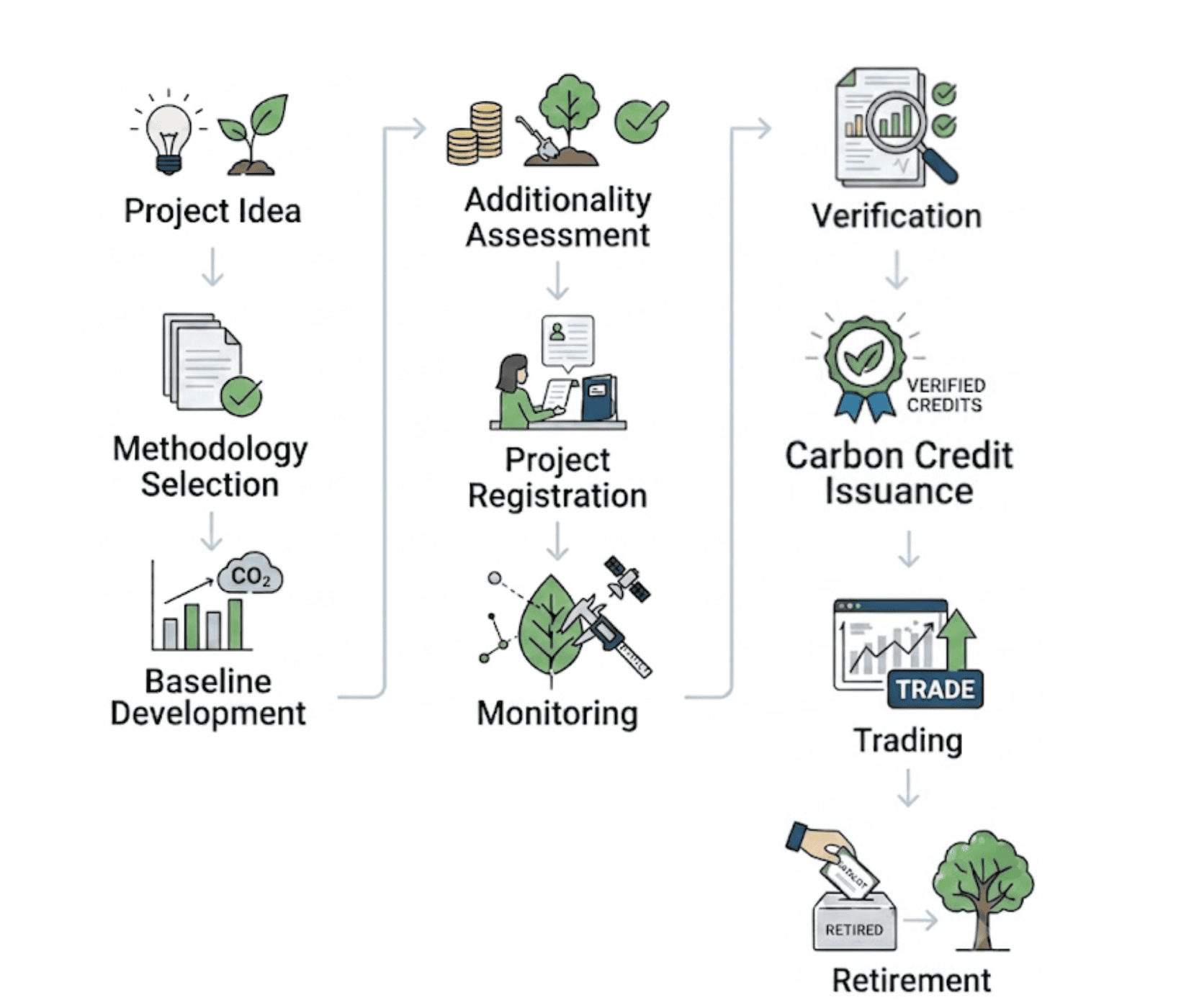
Step 1: Project Identification
The carbon credit lifecycle begins with project identification: the process of determining whether a potential activity qualifies for participation in the offset mechanism and whether the expected carbon credit revenue makes the project financially viable. Project identification involves assessing the geographic scope and scale of the proposed activity, identifying the relevant approved methodology, conducting a preliminary additionality assessment, and estimating expected credit generation volumes.
Project identification also involves due diligence on legal and land tenure questions. Who owns the land or facility? Are there existing legal obligations that might affect project eligibility? Are there competing claims on the carbon rights? In forestry and land-use projects, land tenure clarity is particularly important because unclear ownership creates risks for both the project developer and carbon buyers. Resolving land tenure questions at the identification stage prevents much more costly complications at the registration and verification stages.
Step 2: Methodology Selection
Methodology selection is the process of identifying which approved CCTS methodology applies to the project activity. This is not always straightforward. Some project types are clearly covered by a single methodology. Others may fall within the scope of multiple methodologies, requiring analysis of which one best fits the specific project design. In some cases, a project may involve components covered by different methodologies, requiring a combined approach.
Once the applicable methodology is identified, the project developer must carefully review all eligibility requirements. Methodologies specify not only calculation procedures but also eligibility criteria regarding project type, scale, technology, location and environmental conditions. A project that does not meet all eligibility criteria cannot generate credits under that methodology, regardless of the emission reductions it achieves.
Step 3: Baseline Development
Baseline development is one of the most technically demanding steps in the carbon credit lifecycle. The baseline represents the counterfactual scenario against which project emission reductions are measured. For a renewable energy project, the baseline might be the grid emission factor representing the fossil fuel generation that would have occurred without the project. For a forestry project, the baseline might be a modeled trajectory of forest cover loss based on historical deforestation rates and relevant drivers.
Baseline development requires careful analysis of historical data, assessment of relevant economic and policy trends, and application of the specific baseline methodology procedures prescribed in the applicable approved methodology. The baseline directly determines the volume of credits a project will generate, since credits equal the difference between baseline emissions and actual project emissions. Errors or biases in baseline construction translate directly into over- or under-issuance of credits.
Digital MRV tools are increasingly valuable at the baseline development stage. Historical satellite imagery, land cover classification data and remote sensing products enable project developers to reconstruct baseline conditions with much greater accuracy and efficiency than traditional field-survey-based approaches. For forestry and land-use projects, digital baseline analysis has become essential for generating defensible counterfactual scenarios at the landscape scales required by modern nature-based solutions projects.
Step 4: Additionality Demonstration
Additionality demonstration is the formal process by which a project developer proves that the project activity would not have occurred without the incentive created by carbon credit revenue. Under the CCTS framework, this is conducted using BM-T-001, which requires completion of four analytical steps: alternative scenario analysis, barrier analysis, investment analysis and common practice analysis.
Alternative scenario analysis identifies all plausible scenarios for achieving the same output as the project activity without the project itself. The most likely of these alternatives is the baseline scenario. Barrier analysis identifies the financial, technological, operational and institutional barriers that would prevent implementation of the project without carbon finance. Investment analysis evaluates whether the project would achieve an adequate financial return without carbon revenue. Common practice analysis assesses whether the project activity is already widespread in the relevant geographical area, since activities that are common practice are presumed to not require carbon finance incentives.
A rigorous additionality demonstration requires high-quality evidence at each analytical step. Financial models must be credible and conservative. Barrier identification must be specific and documented. Common practice assessments must be based on reliable market data. ACVAs scrutinize additionality documentation carefully during validation because it is the integrity foundation of the entire project.
Step 5: Registration
Project registration is the formal process by which a project is entered into the national registry as an eligible offset project under the CCTS. Registration requires submission of the validated Project Design Document, the ACVA validation opinion, and any additional documentation required by BEE. BEE reviews the submission, may request clarifications, and upon satisfaction of all requirements approves the project for registration.
Registration in the national registry is a critical milestone. It establishes the project's official start date for credit eligibility, sets the crediting period during which emission reductions can generate credits, confirms the applicable methodology and baseline, and creates the official record against which all subsequent monitoring and verification activities will be assessed.
Step 6: Monitoring
Monitoring is the ongoing process of collecting, recording and managing the data required to quantify emission reductions during each monitoring period. The monitoring plan, which forms part of the Project Design Document validated at registration, specifies what data must be collected, how it must be collected, at what frequency, using what instruments and with what quality control procedures.
Effective monitoring requires rigorous data management systems that can maintain complete, tamper-evident records of all monitored parameters. For industrial projects, this may involve calibrated meters and automated data logging systems. For forestry projects, it may involve a combination of field measurements at permanent sample plots, satellite-derived land cover and biomass estimates, and spatial analysis platforms. The quality of monitoring data directly affects the accuracy of verified emission reductions and the volume of credits that can ultimately be issued.
Step 7: Verification
Verification is the independent assessment of a project's monitored emission reductions by an Accredited Carbon Validation and Verification Agency. The ACVA reviews the Monitoring Report prepared by the project developer, examines the underlying monitoring data, assesses whether the data collection and calculation procedures comply with the approved methodology, and determines the volume of emission reductions that can be formally credited.
Verification typically involves a combination of document review, remote data analysis and site visits. The ACVA may identify discrepancies between reported data and methodology requirements, raise queries about specific data points, or request additional evidence to substantiate particular calculations. The project developer must resolve all queries to the ACVA's satisfaction before a verification opinion can be issued. A positive verification opinion is the final prerequisite for credit issuance.
Step 8: Credit Issuance
Credit issuance is the process by which Carbon Credit Certificates corresponding to verified emission reductions are created in the national registry and credited to the project developer's registry account. The registry issues the precise number of CCCs specified in the verification opinion, each with a unique identifier, vintage year and associated project reference. From the moment of issuance, the CCCs are transferable assets that can be sold, traded or retired.
Step 9: Trading
Once issued, Carbon Credit Certificates can be traded on designated exchanges regulated by CERC. Trading enables price discovery and allows CCCs to flow from project developers to compliance entities or voluntary buyers. The trading infrastructure must support transparent price discovery, efficient settlement and reliable transfer of registry ownership records. As the Indian Carbon Market develops, secondary market liquidity will be an important determinant of market efficiency and of the financial signals that carbon prices send to project developers and compliance entities considering investment decisions.
Step 10: Retirement
Retirement is the final step in the carbon credit lifecycle. When a CCC is retired, it is permanently cancelled from the registry and cannot be transferred or reused. Retirement occurs when a compliance entity submits credits to meet its regulatory obligation, or when a voluntary buyer retires credits to compensate for its own emissions and makes a public claim based on the retirement.
The retirement record in the national registry is the definitive documentation of a credit's use. It records the identity of the retiring party, the purpose of retirement, and the date and volume retired. This record provides the audit trail that allows corporate sustainability disclosures based on carbon credit retirement to be verified against the registry, preventing false claims about credit use.
Why Digital MRV Will Define the Future
Why Traditional MRV Breaks at Scale
Traditional Monitoring, Reporting and Verification approaches for carbon projects rely heavily on field-based data collection, manual documentation and periodic third-party audits. For individual projects covering hundreds or a few thousand hectares, this approach can produce credible results. But as India's carbon market scales to encompass thousands of projects across millions of hectares of forestry, agriculture and land-use activities, the traditional approach faces fundamental limitations.
Field surveys are expensive and time-consuming. Deploying measurement teams to remote forest areas, sampling sufficient plots to achieve statistically robust estimates, and maintaining monitoring continuity over multi-year crediting periods requires substantial human resources and logistics. At the scale of a national carbon market encompassing thousands of projects, the cost and capacity constraints of traditional field-based approaches become structurally prohibitive.
Manual documentation creates data quality risks. When monitoring data passes through multiple manual recording, transcription and compilation steps, the potential for errors, omissions and inconsistencies grows. Carbon verifiers must invest substantial time reviewing documentation quality rather than focusing on the underlying environmental performance questions. Digital systems that capture data directly into structured, auditable databases eliminate most manual transcription risks.
Satellite Monitoring
Satellite monitoring enables continuous observation of project areas from space, generating systematic records of land cover, vegetation condition, forest extent and biomass dynamics across time. Modern satellite constellations provide observation frequencies ranging from daily to weekly for most locations globally, enabling monitoring cadences that field surveys cannot approach economically.
For forestry and land-use carbon projects, satellite monitoring is particularly powerful. Optical multispectral satellites can detect vegetation indices correlated with biomass, identify land cover changes, and monitor phenological cycles. Synthetic Aperture Radar satellites can penetrate cloud cover to provide all-weather monitoring capability, which is critical in India's monsoon-affected tropical regions where optical coverage may be unavailable for weeks or months at a time. The combination of optical and SAR monitoring provides a comprehensive observational record that supports credible carbon stock assessment.
AI-Based Carbon Accounting
Artificial intelligence and machine learning techniques are transforming the accuracy and efficiency of carbon stock estimation from remote sensing data. Traditional approaches to translating satellite observations into biomass and carbon stock estimates relied on relatively simple vegetation index relationships that suffered from saturation in high-biomass environments. Machine learning models can integrate multiple data streams including multispectral reflectance, radar backscatter, topographic data and field plot measurements to produce more accurate biomass estimates across a wider range of forest conditions.
AI-powered change detection algorithms can identify deforestation events, land cover transitions and disturbance patterns with high accuracy and near-real-time speed. These capabilities enable carbon project monitoring systems to detect reversal events rapidly, triggering appropriate registry responses without waiting for the next scheduled monitoring period. Continuous AI-assisted monitoring represents a fundamental improvement in the temporal resolution of carbon stock tracking.
Dynamic Baselines
Dynamic baseline approaches use continuously updated satellite and environmental data to revise baseline scenarios in response to changing conditions. Traditional static baselines, established once at project registration and held constant throughout the crediting period, cannot account for changes in deforestation rates, land use economics, or climate conditions that occur after the baseline is set. Dynamic baselines that respond to these changes produce more accurate counterfactual scenarios and therefore more credible credit calculations.
Digital MRV platforms are essential for dynamic baseline implementation because they provide the continuous data streams needed to update baseline models regularly. At Sylithe, dynamic baseline modelling uses historical satellite imagery and land cover analysis to reconstruct pre-project conditions and then applies ongoing monitoring data to update the baseline trajectory, ensuring that credit calculations reflect current rather than outdated counterfactual scenarios.
The Future of Digital Carbon Infrastructure
The future of carbon market infrastructure lies in seamlessly integrated digital systems that connect satellite monitoring, AI analytics, registry data management and verification workflows into a continuous, automated carbon intelligence pipeline. Projects that build this infrastructure early will gain significant competitive advantages as market standards evolve toward requiring continuous rather than periodic monitoring.
Registry integration is the final frontier of digital MRV. Systems that can automatically transmit verified monitoring data to national registries, trigger credit issuance processes and maintain audit trails across the entire data pipeline from satellite observation to credit retirement represent the end state of digital carbon infrastructure. Building toward this integrated architecture positions India's carbon market for the scale and efficiency required to support a genuinely transformative climate finance ecosystem.
How Sylithe Supports Carbon Market Participants
Sylithe is building digital infrastructure for next-generation carbon projects. By combining satellite intelligence, AI-driven analytics and automated MRV workflows, the platform helps project developers create verification-ready datasets and scalable monitoring systems.
Why It Matters
- Satellite Monitoring
- Land Use Change Detection
- Dynamic Baseline Modelling
- Carbon Stock Monitoring
- AI-Powered Reporting
- Verification-Ready Evidence
Why India's Carbon Market Could Become One of the World's Largest
The scale of India's carbon market potential is difficult to overstate. Several structural factors combine to create conditions for a carbon market of exceptional size and economic significance.
The Industrial Base and Compliance Market Scale
India has one of the world's largest industrial sectors, encompassing steel, cement, aluminium, fertilizers, petrochemicals and other energy-intensive manufacturing categories that collectively consume hundreds of millions of tonnes of oil equivalent annually. The compliance mechanism's target population represents a substantial portion of India's national emissions. As target stringency increases over successive compliance cycles, the financial pressure on obligated entities will grow, driving demand for both internal emission reductions and offset credit purchases.
Renewable Energy and the 500 GW Opportunity
India's commitment to 500 GW of non-fossil electricity capacity by 2030 represents one of the largest renewable energy deployment programs in history. Much of this capacity will involve projects that are potentially eligible for carbon credits under BM EN01.001. While additionality requirements will limit the proportion of projects that qualify, the sheer scale of renewable energy deployment creates a substantial pipeline of potential offset projects. The carbon revenue available from eligible renewable projects provides an additional financing lever that can improve project economics, particularly for projects in more challenging locations or with higher development costs.
Forestry and Nature-Based Solutions Potential
India has approximately 71 million hectares of forest cover, substantial degraded land areas suitable for restoration, extensive coastlines with mangrove potential, and a large agricultural sector capable of soil carbon enhancement. The nature-based solutions market potential in India is among the largest in Asia. As methodologies develop for forest management, mangrove restoration, regenerative agriculture and agroforestry, and as digital MRV infrastructure reduces the cost of monitoring and verification for dispersed landscape-scale projects, the volume of nature-based credits generated within India could be enormous.
Blue Carbon and Coastal Ecosystems
India's 7,500-kilometer coastline includes extensive mangrove ecosystems, seagrass beds and salt marshes that collectively represent significant blue carbon storage. Blue carbon ecosystems store carbon at rates several times higher per hectare than terrestrial forests, making coastal restoration among the highest-value carbon project categories. As blue carbon methodology coverage develops under the CCTS framework, India's coastal ecosystems could generate substantial credit volumes while simultaneously supporting coastal communities and biodiversity.
Green Hydrogen and Industrial Decarbonization
India's National Green Hydrogen Mission targets production of 5 million tonnes of green hydrogen annually by 2030, representing one of the world's most ambitious green hydrogen deployment programs. BM EN01.002 creates a methodology pathway for generating carbon credits from green hydrogen production, providing an additional revenue stream that can improve the economics of green hydrogen projects relative to fossil-based hydrogen alternatives. At scale, India's green hydrogen sector could generate significant carbon credit volumes.
Article 6 and International Carbon Export Potential
Under Article 6 of the Paris Agreement, India could export Internationally Transferred Mitigation Outcomes to countries seeking to meet their NDC targets through international cooperation. India's cost-effective emission reduction opportunities across renewable energy, forestry and industrial sectors make it a potentially significant supplier of internationally traded mitigation outcomes. The foreign exchange revenue from Article 6 exports, combined with the technology transfer and investment that international carbon market participation can attract, represents a significant economic opportunity alongside the domestic climate benefits.
The Future of the Indian Carbon Market
India's Carbon Credit Trading Scheme represents one of the most important climate policy developments in the country's history. By combining compliance obligations, voluntary participation, approved methodologies and robust verification systems, the Indian Carbon Market has the potential to become one of the world's most significant carbon finance ecosystems.
The market's success will depend on several factors that are still being shaped: the stringency and credibility of compliance targets, the rigor and coverage of approved methodologies, the quality and independence of verification agencies, the liquidity and transparency of trading markets, and the quality of digital monitoring infrastructure that enables continuous, cost-effective verification of emission reductions at scale.
“The success of India's carbon market will ultimately depend on transparency, environmental integrity and the quality of the data used to measure climate outcomes.”